


Best Thermal Monocular Wins 2025 iF Award, Cuts the Learning Curve
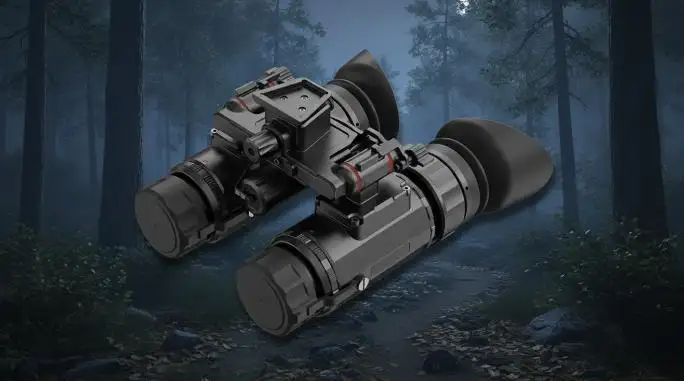
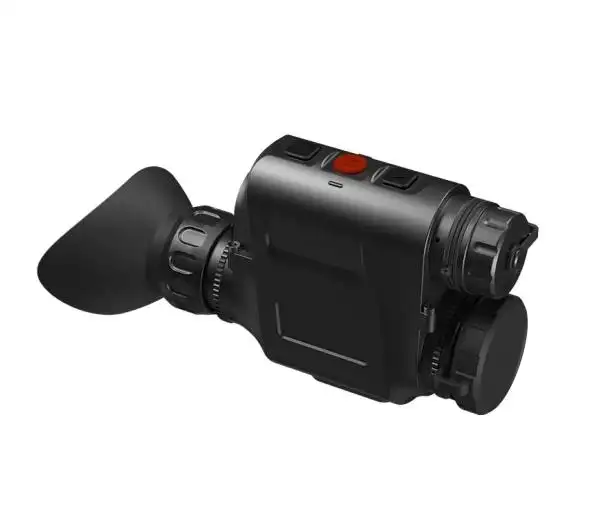
When a tool removes friction, people notice. The BINOCK TH10 was built around that idea, then validated by a 2025 iF Product Design Award. Instead of piling on features you will never use, it focuses on the ones that matter in the field - clear imaging, intuitive controls, and reliability you do not have to second-guess. For buyers searching for the Best Thermal Monocular, the TH10 is engineered to feel natural from day one, so you spend less time learning and more time acting on what you see.
What a Thermal Monocular Is - and Why the Award Matters
A thermal monocular reads infrared radiation - heat - rather than amplifying visible light. This simple shift changes what you can do. Because it visualizes heat signatures, a thermal device works in full sun, after sunset, and through light haze or smoke. That makes it indispensable for wildlife studies, perimeter patrols, search and rescue, and maintenance tasks where a few degrees can reveal a failing component.
The 2025 iF Design Award is not a marketing flourish. It is judged by an independent panel that looks for products with clarity of purpose, thoughtful ergonomics, and a proven benefit to users. Recognition for the TH10 signals that BINOCK's choices - sensor selection, lens pairing, interface design, and system integration - come together as a cohesive experience. In plain terms, it means less hunting through menus and more confidence in the moment.
How Thermal Imaging Works in the Real World
Under the hood, a thermal sensor converts tiny temperature differences across a scene into an image. The TH10 uses an uncooled VOx microbolometer, a detector architecture favored for its stability and low power demand. That sensor pairs with objective lenses from 9.7 mm to 25 mm to balance field of view and reach. Optical magnification spans 1x to 5.8x, with 1 - 4x digital zoom for flexible framing. A 1024x768 display preserves fine gradients, while 25 - 50 Hz frame rates keep motion smooth when tracking targets or scanning from a vehicle.
Beyond "thermal sees heat,” two practical concepts shape what you will see:
- Emissivity: Matte, non-metallic surfaces radiate infrared energy efficiently and render accurately. Polished metals and glass can reflect ambient IR, creating false hotspots. When inspecting equipment, change your viewing angle or use nearby matte references to confirm what is truly warm.
- Non-uniformity correction (NUC): As a sensor warms and cools, it needs brief calibration to keep the image clean. The TH10 runs short, unobtrusive NUC cycles that preserve detail without breaking your flow.
Best Thermal Monocular, Defined by Fewer Compromises
Across the category, users face the same pain points: clumsy interfaces, heavy housings, battery anxiety, and inconsistent images. The TH10 answers each with practical decisions.
• Too many nested menus: The interface exposes the essentials directly, with clear iconography and minimal layers.
• Fatigue from weight and balance: A compact 251 g chassis places the center of gravity where it naturally rests in a one-handed grip.
• Missed moments from lag: Fast boot, responsive 25 - 50 Hz imaging, and smooth zoom steps reduce the chance you lose a critical second.
• Tough environments: IP67 sealing and shock-tolerant construction keep you on task when rain and dust show up.
• Power uncertainty: A single, widely available 18650 cell supports extended operation without proprietary packs.
u Why It Feels Easy on Day One
Ease of use is about predictability. Primary controls land under your thumb and index finger - even with gloves - so common actions are muscle memory: change palette, adjust zoom, optimize the image. Sensible defaults deliver a usable picture immediately, then allow fine-tuning as needed. Eye relief of 23 mm supports eyewear, and the diopter adjusts smoothly and holds focus as you move from a wide scan to a precise check. That combination creates a Best Thermal Monocular experience that feels familiar within minutes, not hours.
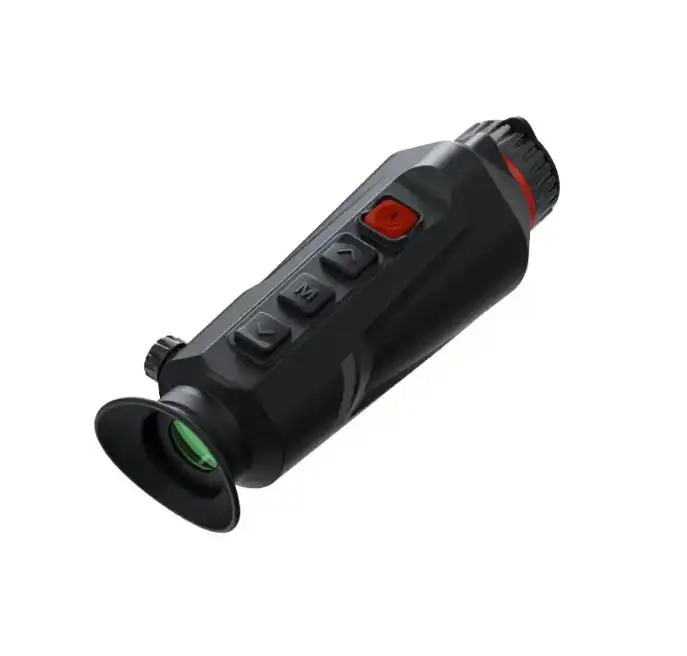
Optics and Processing That Hold Up Everywhere
Image quality is not a single spec; it is the alignment of sensor, glass, processing, and display. The TH10's uncooled VOx microbolometer delivers the thermal sensitivity professionals expect without the complexity of a cooled system. Lens options from 9.7 mm to 25 mm let you match the field of view to the job - sweeping an open field for wildlife, or tightening in for long-range identification across a fence line. Optical magnification preserves native detail, while the 1 - 4x digital zoom gives you framing flexibility when distances change quickly.
On the display side, 1024x768 resolution renders gradients cleanly, making it easier to see subtle heat transitions that often carry the real signal. A selectable 25 - 50 Hz frame rate keeps panning and target tracking fluid; you can also dial back to conserve power when monitoring static scenes. Image processing is tuned to show thermal distribution consistently across sunrise, midday, and night - precisely when many devices struggle as ambient conditions swing.
u Built for Reliability, Not Just Specs
Reliability is a sum of small, coherent decisions.
• With an IP67 rating, dust and immersion do not put your schedule at risk.
• The chassis resists torsion and impact, preserving alignment between optics and sensor.
• Power comes from a standard 18650 battery, so spares are easy to source and pack.
• Thermal management helps keep the detector in a stable operating window, supporting repeatable calibration over long sessions and across temperatures.
Because BINOCK controls the sensor tuning, optics, firmware, and ergonomics, updates are validated as a system. New features arrive without introducing friction elsewhere, which lowers lifetime risk for professionals and keeps enthusiasts confident season after season.
u Where the TH10 Earns Its Keep
Thermal imaging pays off when it serves a clear task. The TH10 fits three common patterns - long-range observation, rapid area scans, and spot-checks - without changing your setup.
• Wildlife and conservation: Observe quietly without visible light that spooks animals. Detect and track heat in tall grass or dense brush at dawn or dusk.
• Security and patrol: Maintain situational awareness along dark perimeters and variable lighting, with fast boot and stable contrast when you step outside.
• Search and rescue: Scan wide areas for heat signatures safely, distinguishing a person from background clutter at useful distances.
• Predictive maintenance: Identify insulation gaps, hot bearings, and electrical anomalies without tearing down assemblies. Emissivity awareness helps separate reflection from real heat.
Each scenario benefits from the same fundamentals: a device that starts quickly, stays balanced in the hand, and resolves detail without hunting through menus.
u Practical Tips to Get More from the TH10
• Choose lenses by task. Wider lenses accelerate wide-area sweeps; longer focal lengths extend detection range and identification detail.
• Match frame rate to motion. Use 50 Hz for moving subjects or vehicle-based scans; drop to 25 Hz to save power on static scenes.
• Select palettes intentionally. White-hot is intuitive for many; black-hot can reduce eye strain; high-contrast modes help reveal small anomalies.
• Manage emissivity. Polished metals and glass reflect IR. Change angles or reference a nearby matte surface to confirm a hotspot.
• Embrace quick calibration. Allow brief NUC cycles to keep the image clean during long sessions or temperature swings.
• Keep optics clean. A trace of residue can wash out contrast - use a proper lens cloth for coated glass.
• Favor optical magnification. Use digital zoom to frame only when you cannot get closer; it preserves apparent detail.
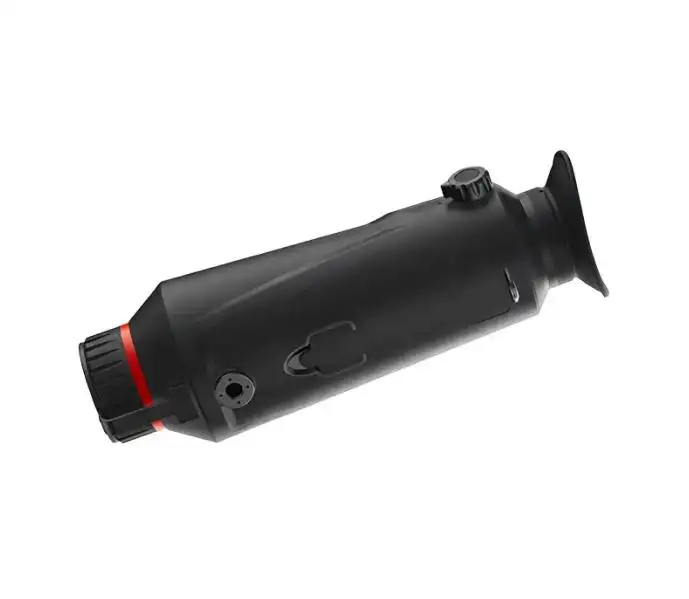
Why the TH10 Belongs on Your Shortlist for the Best Thermal Monocular?
If you are standardizing for a team or upgrading a personal kit, the TH10 offers a direct route to proficiency. It combines an award-winning industrial design with a tuned sensor-optics-software stack that highlights what matters in the scene. The result is simpler operation, clearer signal, and dependable performance across conditions - qualities that define the Best Thermal Monocular for real-world use, not just a spec sheet.
Next Steps
- Talk with a specialist for a configuration that matches your terrain, distances, and workflows.
- Request a live demo to see the TH10 in your environment and lighting conditions.
- Ask for the technical brief to review specifications, integration options, and lifecycle support.
Contact BINOCK to pilot the TH10 and experience how a refined design shortens the learning curve while raising your outcomes from day one.


