


Total Darkness? Digital Night Vision Goggles for Security Have You Covered
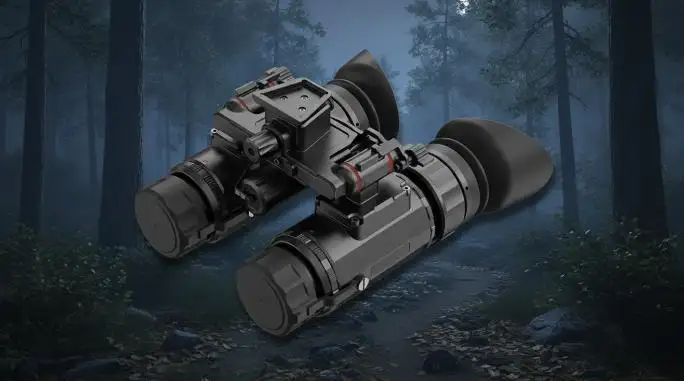
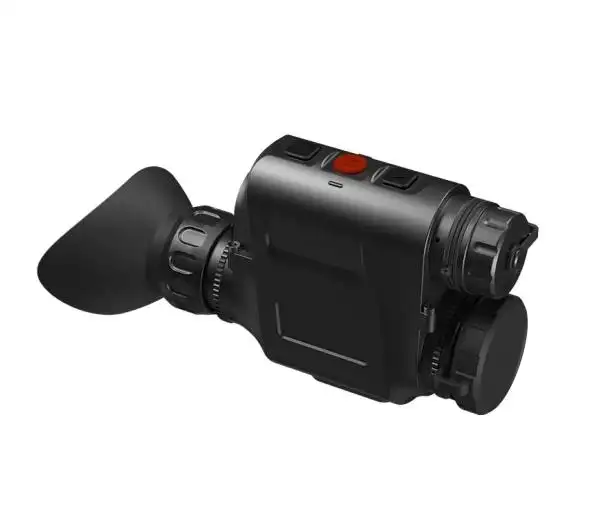
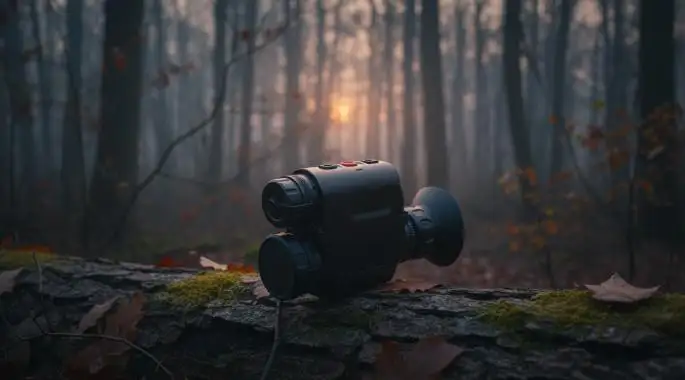
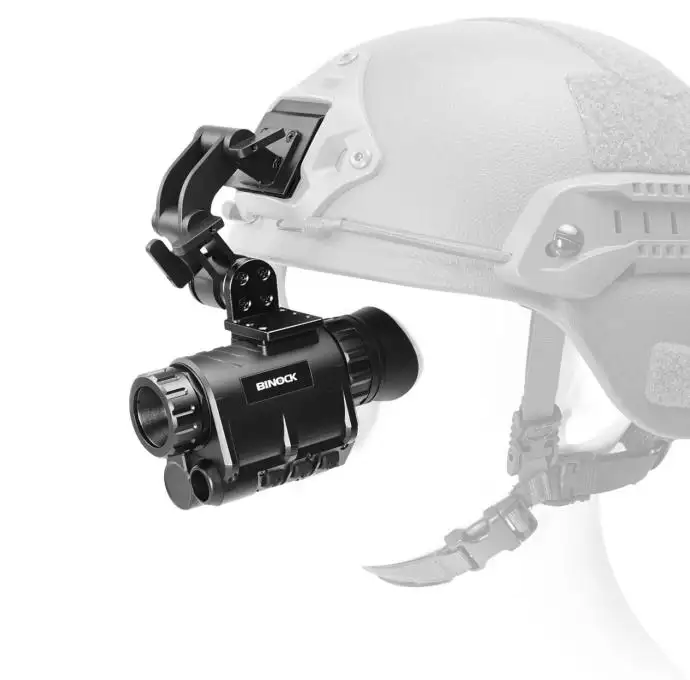
Picture a patrol moving from a moonlit perimeter into a lobby splashed with LED signage. With older analog tubes, the sudden brightness can bloom and wash out the view. With modern Digital Night Vision Goggles for Security, the image stays controlled, edges remain crisp, and the operator keeps momentum. That reliability in harsh, mixed lighting is where BINOCK's single-eye, helmet-ready digital monocular earns its place on a security kit list.
What are the Common Challenges When Total Darkness?
Operating in true zero-light conditions isn't just "harder”; it fundamentally changes how humans and sensors perceive the world. Without ambient cues, the brain's map collapses, small movements disappear into noise, and navigation turns risky. Reflective surfaces and glass warp spatial judgment, while abrupt intrusions of light - from vehicle headlights or emergency strobes - can shock the eye and overwhelm unprotected systems.
Under total darkness, identification falters as faces, badges, and tools compress into low-contrast shapes; evidence capture suffers because standard cameras and body-worn systems rarely produce usable recordings. Fatigue accelerates, throttling decision speed and raising error rates. Hence, intelligent exposure, built-in IR, and adjustable palettes are necessities, not add-ons. Properly configured Digital Night Vision Goggles for Security stabilize the picture, but teams still need training routines tailored to zero-light operations.
u Key Challenges
• Orientation decay: without references, path selection becomes error-prone.
• 3D perception collapse: steps and gaps are frequently misread.
• Light shock response: sudden brightness induces glare and bloom.
• Imaging constraints: noise, reduced contrast, and smear hide micro-actions.
• Gear overhead: added peripherals increase weight, snag risk, and setup time.
• Review fragility: compromised footage hinders training and incident analysis.
• Identification uncertainty: faces and badges dissolve into silhouettes.
• Identification risk: faces, badges, and tools are hard to distinguish accurately.
• IR trade-offs: active illumination extends range but can expose operator position.
• Evidence capture strain: poor footage undermines documentation and post-incident review.
What Digital Night Vision Actually Does
Digital night vision uses a sensitive sensor, on-board signal processing, and a microdisplay to turn scarce photons into a legible picture. Instead of relying on fragile image intensifier tubes, the device captures light, optimizes exposure, suppresses noise, and renders a sharp image you can tune to the scene. The result is adaptable visibility that holds up under streetlights, starlight, or total darkness.
Analog systems still work well in consistent low light, but they struggle with abrupt transitions and are vulnerable to bright sources. Digital Night Vision Goggles for Security flip that script. Dynamic exposure and intelligent brightness management handle everything from headlamps to reflective signage, shrinking glare and protecting contrast so targets are easier to read. That stability is not cosmetic; it shortens the time to recognize threats, evaluate movement, and make decisions.
u Coverage From Low Light to Zero Light
Good security gear has to work every hour of the night, not only when the moon cooperates. BINOCK's monocular amplifies natural light for passive viewing under starlit skies, then adds an integrated infrared illuminator when ambient light disappears. Because the IR source is built in, most teams can leave external torches behind. Less gear means fewer snag hazards, fewer cables to fail in the rain, and a cleaner silhouette on a helmet or chest rig.
Operators can also switch among four display palettes to match the task. Some emphasize edges and fine detail against foliage, others reduce eye strain during long watches, and still others boost contrast for rapid search in cluttered scenes. Over a long shift, palette selection becomes a small but meaningful performance advantage.
What Sets Digital Night Vision Goggles for Security Apart
• Tolerance for mixed lighting: Digital architectures excel at fast shifts between dark alleys and lit interiors. Automatic brightness control reduces blooming and keeps exposure in check.
• Post-purchase growth: Firmware updates unlock enhanced brightness control, improved denoising, and additional palettes - no hardware change required.
• Always-connected workflow: Wireless monitoring and protected recording streamline supervision, evidence handling, and instruction across remote teams.
u Field-Proven Advantages You Feel on Patrol
Security work rarely happens in textbook conditions. Subjects move, backgrounds are cluttered, and light sources flare from odd angles. BINOCK's approach is to minimize surprises by delivering stable imaging and ergonomic integration you can forget about once the shift gets busy.
• Clarity with context: A wide field of view paired with high-definition imaging preserves both the big picture and the telltale details. Reading a badge, catching the shape of a tool, or distinguishing a face at the edge of the frame gets easier when the image holds both resolution and breadth.
• Hands-off exposure control: Walking from a parking deck into a stairwell shouldn't require menu diving. Automated management of exposure and contrast keeps the image usable through abrupt transitions so the operator can focus on the scene rather than settings.
• True zero-light capability: Low-light amplification covers passive scenarios; the built-in IR fills in when darkness is complete. Eliminating external emitters trims weight and raises reliability, particularly in foul weather.
• Palette flexibility: Four color display modes let teams tune the image for long stints on observation, perimeter sweeps under foliage, or tight indoor searches.
• Live oversight and capture: Wireless connectivity allows supervisors to view what the operator sees, document incidents in real time, and archive training clips without pulling anyone off mission.
u Built to Mount, Built to Last
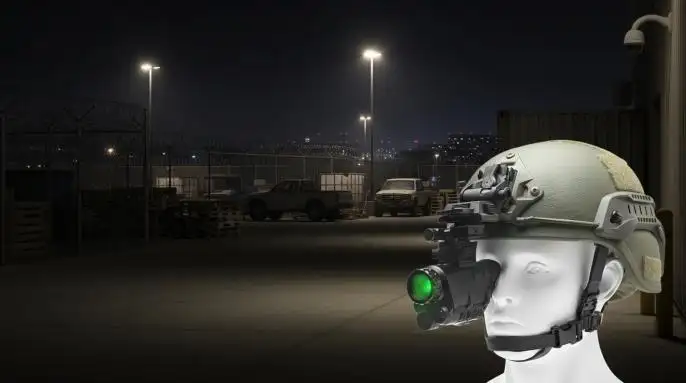
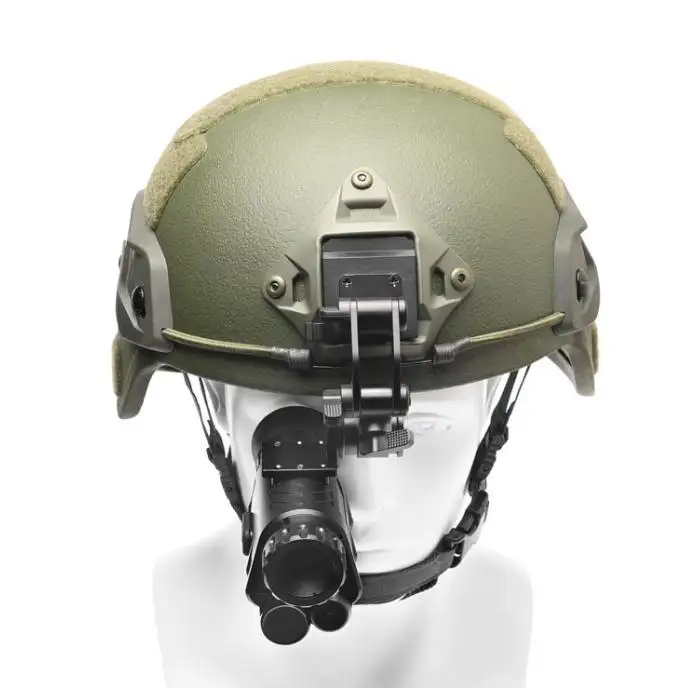
Helmet compatibility and ruggedization are non-negotiable in real deployments. BINOCK's digital monocular mounts to common helmets and supports the international L4G24 interface, so teams can deploy without improvised adapters or a wholesale mount change. The monocular format keeps weight balanced and allows single-eye use to preserve depth perception - important when moving over uneven ground, climbing, or driving.
The chassis is sealed and reinforced for outdoor use, and every unit goes through optical testing, electronic inspection, and environmental checks to confirm reliability before it ships. The goal is boringly predictable performance during the first mission and the hundredth.
Procurement That Matches How Programs Grow
Most agencies start with a small validation, then scale if the gear performs. BINOCK's procurement framework supports both phases. Minimum order quantities are intentionally modest for pilot trials, with quick-turn sample units available for demos, bid prep, and field testing. Typical air freight delivery ranges from one to two weeks depending on destination and customs. Once a ship-to address is confirmed, you receive precise lead times and freight quotes so schedules stay intact.
Brand owners and distributors can opt for OEM/ODM paths that include custom logos, retail packaging, and white-label configurations. Customization begins at an accessible quantity to minimize inventory risk while preserving brand consistency.
u Capacity, Compliance, and Continuity
A good device is only useful if you can keep it in stock and approved. BINOCK maintains stable component reserves and can scale production to several thousand units per month, supporting distributors and project buyers with dependable lead times. Globally recognized compliance: CE, FCC, and RoHS are standard; additional testing can be organized to satisfy national standards or tender documentation.
Operational consistency: Updates follow a planned cadence. Firmware is harmonized across batches, accessory kits are reference-documented, and any revisions are broadcast to keep training synchronized. This reduces support friction and ensures mixed-batch fleets act consistently on deployment.
u Quick Feature Snapshot
• HD optics with wide field of view to balance scene awareness and detail recognition
• Smart brightness logic that curbs glare, bloom, and abrupt light changes
• Low-light amplification with built-in IR for genuine zero-light operations
• Four curated palettes for contrast, stamina, and mission-specific use
• Wireless connectivity enabling live supervision, secure recording, and export
• Robust, helmet-ready chassis compatible with L4G24 and common mounting hardware
u Practical Tips for Operators
• Palette selection matters: high-contrast for searching through foliage or shadows; softer palettes to reduce eye strain during long posts.
• IR restraint: favor passive detection; toggle IR for short windows when ambient disappears and ID is required.
• Practice light transitions: drill moving between dark exteriors and lit interiors to build confidence in the auto-exposure response.
• Monocular movement: keep one eye unaided to retain peripheral vision and depth cues for safer navigation.
Why Digital Night Vision Now
With pervasive LEDs, sudden headlight flares, reflective surfaces, and rapid threshold crossings, analog struggles to maintain clarity. Digital Night Vision Goggles for Security deliver superior control, consistency, and evidence-ready output in these modern conditions. Software-driven exposure control, palette flexibility, and wireless workflows are not add-ons; they are core capabilities that align with today's operational tempo and documentation needs. They also lower lifecycle cost by absorbing feature growth in firmware rather than new hardware.
Call to Action
If your team needs dependable vision when ambient light disappears, make the move to Digital Night Vision Goggles for Security from BINOCK. Request a sample for a real-world trial, explore OEM/ODM or white-label options, or schedule a technical briefing with our engineers. We will help you finalize palette selections, mounting interfaces, compliance targets, and logistics - then deliver the continuity your program requires from pilot to full rollout.


