


IP67 Protection + Lightweight Helmet NVG - Night Vision for Law Enforcement
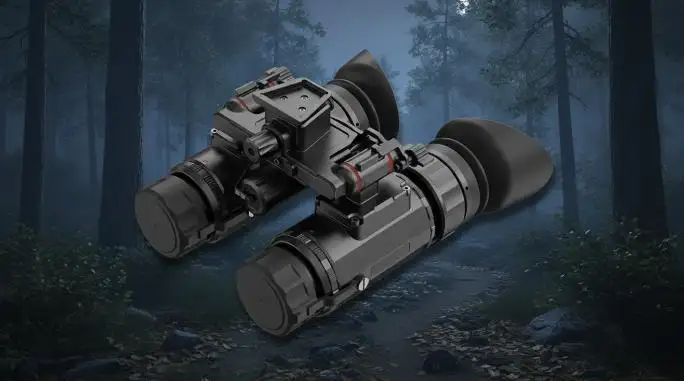
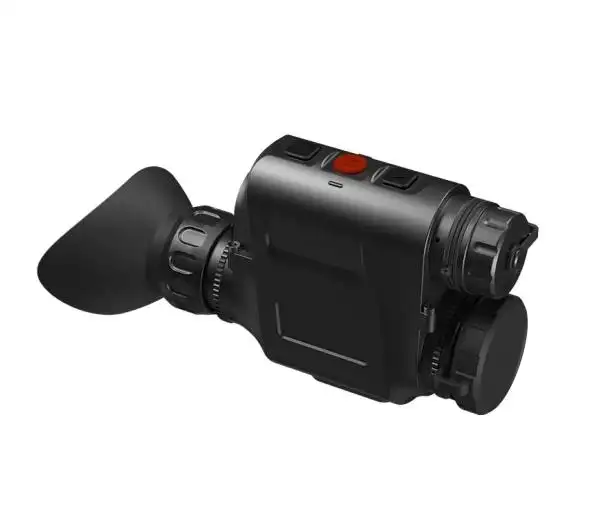
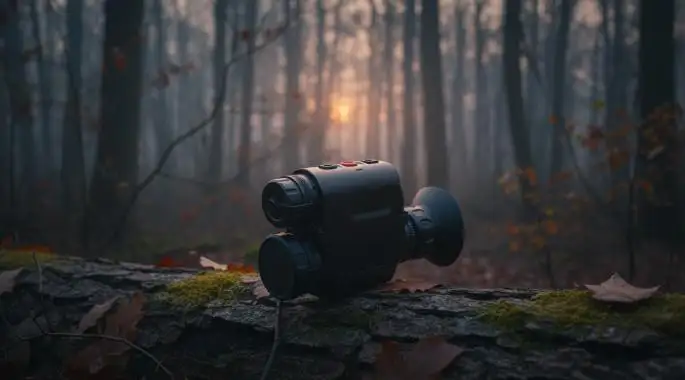
Night Vision for Law Enforcement gives officers the confidence to see, interpret, and move through darkness with control. Cities don't go quiet after sunset, and rural zones don't wait for daylight; calls continue, traffic flows, and searches shift from bright storefronts to unlit fields in minutes. Reliable night vision turns those transitions into manageable tasks, not gambles. Today's helmet-mounted digital systems broaden the view, trim weight, and harden against weather, helping agencies sustain tempo and safety across alleys, highways, parklands, and everything in between.
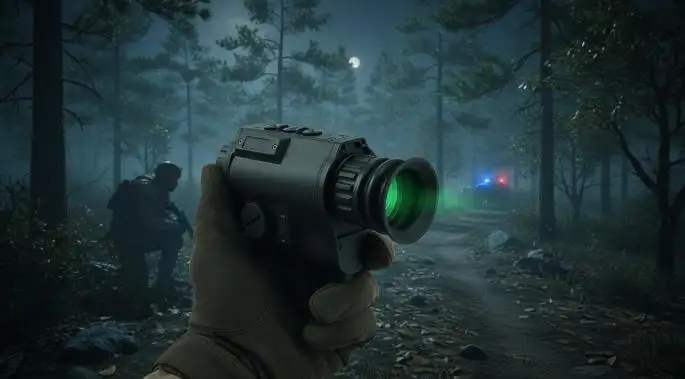
What Is a Night Vision for Law Enforcement
At a practical level, Night Vision for Law Enforcement is the intersection of optics, sensors, and human factors. The science starts with spectral reach - the band of wavelengths a device can use. Systems sensitive across roughly 400 - 1100 nm gather faint ambient light from moonlit streets and starlit trails, and they can add controlled infrared illumination when ambient photons aren't enough. This wider sensitivity stabilizes contrast under mixed lighting, so the image doesn't collapse when a scene shifts from LED signage and reflective glass to shadowed stairwells or unlit service roads.
But the picture isn't only about the sensor. Field of view shapes how the brain assembles a scene during movement. Weight determines whether an officer keeps a natural gait through a long shift or fights creeping neck fatigue by hour three. Controls - especially those operable with gloves - decide how fast users can adjust brightness or IR assistance without breaking focus. Robust sealing is the quiet partner: dust, rain, and occasional immersion are part of night work, and a poorly sealed device is a point of failure waiting for a storm or a puddle.
u What is IP67 Protection for Law-Enforcement Night Vision?
IP67 is an internationally recognized ingress protection rating (IEC 60529) that certifies how well a device withstands solids and liquids.
• The "6" rating is dust-tight - no particulate ingress to obscure imagery or compromise sensor/controls integrity.
• The "7" rating is temporary immersion-ready - up to 1 m for 30 minutes - safeguarding internal electronics in wet, high-risk environments.
For Night Vision in Law Enforcement, IP67 translates into operational certainty. Officers routinely move through construction dust, urban grit, wet stairwells, basements, tunnels, and rain-soaked perimeters. It's not a dive rating, but it's the right level of rugged sealing for real-world variables - keeping gear dependable without excess bulk.
• Dust-tight (6): Blocks fine particulates that can scratch lenses, degrade sensors, or foul switches.
• Water resistance (7): Withstands temporary immersion; protects during heavy rain, splashes, and decon rinses.
• Consistent performance: Stable image quality and controls across shifting weather and terrain.
• Fewer failures: Reduced moisture ingress lowers maintenance and extends service intervals.
• Mission continuity: Seamless transitions from dry streets to flooded alleys without swapping gear.
u What Lightweight Means for Law-Enforcement Night Vision?
Lightweight, in head-mounted night vision, means a device that minimizes mass and optimizes balance so officers can wear it for extended shifts without fatigue.
Every gram on the helmet multiplies torque on the neck; lighter, better-balanced optics cut strain, wobble, and hot spots, preserving image stability while running, climbing, or driving.
Lighter gear also simplifies loadouts, leaves room for comms and eye protection, and lowers injury risk during long operations. Crucially, "lightweight" should not trade durability or runtime: modern designs deliver rugged IP67 sealing and all-night power while keeping weight down, so officers stay effective from first contact to final report.
• Less neck strain; longer wear
• Faster target acquisition and movement
• Stable imagery under dynamic motion
• Safer ergonomics; fewer injuries
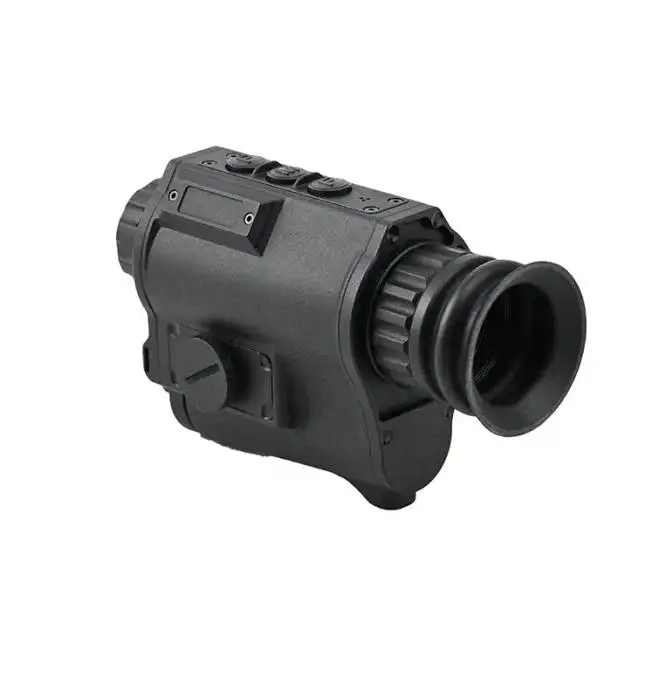
u Modern Vs. Traditional Night Vision
Older analog intensifiers were workhorses, but they carried constraints: narrow viewing windows, a tunnel-like effect, and uneven performance in bad weather. Digital night vision platforms reflect operational realities - built to keep officers effective in mixed lighting and rough weather:
• Wider FOV, less tunnel: Maintain orientation and situational awareness during movement and contact.
• IP67 protection: Dust-tight, immersion-resistant sealing keeps the platform operational in rain, floods, and debris.
• Quick diopter compensation (±4D): Supports different eyesight without glasses, maintaining clarity and comfort.
• IR intensity modes and granular brightness steps: Keep imagery clear in city glow, under moonlight, and in low-reflective conditions.
In the field, digital systems mean rapid identification, efficient movement, and steady confidence when illumination is thin. For Night Vision for Law Enforcement, modern digital builds deliver clear gains without trading away resilience.
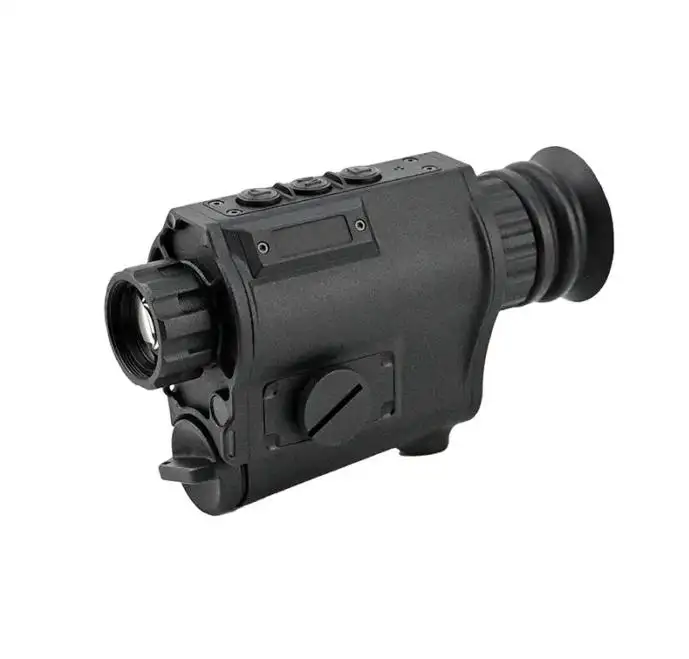
Real-World Challenges and Performance Needs
Some truths about performance only show up in the dark and under pressure - far beyond the spec sheet. Picture a foot pursuit that moves from a fluorescent foyer to a misty alley and then a dark lot with headlights sweeping across glass. Without broad spectral sensitivity and fine control, image quality will pulse and smear at the worst time. Consider hours spent on perimeters: heavy housings subtly nudge posture, making fatigue a factor even before the call ends. If sealing fails, dust and moisture creep inside and reliability becomes guesswork. And a battery swap at the wrong moment can interrupt momentum and introduce risk.
Mounting and control placement shape outcomes, too. Gloves, rain, and stress demand controls that are discoverable by touch, distinct enough to avoid accidental activation, and consistent across units. Helmets differ between agencies, so alignment and balance must remain stable through climbing, crouching, and vehicle ingress and egress. Over longer deployments, comfort turns into performance. Lightweight assemblies help officers maintain steady movement, gather more peripheral information, and keep attention on the mission rather than the gear.
u Less-Known Considerations that Shape Outcomes
Operational details that rarely headline marketing copy often decide whether night vision helps or hinders.
• Dark adaptation: Excessive screen brightness can slow the eyes' adjustment to darkness. Precision brightness management preserves microcontrast and reduces glare-driven fatigue.
• Weather backscatter: Water droplets scatter IR back into the frame. Choose IR wavelength/output to tame backscatter and keep the scene clear.
• Spectral bumps: High-pressure sodium and certain LED lighting yield uneven spectral peaks. A 400 - 1100 nm sensitivity range helps stabilize imaging when multiple light sources compete.
• Diopter alignment: Slight mismatches in diopter settings produce eye strain and erode fine detail recognition. Precise adjustment with a generous range reduces workload over time.
• Field geometry: A wider field of view supports vestibular stability, aids tracking of peripheral motion, and cuts down on misjudgment in tight corridors and stairwells.
None of these are cosmetic. They determine whether Night Vision for Law Enforcement functions as a force multiplier or becomes an extra layer of complexity.
NVG70S - IP67 Protection and Lightweight Helmet NVG
The NVG70S is designed for Night Vision for Law Enforcement where clarity, endurance, and environmental protection must coexist. Its balance centers on natural head movement and controls that make sense by touch, so users can transition from climbing to cover to vehicle entry without mental overhead. Imaging remains steady as lighting shifts from city edges to moonlit fields and low-reflective surfaces, and the interface is tuned to keep fine detail visible without adding cognitive burden.
The NVG70S maps to the priorities agencies care about. A broad field of view enhances situational awareness and cuts the tunnel effect during movement. Low mass limits neck strain across long assignments. Diopter adjustability supports diverse eyesight profiles, enabling precise focus with minimal fiddling. IP67 sealing protects against dust, rain, and short-term immersion - conditions officers encounter, not hypotheticals. Together, those traits set a practical baseline for dependable patrol and tactical work.
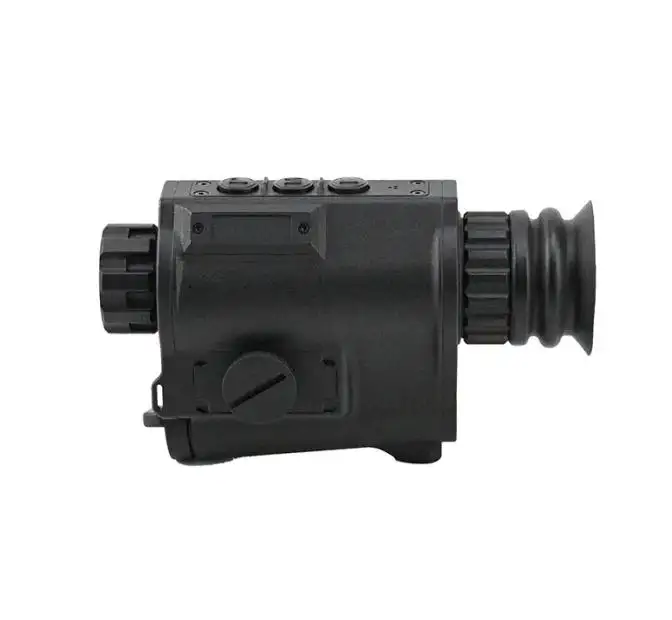
u Key Specifications and Operational Benefits
• Field of view: 50°, giving officers a fuller picture and better orientation during searches and transitions.
• 19.8 mm objective lens provides mid-distance identification while preserving field geometry.
• Working time exceeding 7 hours supports extended operations and reduces power logistics.
• System mass of 365 g maintains neutral cervical posture and mobility.
• IP67 ingress protection guarantees dust exclusion and tolerance to temporary immersion.
• Diopter adjustment from −4D to +4D enables individualized focus control, lowering visual workload.
• Spectral sensitivity spanning 400 - 1100 nm ensures continuity across ambient urban light and auxiliary IR.
• Image resolution: 800×600, tuned for stable clarity and dependable identification in practical law enforcement tasks.
• Battery: One 18650 rechargeable lithium battery for routine use, with support for two CR123A/16340 cells when a quick substitute is needed.
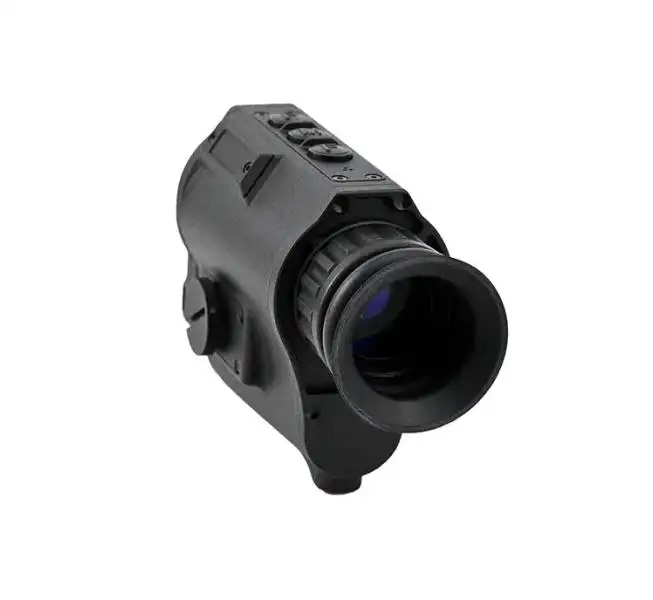
Beyond the numbers, the NVG70S fits day-to-day workflow. Helmets aren't passive mounts; they're dynamic platforms. The housing is balanced to reduce neck torque and align cleanly with common mounting interfaces. Controls have tactile cues for quick confirmation, allowing adjustments without taking eyes off the scene. Display brightness can be fine-tuned to protect dark adaptation and preserve micro-contrast on low-reflective surfaces. Multiple IR modes cover patrol, navigation, and training, so officers can tune the device to the mission at hand rather than compromise across all tasks.
Night Vision for Law Enforcement is not a single spec or switch. It's the harmony of view geometry, optical tuning, sealing, endurance, and human-centered control. The NVG70S brings that balance together, addressing tunnel perception, fatigue, mixed lighting, and weather exposure - the everyday issues that shape outcomes more than any one number on a spec sheet.
Call to Action
Ready to elevate your night operations with clarity and protection you can trust? Request a live demo of the NVG70S, review deployment kits, and schedule operator training tailored to your mission profile. Connect with our technical and sales team to assess Night Vision for Law Enforcement solutions that align with your agency's standards, procurement roadmap, and long-term readiness.


