


End Narrow Views and Image Noise: Military-Grade Night Vision for Outdoor Adventure
Night Vision for Outdoor Adventure demands a clear, wide, and stable view when the sun goes down, without the tunnel vision and grain that erase detail and slow decisions. In the analysis that follows, I will define the operational meaning of "military-grade" for night vision, examine how narrow fields of view and image noise undermine situational awareness, and present a focused review of the our Night Vision for Outdoor Adventure specifications and their practical implications. A pivotal capability ultimately determines whether darkness becomes a liability or an advantage - yet it is often overlooked until the moment it matters most.
Defining Military-Grade for Night Vision for Outdoor Adventure
u What Military-Grade Means
"Military-grade" is not a slogan. It denotes measurable performance and durability against defined standards for optical clarity, detection range, mechanical robustness, and environmental protection. For Night Vision for Outdoor Adventure, military-grade means a wide, stable field of view that preserves situational awareness; a clean image with minimal noise under starlight and partial moonlight; and reliable operation across cold, heat, dust, and rain. It means the device slots into your current helmet mount and power system and keeps running long enough for patrols, training blocks, and hours of outdoor movement after dark.
In real terms, military-grade night vision hinges on three pillars:
•Operational clarity: solid DRI benchmarks delivered by quality optics and precise display resolution.
•Temporal stability: refresh rates that prevent blur and lag during aggressive head turns or dynamic movement.
•Survivability: IP67 sealing and reinforced interfaces that hold up to dust, water, and impact in the field.
Why Narrow Views and Image Noise Hold You Back
Narrow views compress the world into a tunnel. With a small field of view, peripheral cues vanish, target hand-offs slow, and navigation becomes tiring. The cognitive load rises as the brain compensates for missing context. Image noise adds a second handicap. Grain and scintillation mask edges, hide terrain features, and make moving subjects harder to track. Under very low light, photon shot noise becomes dominant; if the system cannot manage it, micro-details blur into a grey haze.
The downstream effects are predictable:
•Reduced situational awareness: fewer peripheral signals reach the eye, so threats and obstacles surprise the user.
•Slower decisions: the brain spends time cleaning a noisy image, delaying recognition.
•Higher fatigue: constant scanning with a narrow, unstable view increases neck movement and visual strain.
u Modern Vs Traditional Night Vision
Traditional image-intensifier tube devices (Gen2+/Gen3) remain effective, but they carry limitations for Night Vision for Outdoor Adventure. Typical fields of view hover around 40°. Tube scintillation introduces noise in low light. Runtime depends on specific power packs and often requires careful management. Costs are high, and maintenance can be specialized.
Digital night vision has matured to solve many of these pain points. Wider optics can deliver expanded fields of view. High, selectable frame rates provide smoother motion. Clean digital displays reduce perceived noise and improve edge definition. Power efficiency extends runtime. And price-performance has shifted; robust digital systems now rival classic analog clarity in many outdoor scenarios while dramatically lowering acquisition cost.
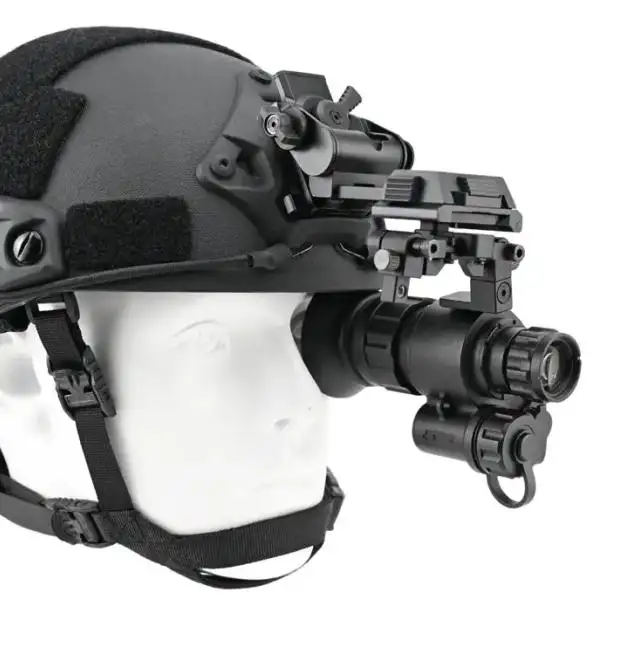
NVG90 Pro: A Practical Path To Military-Grade Capability
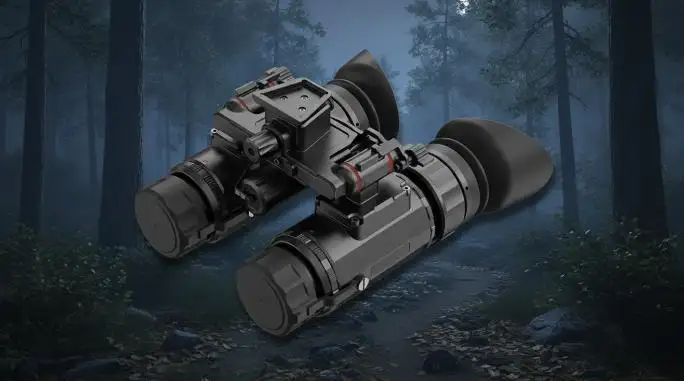
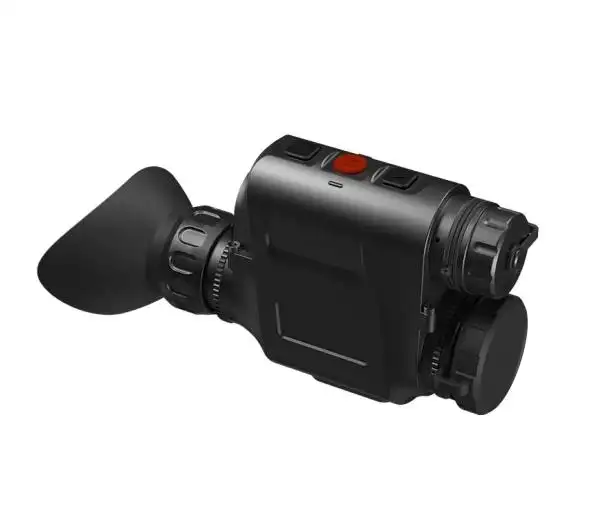
The NVG90 PRO is a digital night vision goggles platform engineered for users who expect military-grade outcomes without the traditional cost of tube-based devices. It combines a 19.8 mm optical system with a wide 50° field of view to restore peripheral awareness. Its 800×600 digital display produces a clean image that preserves terrain texture, movement cues, and equipment outlines. For Night Vision for Outdoor Adventure, this balance of width and clarity directly addresses tunnel vision and grain.
High frame rate options (50 Hz or 100 Hz, with customization at 60 Hz or 120 Hz) improve motion stability. Rapid head turns, sprinting, or scanning a ridgeline demand temporal resolution; higher refresh rates reduce blur and help users lock onto moving subjects. Efficient digital architecture yields more than 18 hours of continuous use, a practical advantage for long patrols or multi-stage outdoor routes. Multi-battery compatibility (16340, CR123A, and 18650) simplifies logistics and mitigates supply risk.
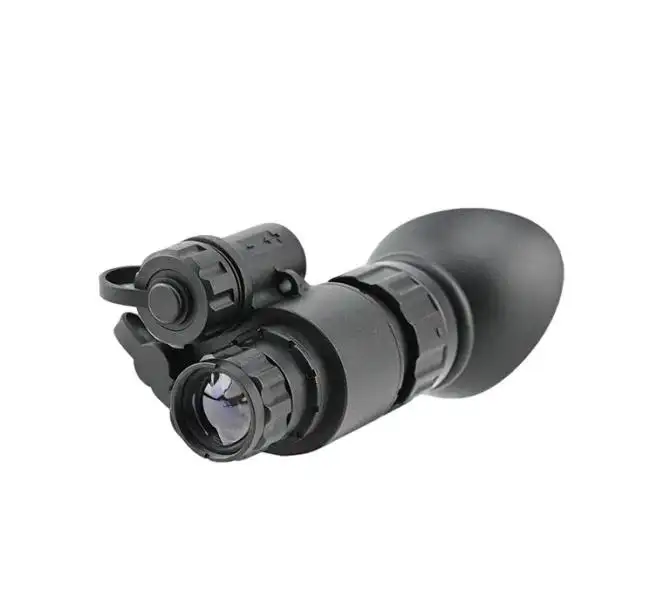
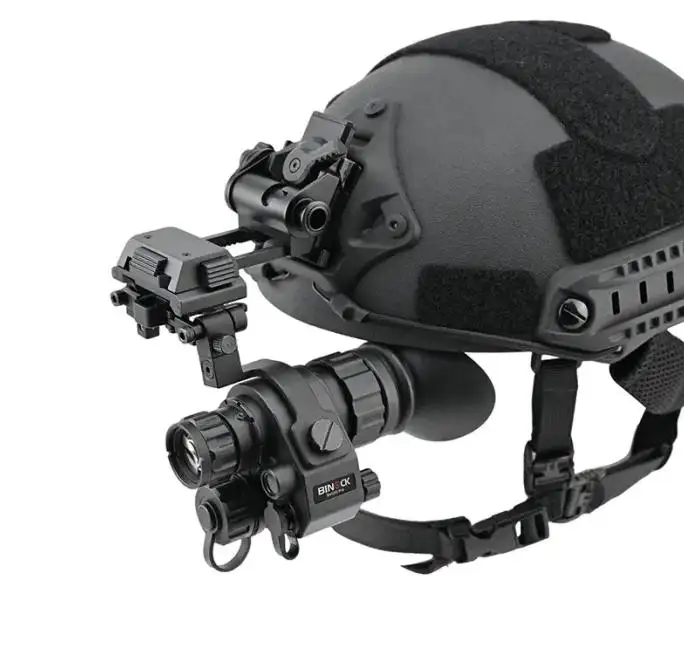
Durability matters in the field. An IP67-rated housing resists dust and water ingress. The standard Wilcox mechanical interface integrates with modern helmet setups, enabling proper eye relief and stable alignment. At a minimal 268 g, the NVG90 PRO reduces the burden on the neck and keeps comfort high across long-duration tasks, even with helmet-mounted accessories like radios, cameras, or counterweights.
- DRI sets the performance boundaries:
•Human DRI: detection up to 935 m, recognition up to 468 m, identification up to 234 m under representative conditions.
These standards guide standoff choices, observation post placement, and movement plans that track with actual capability.
In Night Vision for Outdoor Adventure, a solid DRI grasp is a quiet advantage - most failures occur when identification is pursued at detection-suitable ranges.
These benchmarks let planners set safe standoff, select effective observation positions, and design movements that align with device performance. In Night Vision for Outdoor Adventure, DRI awareness is a quiet advantage - failures often result from seeking identification at distances appropriate only for detection.
From Spec Sheet to Field Performance:
•50° FOV to broaden situational context and reduce tunnel effect.
•800x600 screen resolution for crisp contours and trustworthy recognition.
•50/100 Hz baseline, adjustable to 60/120 Hz for smoother motion and tracking.
•Over 18 hours of operation, with multi-battery support for flexible resupply.
•IP67 build and Wilcox interface for rugged helmet integration.
•268 g weight to limit fatigue during long movements.
Field Usage Pointers and What Comes Next
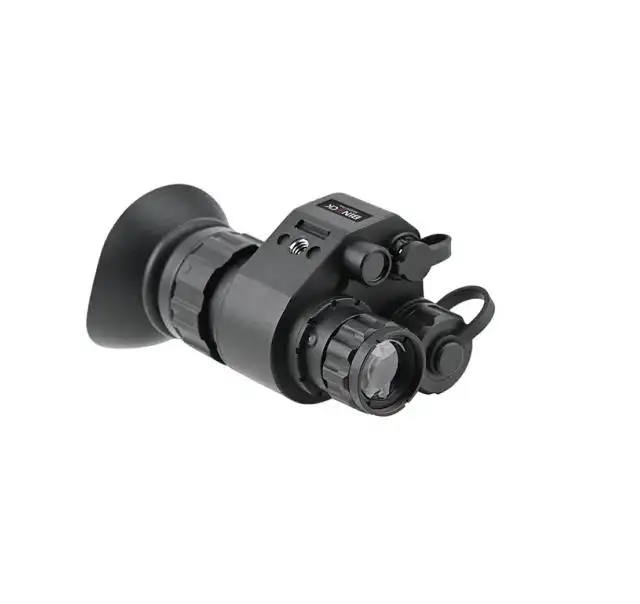
Night Vision for Outdoor Adventure depends on smart setup. Adjust diopters per eye in daylight or controlled light for razor-sharp focus - this reduces strain later. Align the optics through the Wilcox mount to center the axis, minimize tilt, and set IPD. Check helmet balance for even weight. Move forward today: request a configuration review or place a pre-order.
Frame rate selection is more than a comfort choice. Lower refresh rates extend runtime; higher refresh rates deliver steadier motion cues in complex terrain or during fast tracking. In forests and narrow paths, higher rates help edges remain continuous through foliage and contrast shifts. On open ground, lower rates can be adequate and save energy.
For cold conditions, lithium chemistry is advantageous. 18650 rechargeables enable longer stints with consistent recharge planning, whereas CR123A disposables broaden resupply options. IP67 protection depends on seal discipline: keep battery doors and mounts clean to maintain gasket effectiveness. A brief inspection before exposure to rain or sand prevents avoidable failures.
A few less-known practices improve image quality:
•Manage local light sources. Avoid direct exposure to bright LEDs or vehicle beams; digital sensors handle dynamic range well, but stray glare still reduces contrast.
•Preserve dark adaptation. Minimize sudden white light use to keep the eye's sensitivity aligned with night conditions.
•Stay at true 1x optical magnification for navigation. It preserves natural depth cues and gait stability, reducing trip risk on uneven ground.
•Use DRI thinking in route planning. Do not rely on identification ranges when the mission only requires detection; reserve identification for closer standoff points or controlled observation posts.
The NVG90 PRO demonstrates that military-grade clarity, stability, and durability no longer require a premium military budget. It pairs wide optics, clean imaging, robust build quality, and long runtime to remove the two barriers that most often compromise night operations: narrow views and image noise.
Call to Action
If you are ready to end tunnel vision and grain in Night Vision for Outdoor Adventure, schedule a field demo of the NVG90 PRO or contact our team for a technical consultation. Evaluate the device against your routes, lighting conditions, and gear. A short session under real night skies will show how wider views and cleaner images accelerate decisions, improve safety, and expand what is possible after dark.


