


Night Vision for Rescue Operations: Rescue Challenges & Practical Solution Guide
Night Vision for Rescue Operations is changing the way responders work after sundown. Instead of guessing at shapes and shadows, teams can convert difficult scenes into usable, timely information that keeps searches moving and people safer. Subsequent sections examine the principles, constraints, and IR methodologies of Night Vision for Rescue Operations, introduce our Night Vision for Rescue Operations through specifications, integration, and durability, and codify deployment checklists and training techniques. Yet a decisive limitation - quietly shaping detection speed and safety - remains concealed; its implications are revealed in the conclusion.
What Is the Scope of Night Vision for Rescue Operations?
Night Vision for Rescue Operations spans the full nighttime response cycle - from initial detection and approach to stabilization, extraction, and handover - across diverse terrains and incident types. It covers urban blackouts, wilderness and alpine SAR, maritime and flood recoveries, post-earthquake collapses, wildfire smoke environments, medevac landing-zone control, and confined-space industrial incidents.
• Scenarios: urban, suburban, wilderness, alpine, maritime, flood, post-disaster, and industrial confined spaces
• Tasks: pathfinding, hazard screening, victim location and triage, perimeter security, signaling/marking, LZ assessment, rope/swift-water operations
• Equipment: helmet-mounted NVGs (e.g., binocular/monocular), handheld viewers, IR strobes/markers, eye-safe lasers, thermal overlays
• Integration: UAS feeds, GPS/digital maps, team radios, location beacons, incident command platforms
• Constraints: smoke, fog, heavy precipitation, glare, particulates, reflective surfaces, battery endurance
• Compliance: light-discipline SOPs, eye safety standards, privacy law, airspace rules; excludes daylight-only and ungoverned surveillance use
What Night Vision for Rescue Operations Actually Does
At its best, Night Vision for Rescue Operations blends sensitive digital sensors, near-infrared assistance, and high-contrast imaging to pull detail out of low light. That detail isn't just "nice to have” - it shortens search time, cuts down on missteps, and helps teams interpret terrain and movement under pressure. Seconds matter in rescue. The ability to spot subtle motion, read reflective threads on jackets, and judge the edge of a ridge can change outcomes.
A crucial idea behind good night vision is optical balance. A broad field of view lets you hold situational awareness without tunnel vision. A longer focal length preserves fine detail at medium distances where subjects are often found. When those two are matched correctly, responders can scan quickly yet still resolve tracks, gear tags, or rope lines. That balance sits at the heart of Night Vision for Rescue Operations and is why the right optics matter more than headline magnification.
u The Real Challenges at Night
Darkness amplifies familiar risks and introduces new ones. Search teams regularly contend with:
• Low contrast caused by rain, fog, dust, or smoke that turns everything gray.
• Glare from flashlights, headlamps, or vehicle lights that wipes out dark adaptation.
• Tricky terrain where rocks, roots, edges, and drop-offs are hard to read.
• Motion blur when subjects or rescuers move quickly or when panning to cover ground.
• Fatigue and cognitive overload during long deployments in heat or cold.
• Confusion between thermal and night vision; thermal highlights heat signatures, while night vision amplifies available light. They serve different use cases and sometimes need to be used side by side.
One challenge that's easy to miss is near-field work. Rescue isn't all scanning distant ridgelines. It includes triage at arm's length, reading labels, checking maps, and verifying equipment. If a device cannot focus close, teams end up pulling the goggles off and on, which slows tasks and introduces errors. Night Vision for Rescue Operations is most useful when it supports both scanning and close work without constant adjustments.
Why Modern Night Vision Beats White-Light Searches
Flooding a scene with white light seems straightforward: switch on, sweep, repeat. It's cheap and familiar, but it collapses shadows into glare, exhausts batteries, and often announces your position to subjects or wildlife - sometimes with unintended consequences. It also ruins dark adaptation for the entire team.
Modern Night Vision for Rescue Operations takes a different approach. Controlled IR illumination paired with high frame-rate imaging and a crisp grayscale display preserves contrast without broadcasting that you're there. Black-and-white rendering makes edges and textures pop. Helmet mounting keeps hands free for rope work, patient care, and navigation. Instead of blinding the scene, you quietly interpret it, which leads to faster detection, better judgment, and a lower signature in sensitive missions.
BINOCK NVG90: A Practical System Built for Real Rescues
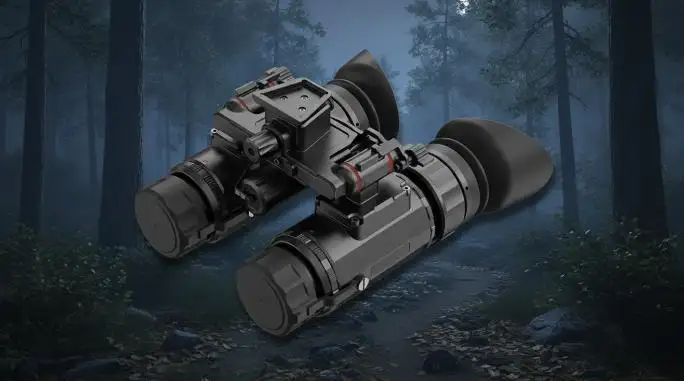
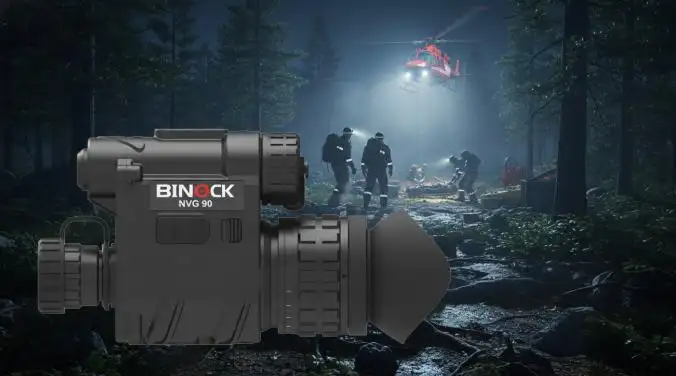
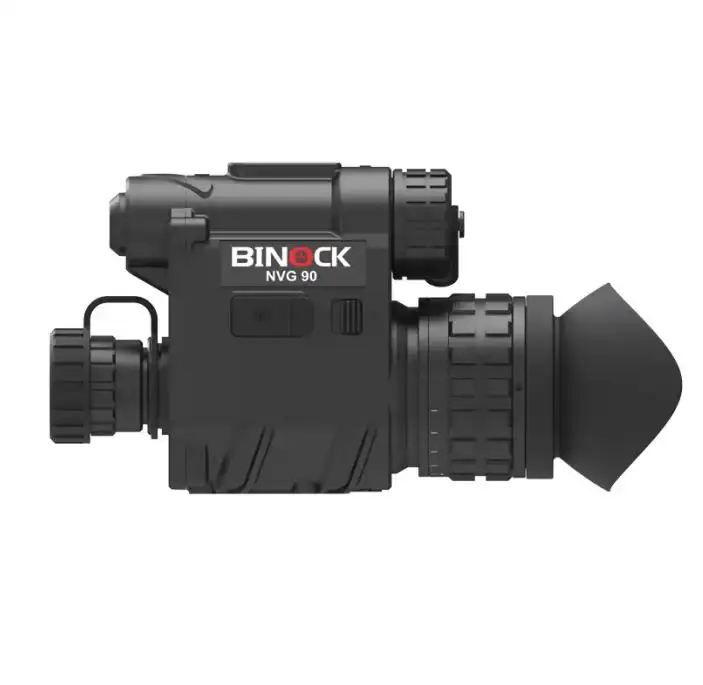
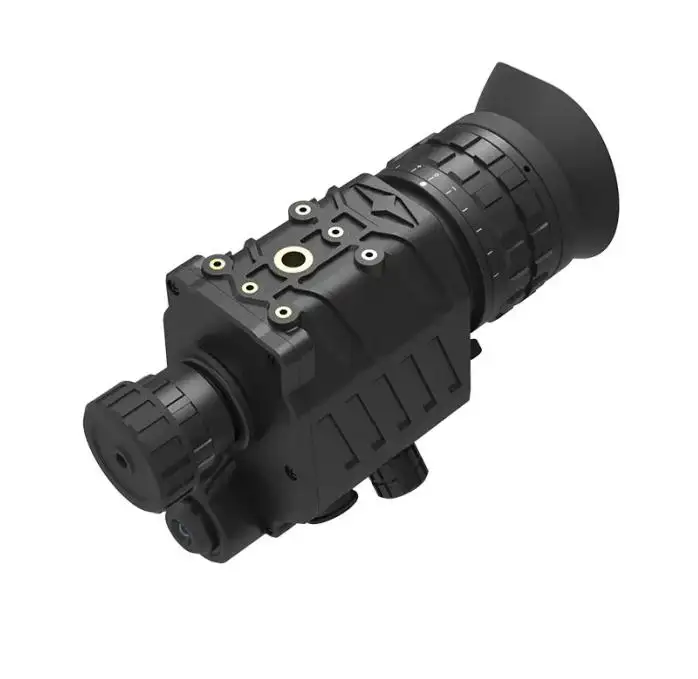
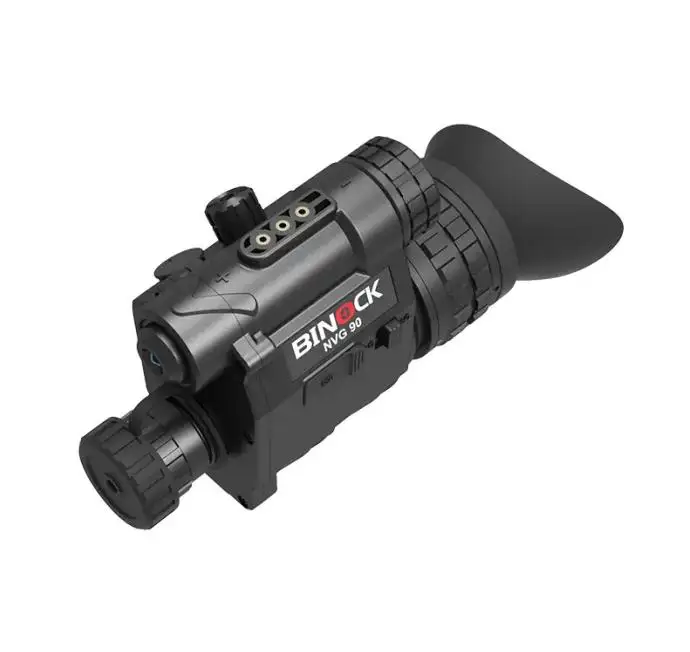
Rescue teams need kit that holds up. BINOCK's NVG90 is a helmet-mounted night vision platform designed for outdoor tactical simulation, professional patrols, border monitoring, emergency search and rescue, and law enforcement. Its optical pairing - a 21.7 mm objective focal length with a 45° field of view - favors the optical balance described above, keeping situational awareness wide while making medium-distance details readable.
The imaging pipeline runs on a 1280x960 high-definition digital sensor that renders in crisp grayscale. Dual frame-rate modes give you smoother imaging when you pan or track motion, which helps reduce blur. An integrated 940 nm IR illuminator provides low-signature support - typically less noticeable to people and animals than shorter-wavelength emitters - so teams can maintain discretion when required. Crucially, minimum focusing distance is 500 mm. That means responders can read labels, check equipment, sign off tags, or treat injuries without removing the NVG90.
Brightness is adjustable in multiple steps, letting users favor contrast over raw lumens in fog, dust, or smoke. Optical magnification is 1X, preserving natural scale for navigation and rope management. Adjustable diopter settings help match different eyesight profiles and reduce eye strain during extended missions. Together, these choices serve the practical heart of Night Vision for Rescue Operations: see more, guess less, and move safely.
Integration and Durability that Don't Get in the Way
The NVG90 is engineered as night vision goggles for helmet mounting and interfaces with the Wilcox tactical standard. That bayonet mount keeps the unit stable while running, climbing, or crawling and integrates cleanly with most tactical helmets. At 356 g, the front-end weight is balanced for long wear without constantly fighting your neck muscles.
Protection is IP54, guarding against dust and splashing water - more than enough for the unpredictable mix of weather and debris in field searches. Operating temperature spans −20°C to +55°C, and the device has been tested for more than 4 hours of continuous use across that 75°C ambient range on a single 18650 rechargeable lithium battery. A Type-C connector simplifies charging and data access for modern kits and reduces cable chaos.
Images render in black and white to heighten contrast and edge recognition. Language options support multilingual teams, while OEM/ODM customization lets agencies add logos and tailor packaging for consistent identity across fleets and partner organizations. Support is straightforward: a one-year warranty covers manufacturing-related faults with repair or replacement after verification. Technical support and equipment debugging help teams tune performance before deployment.
u Where it Fits
Use cases for Night Vision for Rescue Operations with the NVG90 include border patrol, security monitoring, emergency search and rescue, outdoor law enforcement, field patrols, and animal monitoring. In each scenario, the device shortens detection time, improves judgment under pressure, and helps maintain team safety by keeping more information available without compromising position.
u A Quick Deployment Plan that Works
Before you head out, write down mission priorities. Decide whether the emphasis is detection range, near-field tasks, or movement speed. Then work through a simple checklist:
• Configure NVG90 brightness and IR output for the terrain and weather. Favor contrast, not just brightness.
• Verify helmet fit, Wilcox interface lock-up, and clean cable routing to the Type-C port.
• Set diopters for each user and confirm eye relief with and without eyewear.
• Test both frame-rate modes and pick the smoother option for fast panning.
• Confirm near-field focus at 500 mm for medical kits, maps, and tags.
• Charge 18650 cells, and plan battery rotations beyond 4 hours, especially in extreme temperatures.
• Run a short night rehearsal to validate spacing, hand signals, and comms.
• Assign scanning sectors and near-field roles to avoid overlap and missed areas.
• Log baseline ambient conditions (fog, haze, rain) to guide brightness and IR adjustments during the mission.
u Field Techniques that Pay Off
Small habits compound into safer, faster work. These tips align with how Night Vision for Rescue Operations succeeds on the ground:
• Read terrain in grayscale. Texture and contour stand out; use them to judge footing on loose surfaces.
• Scan with a steady cadence. Slow, deliberate sweeps expose faint motion and reflective stitching that quick passes miss.
• Keep light discipline tight. Avoid white-light bursts unless necessary. 940 nm IR preserves stealth and tends to be less disruptive to wildlife.
• Chase contrast, not lumens. In fog or dust, more brightness can flatten detail. Adjust in small increments and re-evaluate.
• Designate a near-field specialist. One team member set up for close work (maps, triage, equipment checks) exploits the 500 mm focus advantage.
• Rotate batteries proactively. Cold suppresses output; heat stresses cells. Don't wait for the first flicker.
• Train with the helmet mount. Durable stabilization keeps optics locked in during rapid movement, vertical access, and confined-space crawl, cutting misalignment and strain. Document haze layers, glare sources, and reflective clutter; these insights inform better setup and yield stronger results next time.
Call to Action
Elevate and standardize your NV program with BINOCK NVG90. Arrange a field demo, engage in an OEM/ODM design consult, or schedule technical onboarding to finalize configurations pre-deployment. Get in touch to tune NVG90 for your missions and deploy tonight, not someday.


