


Is Night Vision Monocular NVG50 Worth Buying? —— See its true cost-effectiveness from two sets of core linkage parameters

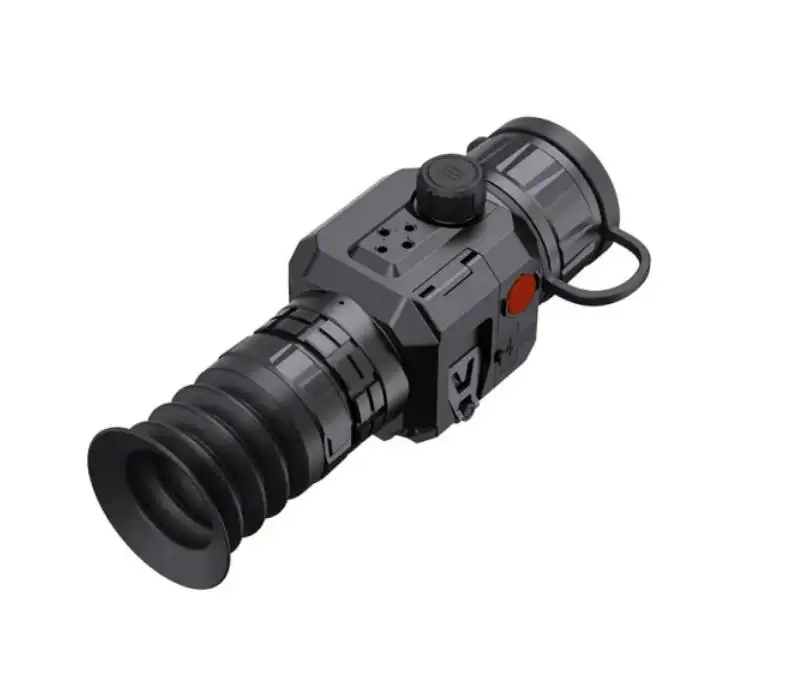
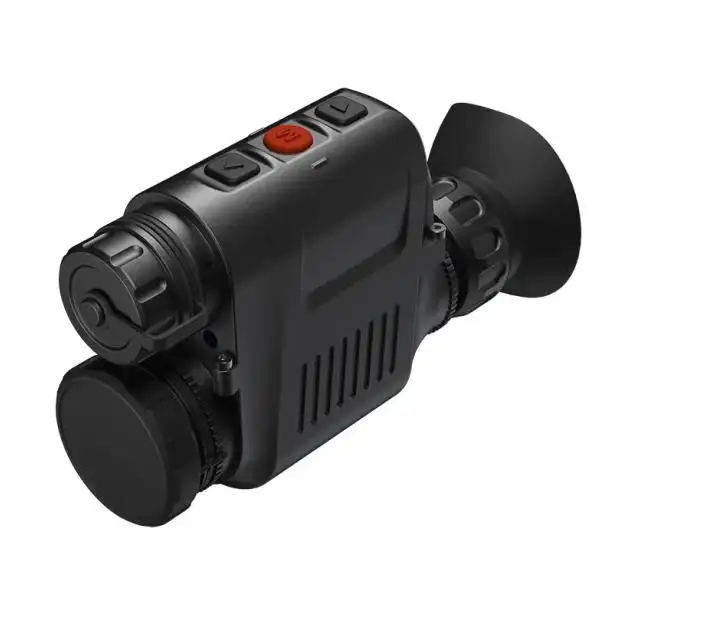
In the current night vision monocular market, many users face the same problem when choosing products: the parameters look similar, but there is a big price difference. So, what is the real difference? If you only look at resolution, magnification, or battery life, it is easy to be misled by a single indicator. In fact, whether a night vision device is worth it or not depends more on whether the key parameters are effectively linked and whether they can maximize their value in real usage scenarios.
NVG50 is officially a night vision monocular that excels in parameter synergy. In this article, we will start with two highly correlated parameter combinations to explain where its cost-effectiveness is reflected.
Linkage of NVG50 Night Vision Monocular Imaging System
Resolution, field of view, and optical magnification decided to 'see clearly and see everything’
In optical devices, the imaging experience is never determined by a single parameter alone, but rather the result of multiple core parameters working together. NVG50 is very practical in this regard.
Firstly, the display resolution is 2560x1440. This resolution is not meant to pursue exaggerated numbers, but rather to strike a balance between "clarity" and "power control". When observed at wild night, it is sufficient to present clear contour details, such as animal limb movements, changes in personnel contours, or target direction judgments, without causing noise amplification or excessive image burden due to high resolution.
Secondly, the resolution is linked to a FOV of 1x optical magnification +45 °. Many night vision products, in order to emphasize "seeing far", will make efforts in optical magnification, but the result is often that the field of view is severely compressed, which is not conducive to actual search and judgment. The NVG50 night vision monocular adopts 1x optical magnification and a wide field of view of 45 °, allowing users to obtain a natural viewing angle closer to the human eye when wearing or holding it. This combination is particularly suitable for real-life scenarios such as patrol, wildlife observation, and path recognition.
On this basis, the NVG50 night vision monocular is supplemented by a digital magnification of 1-4x, rather than the main feature. This design concept is very rational - the basic image of the optical system is complex, "stable, realistic, and low distortion", and the digital magnification is only used when the target needs to be zoomed in. The linkage of this imaging system enables BINOCK NVG50 to provide sufficient details without sacrificing overall observation efficiency among night vision optics in the same price range, which is an important manifestation of cost-effectiveness.

Night Availability Linkage
Infrared system & low light performance & refresh rate deciding whether it can truly be used for a long time
In addition to the parameter linkage of the first set of imaging systems mentioned above, another set of parameters that directly affect the value of use comes from sustainable practicality in nighttime environments. This is often overlooked in parameter tables, but it is crucial in practical use.
NVG50 adopts 940nm infrared fill light, which is a very noteworthy choice. Compared with the common 850nm infrared, 940nm is less noticeable in the wild, which is a very practical advantage for outdoor observation, security patrol, or users who require concealment. Infrared fill light itself is not a selling point, whether fill light "does not expose oneself" is the key.
The value of infrared systems must be linked to the low light imaging capability of the equipment. The maximum visible distance of NVG50 night vision monocular in a starlight environment can reach 300-400 meters, which means that in most natural night conditions, users do not need to turn on infrared fill light for a long time to complete basic observations. This not only enhances the concealment of use, ensuring that wild animals are not disturbed during night observations, but also directly reduces energy consumption.
In addition, BINOCK's flagship product NVG50 offers a frame rate of 30HZ/40HZ and comes with a sport mode. When moving and observing at night, insufficient refresh rate can cause image delay and ghosting, which in turn increases visual fatigue. The NVG50 ensures picture coherence through higher frame rates in night sports mode, making "clear" not just a static performance.
The design logic of jointly reducing the dependence on infrared in low light environments, pursuing concealment, and smooth motion modes is not common in night vision monocular of the same level, and is also the second core source of NVG50 cost-effectiveness.
Not Piling up Parameters, but Serving Long-Term Use
In addition to the two core linkages mentioned above, the NVG50 also has some "seemingly ordinary" features that have added bonus points for practical use. For example, IPX7 protection level, working temperature range from -25 ℃ to+50 ℃, etc. Although these configurations are basic for night vision monocular observation in the wild, they all point to the same goal: lowering the threshold for use and enhancing device life. For users who truly need night vision optical equipment, stability, reliability, and usability are far more important than just one or two exaggerated parameters.
Conclusion
BINOCK's flagship product NVG50 is not a product that wins solely based on parameters, but a night vision monocular that establishes a reasonable linkage between key parameters. Whether it's imaging systems or nighttime usability design, it embodies a very mature product concept: not pursuing gimmicks that exaggerate parameters, but optimizing around real usage scenarios. If you are concerned about a night vision device that is stable and reliable in practical applications, with a high degree of price and performance matching, then the cost-effectiveness of NVG50 is worth serious consideration.


