


Best Night Vision Goggles For Camping (2026): Starlight Clarity and Field Use

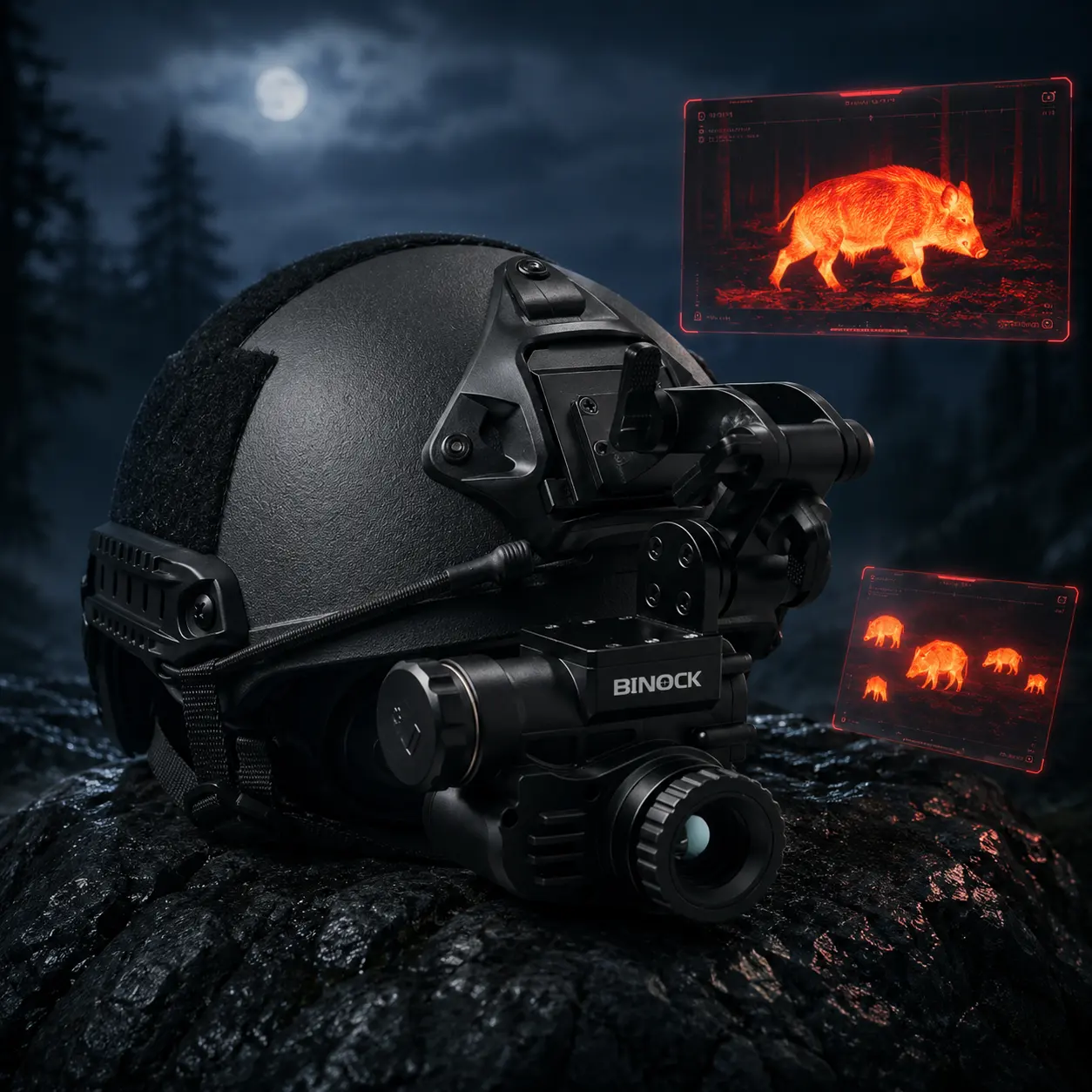

The Night Vision Goggles for Camping are no longer a "nice-to-have" for serious outdoor trips. In 2026, they are a practical safety tool when trails, campsites, and wildlife become harder to read after dark. The best device helps you move with fewer slips, find gear without blasting a headlamp, and stay aware of motion beyond the firelight.
At Binock, we design night optics around real field behavior—walking, scanning, checking gear, and responding to changing light. Camping is not "night patrol," but the conditions overlap: uneven ground, low contrast, and quick movement at the edge of your view. That is why smart buyers do not start with dramatic zoom numbers. They start with one question:
Will I still see edges, shapes, and movement clearly under weak starlight—without fighting settings all night?
Why Starlight Clarity Matters for Camping Safety
Most camping nights are not truly pitch black. You usually get partial moon, a dim sky, scattered reflections off water, or a little ambient light from distant roads. But under trees, shadows become layered. Rocks and roots lose definition. The problem is not that the scene is "too dark." The problem is that it is too low-contrast.
That is where many "best of" lists go wrong. They treat camping like a long-distance spotting contest. In reality, the most common use cases are close-to-mid range: walking a trail, checking the tent line, locating a cooler, confirming where your vehicle is parked, or scanning for movement near the perimeter.
What you want is stable imaging that stays usable in mixed light, so your brain can trust what your eyes see.
Here is what starlight clarity helps you do, in plain terms:
• Read trail edges without guessing
• Spot roots, rocks, and dips before you step
• Track movement smoothly when something crosses your view
• Reduce eye strain during long scans at camp
When we talk about Best Night Vision Goggles for Camping, we consider starlight performance the foundation. Everything else builds on that.
The Core Technology Behind "2K Starlight Clarity"
Night vision should not just "brighten the dark." If a device simply boosts brightness, it often boosts noise too. That can turn a forest into a grainy blur where your eyes work harder and you still miss details.
The Binock NVG50 night vision monocular is built around a 2K ultra-low light sensing system with intelligent adaptive imaging. In the field, this matters because light does not stay consistent. You step from open sky into trees. A reflective stream suddenly adds glare. Fog moves in. Your campfire fades.
Instead of locking you into one look, adaptive imaging helps preserve usable detail under uneven lighting. The goal is not to make the scene look "cool." The goal is to keep edges and motion readable—the two things that prevent mistakes at night.
In practical camping terms, that means:
• Clearer outlines of rocks, roots, and trail breaks under weak starlight
• More stable viewing when you pan across trees or brush
• Less "sparkle" and visual fatigue during longer use
If you are comparing options and asking what separates a marketing spec from a field benefit, focus here. Resolution matters, but usable clarity under low light matters more.
Field of View: Why 45° Helps You Move Confidently
Camping is movement. You walk, scan, reposition, and check around you. A narrow field of view can make you feel like you are looking through a straw. That is slow, disorienting, and easy to misjudge—especially when terrain drops or bends.
The NVG50 is designed with a 45° field of view, which supports broader situational awareness on trails and at camp. For most outdoor users, a wide view is more helpful than extreme magnification because it lets you make fast, safe decisions without constant panning.
This is the simplest way to think about it:
• Wide view helps you navigate and stay oriented
• Zoom helps you confirm what something is, after you spot it
The NVG50 supports 1–4X magnification, which fits typical camping needs. At 1X, your view feels more natural for walking and scanning. When you need confirmation—reflective signage, a distant marker, or movement near a ridge—you can step up gradually rather than jumping into a shaky, over-zoomed image.
If your goal is safer movement, not long-distance surveillance, then field of view is one of the most "real" upgrades you can buy.
Display Modes That Make Sense Outdoors
Camping environments are not consistent. A mode that feels comfortable in open areas may be less helpful in dense forest. Some users also find certain color styles less tiring during long scans.
That is why the NVG50 supports four imaging modes:
• Full-Color: More intuitive scene reading when you want natural context
• Black And White: Strong contrast for shapes and terrain
• Fluorescent Green: A classic night-vision look many users recognize
• White Phosphorus: Often perceived as cleaner for detail spotting in low light
A common beginner mistake is treating modes like a feature checklist. The better approach is simple: choose the mode that makes edges and motion easiest to read in your current setting.
For example:
• On a trail with mixed shadows, black and white may help you read texture.
• When scanning for subtle movement, white phosphorus can feel cleaner.
• When you want quick, intuitive orientation, full-color can be easier to interpret.
When people ask us what makes Best Night Vision Goggles for Camping truly useful, this is a major part of the answer: the right mode at the right moment saves time, reduces strain, and improves confidence.
Comfort, Power, and Mounting for Real Campsite Use
A night-vision device does not help if it stays in the car because it feels annoying to carry. Camping gear already competes for space and weight. The NVG50 weighs 253g, which supports frequent use without feeling like a burden in a pack.
Power planning matters too. First-time buyers often underestimate how quickly "low battery anxiety" ruins a night. A field-friendly routine is straightforward: charge what you use, carry spares, and avoid single-point failure.
The NVG50 uses replaceable rechargeable 18350 lithium batteries (3.7V DC operating voltage). For camping, this supports a realistic routine:
• Carry a spare set in a small dry bag
• Rotate batteries during multi-night trips
• Avoid being forced to "babysit" a built-in battery
Mounting is also not just for tactical users. In camping, a stable setup can be a comfort upgrade when you are scanning for longer periods—especially in cold, wind, or while managing group tasks.
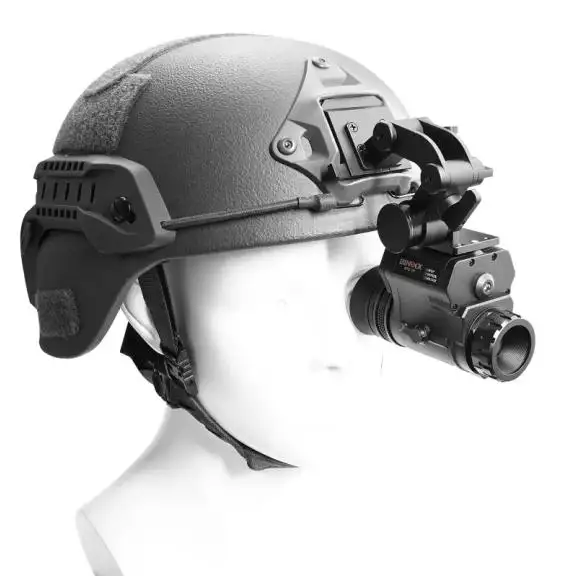
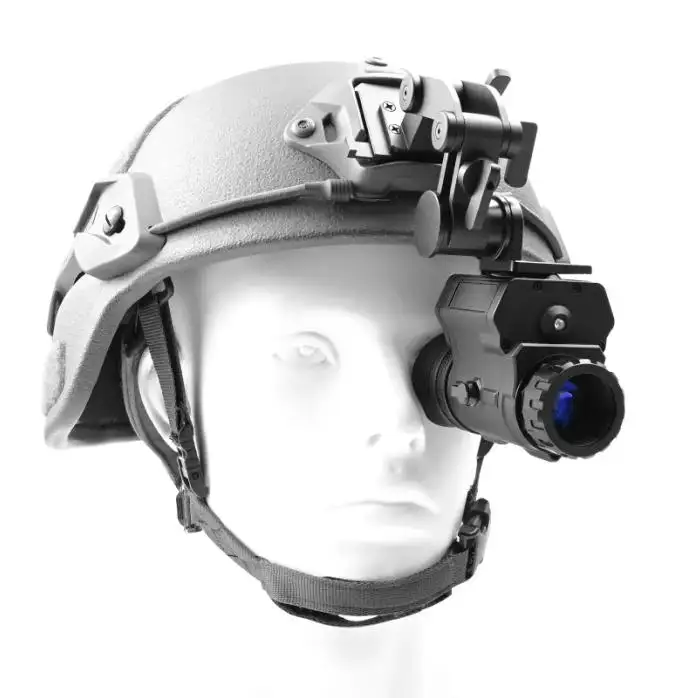
The NVG50 supports multiple helmet and bracket installations, giving you options for handheld use or hands-free setups when needed.
How to Choose the Best Night Vision Goggles for Camping
If you are new to night vision, do not start by chasing the most dramatic specs. Start with what matters for outdoor decisions. Binock’s take: the Best Night Vision Goggles for Camping should hit three priorities:
• Clarity under weak starlight
• A wide, usable field of view
• A user experience that won’t slow you down
Try this buyer’s checklist before you decide:
• Choose high-definition clarity that stays usable under weak starlight (NVG50 delivers 2K-level imaging)
• Prioritize a wide field of view for safer movement (NVG50 offers 45°)
• Look for flexible modes to adapt to terrain and light changes
• Confirm your power strategy (replaceable rechargeable batteries are field-friendly)
• Consider carry comfort and mounting options for longer use (NVG50 is 253g and mount-ready)
A simple way to match specs with how you camp:
• Hiking and trail camping: Prioritize wide view, low fatigue, and quick mode switching.
• Overland And Campsite-Heavy Trips: Prioritize comfortable scanning, power routine, and hands-free options.
• Wildlife Awareness And Perimeter Checks: Prioritize motion clarity, stable imaging, and a clean mode for contrast.
Binock NVG50 As a Practical Option for Camping Use
The goal of night vision in camping is not to turn you into a different kind of person at night. It is to help you do normal outdoor tasks with less risk and less disturbance: moving safely, checking what you heard, finding gear, and staying calm when the forest feels louder than usual.
If your priority is clear viewing under starlight, a wide 45° view for scanning, and flexible display modes that match changing terrain, the Binock NVG50 is a practical option to consider when evaluating Best Night Vision Goggles for Camping.
CTA: If you are building a safer, more confident night setup for your next trip, reach out to Binock to request NVG50 product details, availability, and recommended configurations for your camping style—handheld, bracket, or helmet-mount use.


