


Why Are Night Vision Images Green


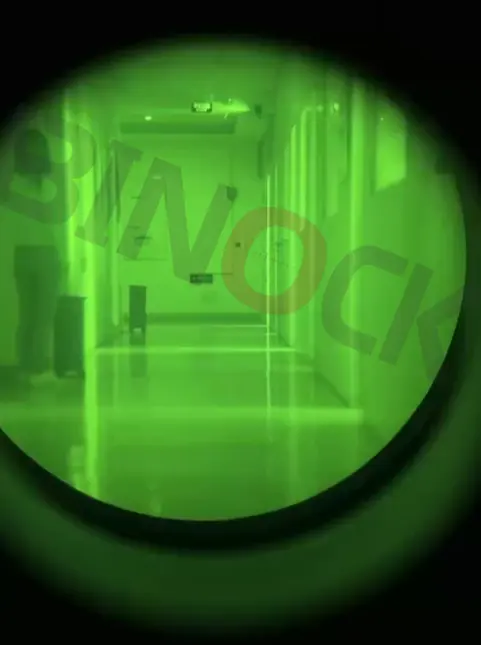
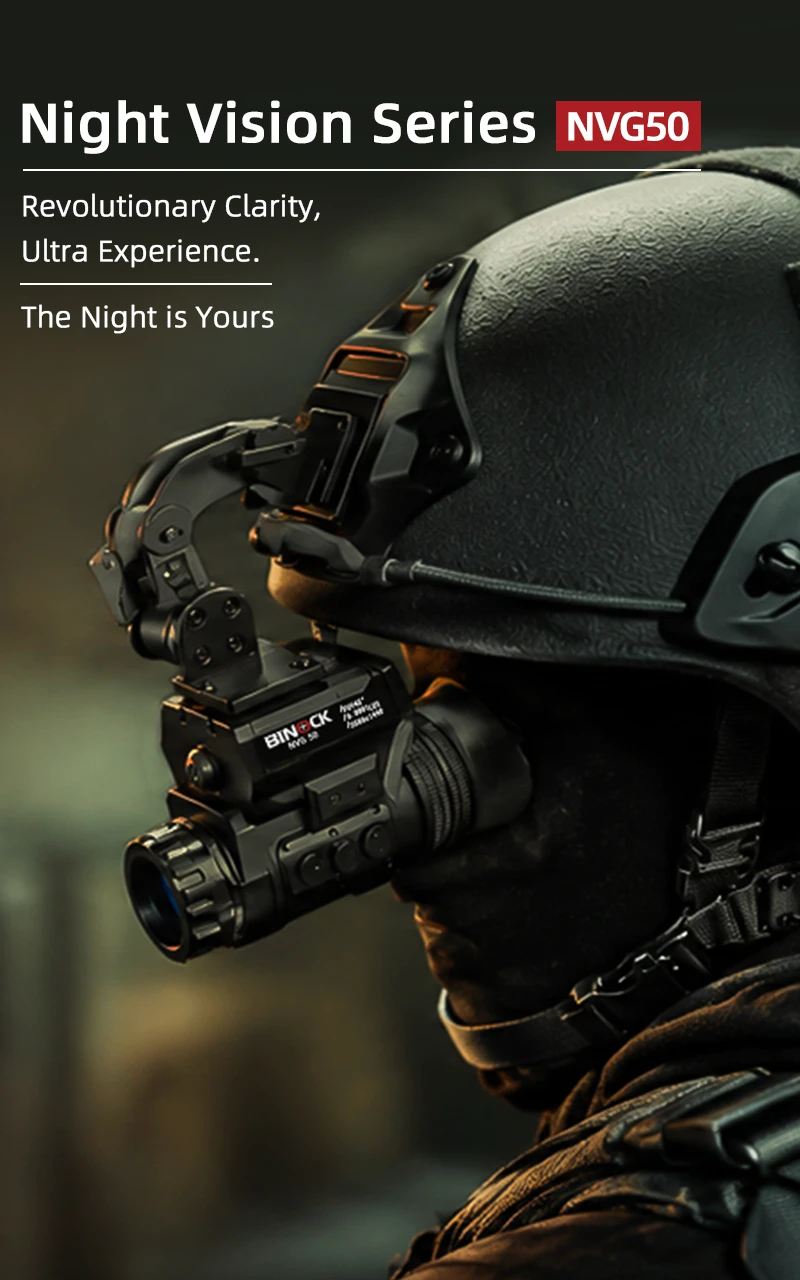
Working as a strategic partner for a top-tier night vision goggles manufacturer, I’ve spent countless hours in the lab and the field dissecting this very question. The answer isn't just about what looks cool—it’s a masterclass in human biology, high-stakes engineering, and tactical efficiency.
The Biological Edge: Why Our Brains Are "Green-Optimized"
If we want to understand the green screen, we have to look inward first. Evolution didn't design us to be apex predators in the dark, but it did give us a specific biological hack. The human eye contains two types of receptors: cones, which handle color and high-detail light, and rods, which handle low-light movement. In total darkness, our cones basically go on vacation, leaving the rods to produce a grainy, black-and-white view of the world.
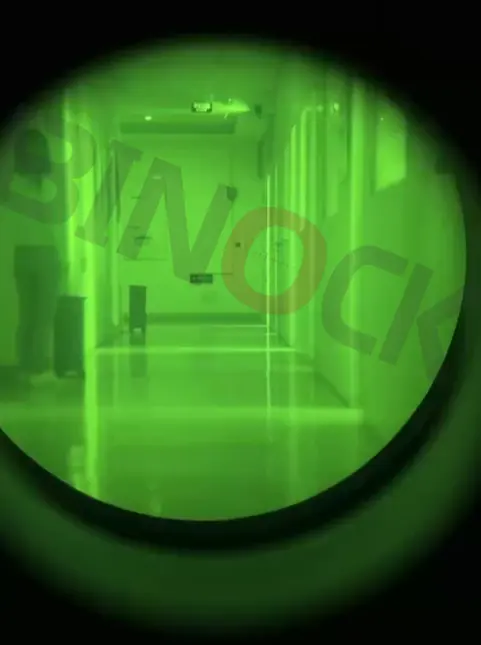
However, we are biologically tuned to the color green. Our eyes are most sensitive to light at a wavelength of approximately 555 nanometers—the exact center of the green spectrum. Because our ancestors spent millions of years navigating dense jungles and forests, our brains evolved to distinguish between thousands of different shades of green. We can see the difference between a lime leaf, a forest-green fern, and a mossy rock far better than we could distinguish between different shades of red or blue.
The Contrast Factor in the Field
When you are using night vision binoculars for an eight-hour surveillance stint, eye fatigue is your greatest enemy. If the screen were red, your eyes would tire within an hour. Because green hits our "sensitivity peak," the image feels "brighter" to our brains even at lower power levels. This allows us to process complex visual data—like a tripwire hidden in the grass or a heat-signature shadow—much faster. In a tactical environment, the split-second difference in recognition speed is often the difference between success and failure.
The Engineering Behind the Glow: The Image Intensifier Tube (IIT)
The magic happens inside a vacuum-sealed component called the Image Intensifier Tube (IIT). This isn't just a fancy lens; it’s a particle accelerator you wear on your face. Unlike a standard night vision camera, which works digitally, analog night vision is a direct conversion of light energy.
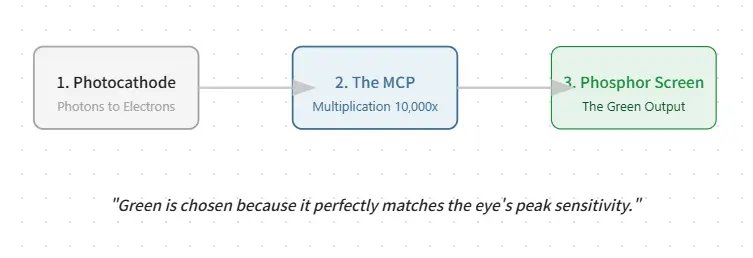
When you look at the diagram above, you see the journey of a photon. Stray light (starlight or moonlight) enters the objective lens and hits the Photocathode. This layer converts light into electrons. These electrons are then accelerated into the Microchannel Plate (MCP)—a thin disc with millions of microscopic holes. Each time an electron hits a hole, it releases a shower of additional electrons.
Finally, this massive cloud of electrons strikes the Phosphor Screen. This is where the color choice is made. Manufacturers use a specific chemical compound called P20 phosphor (Zinc Sulfide). When electrons hit P20, the phosphor atoms get excited and release energy in the form of light. Because of its chemical properties, P20 naturally glows green at exactly the 555nm wavelength our eyes love.
Beyond the Green: Digital, Thermal, and White Phosphor
As tech evolves, I often get asked: "Is green still the best?" The truth is, the market is fragmenting, and for good reason. Depending on your mission, green might not be your first pick anymore.
The Digital Shift
A digital night vision scope operates differently. Instead of an analog vacuum tube, it uses a CMOS sensor similar to a high-end night vision camera. The advantage here is versatility. Digital units can record video, handle bright daylight without "burning out," and allow for software-based color filters. While traditionalists (myself included) often prefer the zero-latency, "organic" feel of analog, digital is becoming the go-to for civilian hunters who want to record their trophy shots.
The Thermal Pivot
One of the biggest mistakes I see beginners make is confusing night vision with thermal. A thermal monocular is not looking for light; it is looking for heat signatures. If a deer is standing perfectly still in thick brush, a green night vision unit might struggle to distinguish it from the foliage. A thermal device, however, will show that deer as a glowing white or orange heat-blob.
In a professional loadout, we often use a "fused" approach. I’ll carry night vision binoculars for navigating the terrain—so I don't trip over rocks—and a thermal monocular for detecting living targets at long distances.
The White Phosphor (WP) Revolution
In the last five years, elite military night vision device units have transitioned to White Phosphor (P45). To the eye, this looks like a crisp, high-contrast black-and-white television image. Some users report that WP offers even better depth perception in urban environments (concrete, steel, and asphalt). However, P20 green phosphor is still the undisputed king for forest and rural environments, where the natural color of the world is green anyway.
Practical Advice: How to Choose Your Night Vision Gear
If you are just starting out, the sheer amount of jargon can be overwhelming. As someone who works on the supply side with a night vision goggles manufacturer, here is my "no-nonsense" checklist for selecting gear:
- Analog vs. Digital: If you need absolute reliability and 24/7 "life-saving" durability, go analog (Green or White Phosphor). If you are budget-conscious and want to record video for social media, a digital night vision scope is a fantastic entry point.
- Magnification: Don't overdo it. High magnification narrows your field of view (FOV). For walking and navigating, 1x is standard. For scouting, 3x to 5x is plenty.
- The IR Illuminator: Every night vision device needs an Infrared (IR) illuminator for "pitch black" conditions (like a basement or a cave). Make sure your unit has a built-in one or an accessory rail for a powerful IR torch.
- Generation Matters: Gen 2+ is the "value" sweet spot. Gen 3 is the "pro" standard. Anything labeled "Gen 1" is essentially a toy by modern standards—avoid it if you want real performance.
The Maintenance Factor: Protecting Your Investment
People often forget that these devices are sensitive instruments. A Gen 3 military night vision device is essentially a high-precision vacuum tube. If you expose it to direct sunlight or even a bright flashlight while it's turned on, you can "burn" the phosphor screen, leaving permanent black spots known as inclusions.
When I’m in the field, I always use a "day cap" (a small pinhole cover) when testing my gear in daylight. And remember: batteries are the number one cause of equipment failure. Always use high-quality lithium batteries and remove them if you aren't going to use the device for more than a month.
The Future: Will We Ever Have Full Color?
We are already seeing the first generation of full-color digital night vision hitting the market. Companies are developing "fused" sensors that overlay thermal data onto a color digital image. However, for the foreseeable future, the "Green vs. White" debate will continue to dominate the professional space.
Why? Because human physiology doesn't change. Until we can rewire the human brain to be sensitive to other colors at low power, the night vision goggles manufacturer community will continue to prioritize the emerald glow that gives our eyes the easiest job in the darkest hours.
Final Thoughts
The reason night vision is green is a perfect storm of biology and chemistry. We use it because it’s efficient, it’s high-contrast, and it keeps us in the fight longer without hitting a wall of exhaustion.
Whether you’re a hunter looking for the perfect night vision binoculars, a security professional needing a thermal monocular, or just a tech enthusiast marveling at a night vision camera, that green glow is a reminder of how far we’ve come. We’ve taken the invisible world of infrared energy and translated it into a language our brains already speak fluently. The night isn't scary anymore—it’s just a different shade of green.
Share on Social:


