


A Night Walk Test: How BINOCK NVG50 Performs on a Dark Trail


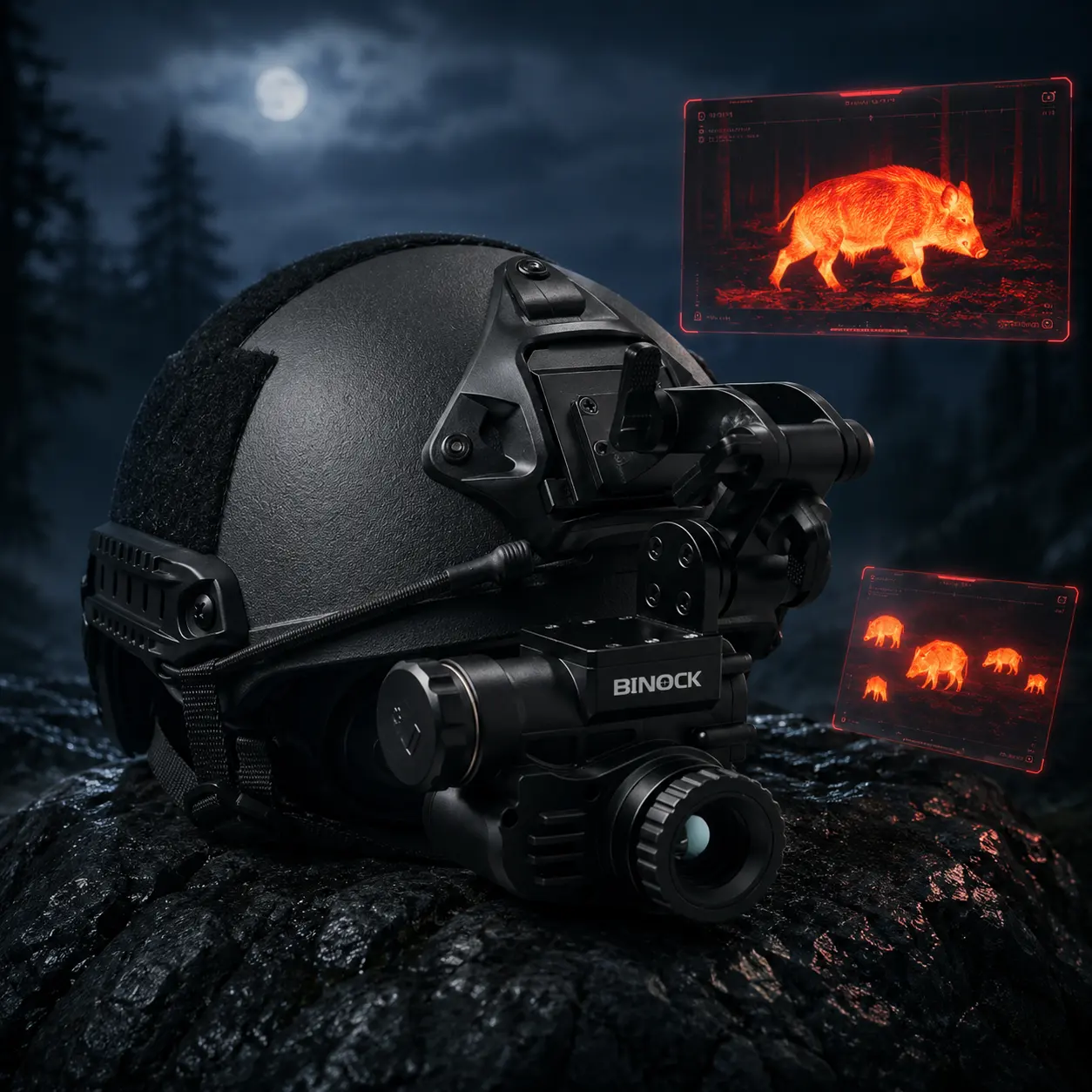

There is a significant difference between testing night vision in your brightly lit backyard versus the pitch-black, claustrophobic canopy of a forest trail. When you are alone on a dirt path, with roots snaking across the ground and low-hanging branches threatening to slap your lens, you find out exactly what a piece of gear is made of. Recently, I had the chance to take the new BINOCK NVG50 out for exactly such a torture test.
For those familiar with the digital night vision market, the NVG30 was a game-changer, offering analog-rivaling clarity at a fraction of the price. The NVG50 arrives as its direct successor, refining the formula into a more rugged, versatile package. This is a helmet and rifle dual-use monocular. It is designed to be mounted on a Picatinny rail as a night scope or slapped onto a helmet shroud for hands-free navigation.
The specs are impressive on paper. It utilizes a 2K (2560x1440) ultra-low illumination CMOS sensor. The Field of View (FOV) sits at a wide 45°, which is crucial for peripheral awareness on a dark trail. For hunters and precision shooters, it supports reticle selection. Finally, it offers four distinct color modes to suit user preference and ambient conditions: Color, Black & White, Fluorescent Green, and White Phosphorus.
But specs don’t matter if you trip over a log. Here is how the NVG50 performed on a real-world night walk.

Round One: NVG50 vs. NVG30 – The Upgrade Check
If you already own an BINOCK NVG30, should you upgrade? I spent the first hour of the night swapping between the two units to find the delta.
The most immediate difference is the housing and ergonomics. The NVG50 is noticeably more compact and feels denser. The NVG30 was never "bulky," but the NVG50 feels better balanced when mounted to a helmet. The build quality of the ABS plastic shell feels upgraded.
Optically, the NVG50 pulls ahead in two key areas. First, the display resolution jumps to 2560x1440 (up from 1920x1080). On the trail, this meant I could resolve the texture of tree bark and specific rocks further out. Second, the latency has been reduced. The NVG30 had minor lag when shaking your head quickly; the NVG50 handles rapid movements better.
Below is a quick comparison of the head-to-head differences:
NVG50 Night Walk Into the Woods: Stellar Low-Light Performance
The true test occurred around 10:00 PM under a starlit but moonless sky. The trail was flanked by dense deciduous trees, blocking most ambient light from the horizon.
This is where the NVG50 shines. The "Ultra Low Illumination CMOS" is not just marketing jargon. With the Infrared illuminator turned completely off, the NVG50 produced a usable, vivid monochrome image. In the "White Phosphorus" mode, the scenery looked remarkably close to high-end analog Gen 2+ tubes—greyscale, crisp, and deep.
Because I did not need to turn on the 940nm IR light, I remained completely invisible to insects (which are attracted to IR) and anyone else on the trail with their own detectors. Walking at a moderate pace was easy; the 45° FOV is wide enough to see the "tunnel" of the trail without feeling like you are looking through a paper towel roll.
I was able to spot a doe standing about 75 meters off the trail simply by the starlight reflecting off her coat. The detail was sharp enough to distinguish her head turning, with no motion blur thanks to the 40hz "Sport Mode."
Meet the Modes: Beyond the Green Glow
One of the best software features of the NVG50 is the color palette selection. Traditionalists will love the White Phosphorus mode for that premium PVS-7 aesthetic. However, I found the Fluorescent Green mode to be the best for depth perception on the uneven trail. The green tint seems to enhance contrast in the shadows, making exposed roots look like 3D obstacles rather than flat patterns.
There is also a full-color mode for urban environments or dusk usage, and standard black & white for battery saving. Having these options in a sub-$500 unit is a massive value add.
Verdict: Who is the NVG50 For?
After logging several miles of dark trail walking, it is clear the BINOCK NVG50 serves multiple audiences effectively.
1. The Night Hiker / Backpacker
If you enjoy night hikes or early morning pre-dawn starts, the helmet-mountable setup is a game-changer. It leaves your hands free for trekking poles or a map. The built-in WiFi also allows you to stream your hike to your phone for a friend to watch along.
2. The Night Hunter
When you’re moving through the dark—on foot, scanning the terrain ahead—the key advantage of digital night vision over thermal is clear: it doesn’t rely on heat. Thermal sees temperature; digital sees shape and texture. That means you can identify not just a warm hog or coyote, but also cold objects like a fence post, a downed tree, or a vehicle—things thermal might miss entirely. Wear the device on your helmet while walking, or flip it up for low-light driving without headlights. Spot a pest, then slide the NVG50 onto your rifle mount. The “dual use” design truly shines here: with support for reticle zeroing, you maintain precision without buying a separate thermal scope. Just keep in mind—for ethical shot placement beyond 50 yards, you’ll likely want an auxiliary IR illuminator.
3. The Backyard Astronomer (Casual)
While not a telescope, the 1x magnification and high light sensitivity make it an excellent "finder" scope for constellations. On a clear night, laying on a blanket with the NVG50 reveals hundreds more stars than the naked eye can see.
Share on Social:


