


Real Outdoor Experience With Night Vision Goggles

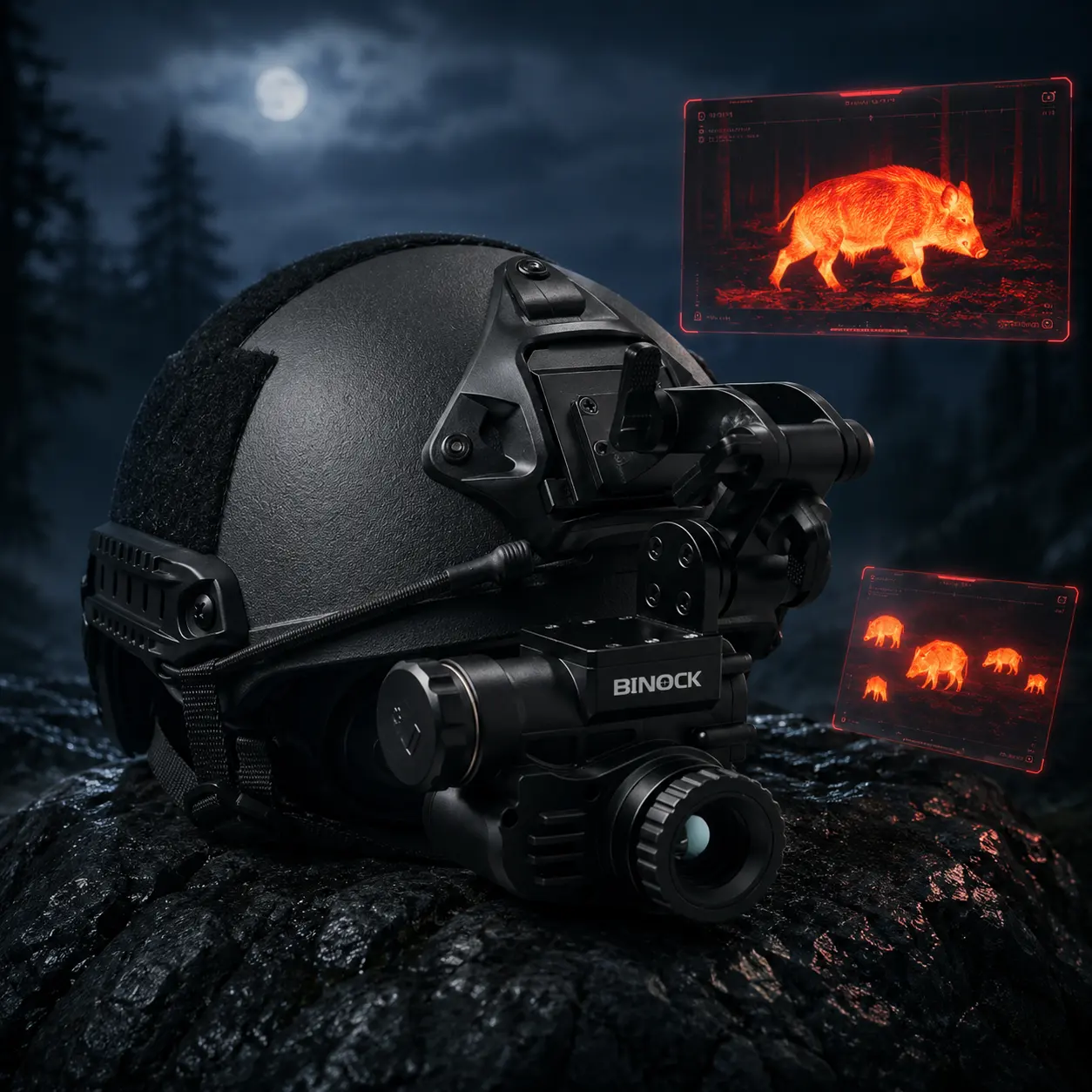

Whether you are browsing a night vision goggles manufacturer for professional tools or casual fun, the results vary. Today we write this article to dive straight into the performance of digital night vision, exploring how modern sensors transform pitch-black environments into clear, actionable data. Unlike older analog tubes, today’s digital NVG systems offer high-definition clarity, recording capabilities, and a versatile experience for anyone looking to own the night.
Who is the Night For? Essential Use Cases for Modern NVGs
Night vision technology is no longer exclusive to elite units. Today, a wide range of military and law enforcement professionals, as well as hobbyists, rely on these tools for safety and success.
Outdoor Hunters and Wildlife Management
For outdoor hunters, the arrival of the digital night vision scope has been a revolution. Tracking invasive species like feral hogs or coyotes requires absolute stealth. Traditional lights spook prey, but a digital scope allows for precise identification and ethical shots from hundreds of yards away. This technology provides a significant advantage for varmint control where being "unseen" is the primary goal.
Search and Rescue (SAR) Teams
In life-or-death situations, search and rescue (SAR) teams use night vision binoculars to scan vast landscapes. When a hiker is lost in the deep woods or a person is missing near a body of water, every second counts. Digital gear allows rescuers to spot the reflective fabric of a jacket or the movement of a survivor long before a standard flashlight beam would reach them.
Military and Law Enforcement Professionals
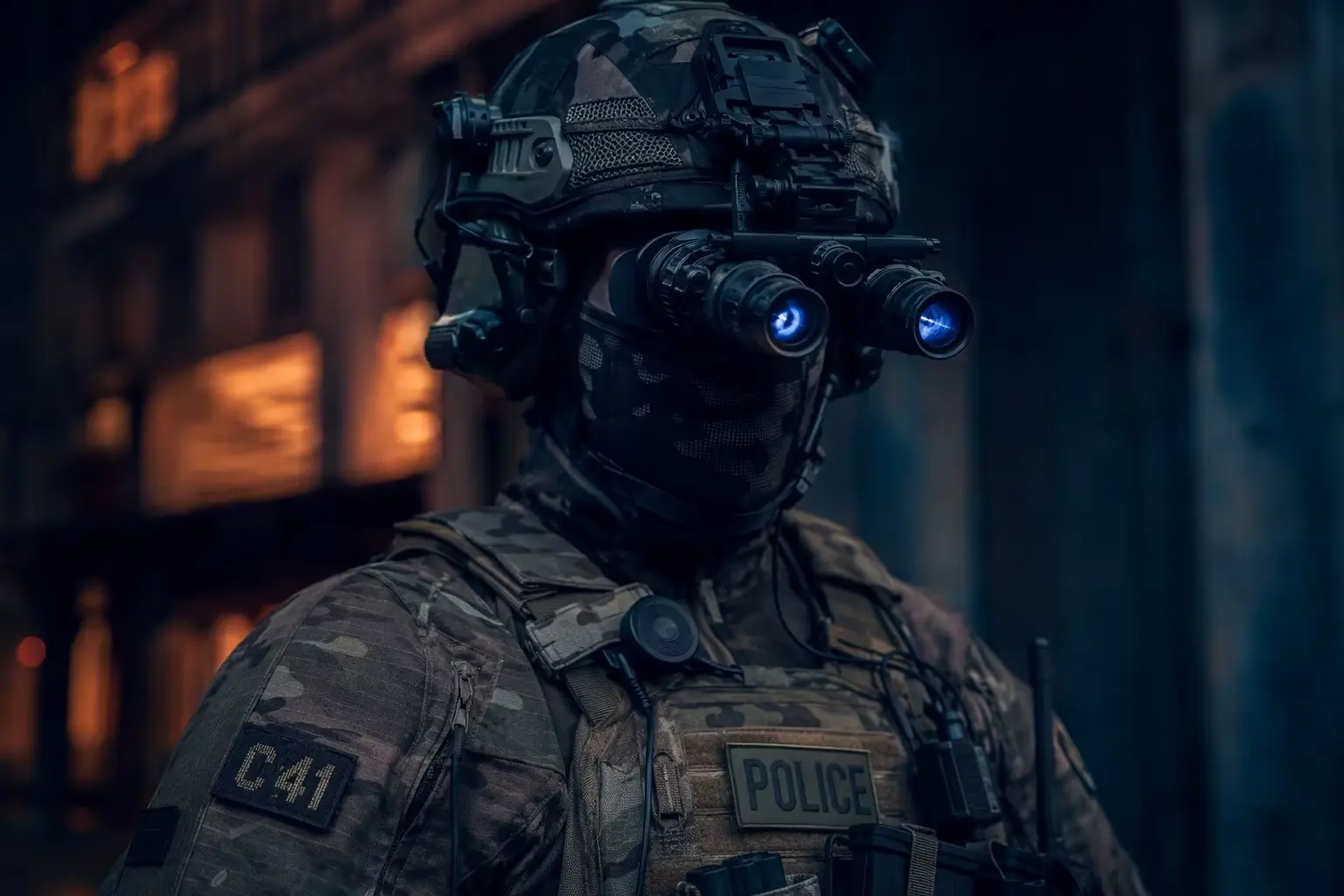
While a high-end military night vision device often uses analog tubes, many military and law enforcement professionals are now integrating digital NVG units for training and specific reconnaissance missions. The ability to stream a live video feed from a night vision camera to a command center is a feature that digital technology provides which traditional analog simply cannot.
Airsoft Enthusiasts and Tactical Training
For airsoft enthusiasts, night games are the ultimate test of skill. Using a helmet-mounted NVG setup allows players to navigate CQB (Close Quarters Battle) environments or dense brush without revealing their position. The "cool factor" is high, but the tactical advantage of navigating while opponents are blind is the real draw.
Industrial Inspectors and Astronomy Observers
It isn't all about combat or hunting. Industrial inspectors use digital units to check for structural heat leaks or monitor large facilities at night without intrusive lighting. Meanwhile, astronomy observers use digital night vision to amplify starlight, revealing nebulae and star clusters that are invisible to the naked eye, effectively turning the sky into a high-definition map.
Environmental Impact: How the World Looks Through the Lens
The quality of your view depends on where you stand. A night vision camera doesn’t see the world like your eyes do; it processes light reflections to build a digital image.
Open Fields vs. Dense Canopy
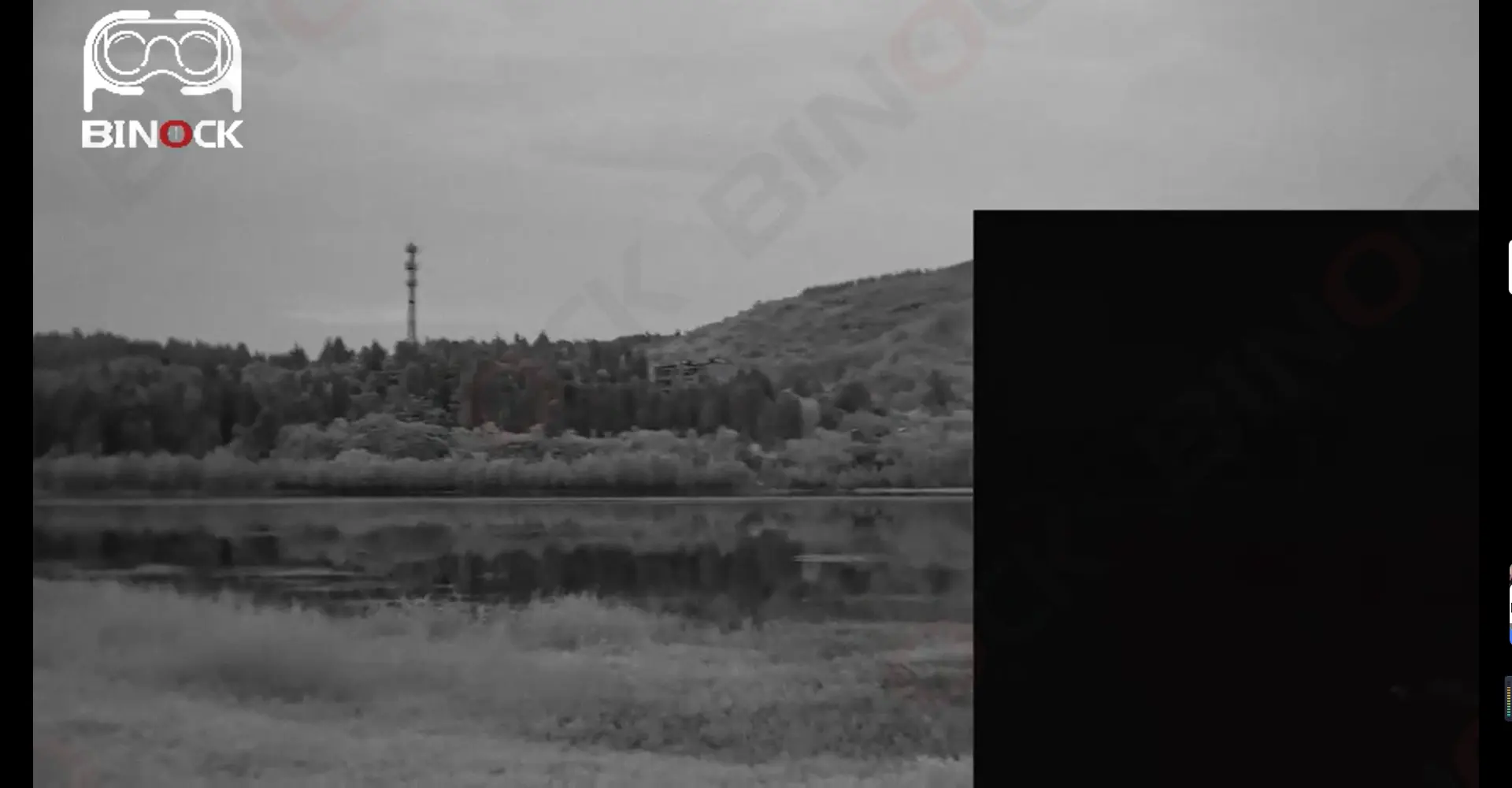
In an open field, your digital night vision scope will feel like a superpower. With even a small amount of ambient starlight, the sensor can produce a crisp, high-contrast image. You can see the horizon, identify tree lines, and spot movement at extreme ranges.
However, move into a dense forest, and the dynamic changes. When the canopy blocks the moon, you rely on Infrared (IR) illuminators. Here, the IR light acts like an invisible flashlight. You will see incredible detail on nearby objects, but you must be careful—a branch too close to the lens can reflect the IR light and "wash out" the background, a common challenge that even military and law enforcement professionals must train to overcome.
Weather and Atmospheric Interference
Rain, fog, and humidity are the enemies of clear vision. Because a night vision binoculars unit relies on light travel, moisture in the air can scatter the beam. In heavy fog, your IR light might bounce back at you, creating a "white wall" effect. On a clear, dry night, however, the digital sensor can produce an image so sharp it feels like watching a 1080p movie in black and white.
The "Noise" and Refresh Rate
In extremely low-light conditions, any digital NVG will show some "noise"—the graininess you see when a sensor is pushed to its limit. High-quality units from a reputable night vision goggles manufacturer use advanced algorithms to smooth this out. Furthermore, the "refresh rate" is vital. For airsoft enthusiasts running through a forest, a high refresh rate ensures there is no "lag" in the image, preventing motion sickness and allowing for fluid movement.
Selecting Your Gear: Balancing Demand and Budget
When you decide to purchase, you must match the device to your mission. The market is filled with options, from a basic night vision camera to a top-tier military night vision device.
Entry-Level: The Curious Explorer
If you are among the astronomy observers or a casual camper, a digital monocular is an excellent starting point. These are budget-friendly, portable, and provide a great introduction to the tech. They are perfect for looking at the moon or checking the backyard for "things that go bump in the night."
Mid-Range: The Dedicated Hunter and SAR Volunteer
For outdoor hunters or search and rescue (SAR) teams, reliability is non-negotiable. At this level, you should look for a digital night vision scope with high-resolution sensors (1080p or higher) and a powerful built-in IR. Look for features like "One-Shot Zero" for hunting scopes and dual-eyepiece night vision binoculars for better depth perception during long SAR sweeps.
High-End: Professional and Tactical Units
Military and law enforcement professionals and hardcore airsoft enthusiasts usually opt for head-mounted NVG systems. Here, you are paying for "Passive Performance"—the ability to see with almost no IR light—and "Zero-Lag" processing. These units are often built to ruggedized standards, capable of surviving drops, rain, and the rigors of a tactical environment.
What to Ask a Night Vision Goggles Manufacturer
Before you buy, check these four critical factors:
- Sensor Type: Is it a modern CMOS sensor capable of handling high-light without damage?
- IR Wavelength: Does it use 850nm (visible red glow at the bulb but longer range) or 940nm (completely invisible but shorter range)?
- Battery System: Does it take standard AAs, or does it require specialized rechargeable packs for long missions?
- Export/Warranty: Is the night vision goggles manufacturer based in a region that provides local support and repairs?
5. Conclusion: Owning the Night
The outdoor experience with night vision is a profound shift in perspective. It turns a landscape of "fear and uncertainty" into a playground for outdoor hunters, a tactical map for airsoft enthusiasts, and a lifesaving tool for search and rescue (SAR) teams.
By choosing the right digital night vision scope or night vision binoculars, you aren't just buying a gadget; you are upgrading your human senses. Whether you are performing a professional sweep as part of military and law enforcement professionals or simply enjoying the stars as an astronomy observer, the night no longer has to be a mystery. The technology is here, the gear is more accessible than ever, and the shadows are waiting to be explored.
Share on Social:


