


5 Things You Notice the First Time You Wear Digital Night Vision


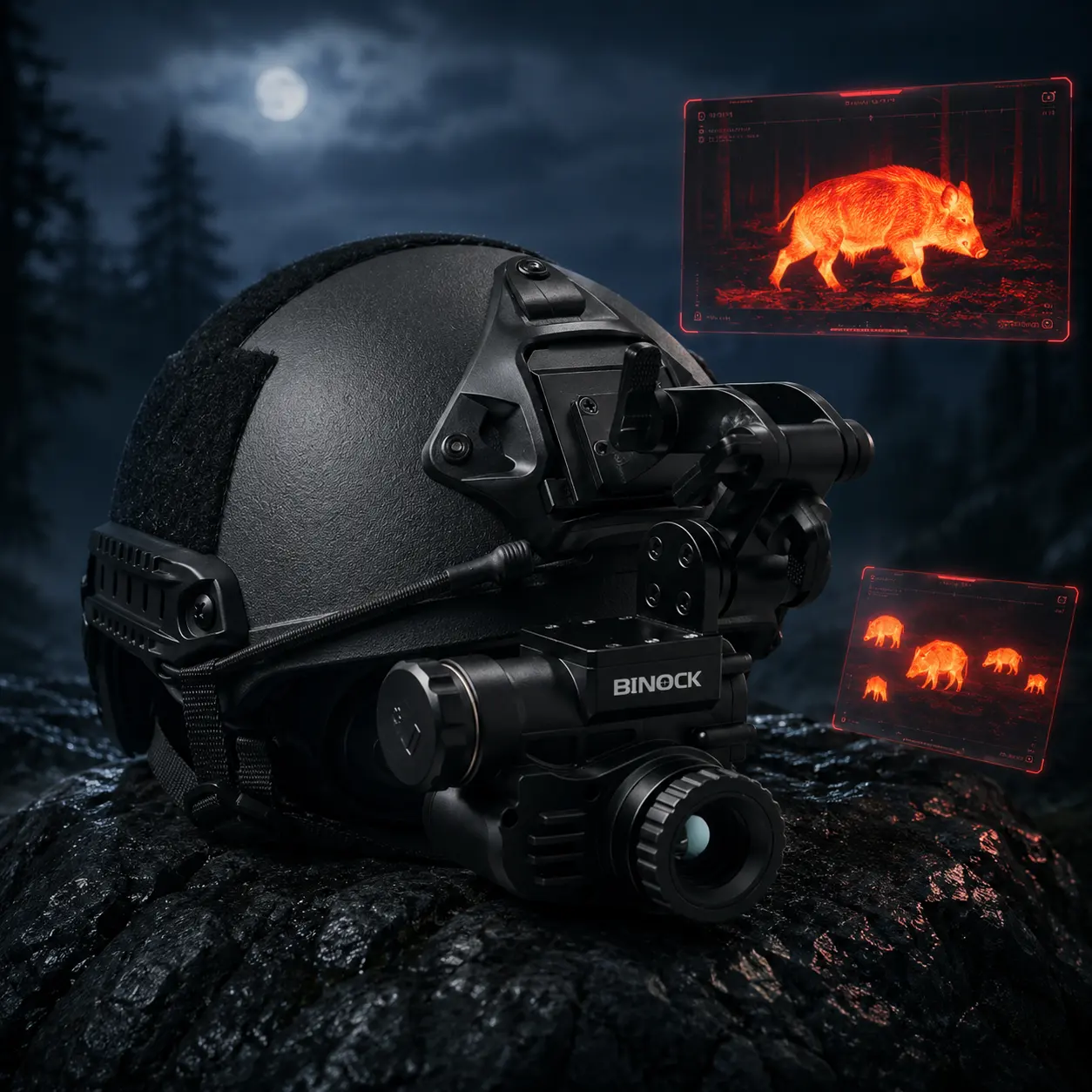

The first time you power on a pair of modern digital night vision goggles, the experience is nothing like the grainy green war movies of the 1990s. You don't get a monochrome swamp—you get a crisp, colorful, almost daylight-like image, even when the room is so dark you can't see your own hand. That was my first shock. I had braced myself for Alien-style green static, and instead, I was looking at a full-color world that felt eerily normal.
But "normal" is deceptive. Within the first sixty seconds, your brain starts firing off alerts: something is different. The image is sharp, yes, but your body knows it's looking at a screen, not through glass. Over the next hour, five distinct realizations hit you—and if you're using a well-engineered unit from a serious night vision goggles manufacturer, some of these realizations are pleasantly surprising.
Let's walk through them.
1. Color Is Back—and It's a Game-Changer
The very first thing you notice is that the world is not green. It's not even grayscale. With a modern digital night vision scope that uses a high-sensitivity CMOS sensor, what you see is a full-color image in all but the most extreme low-light conditions. Think of it as your phone's night mode, but on steroids and with zero shutter lag.
This is a radical departure from traditional image-intensifier tubes. For decades, the military green tint was a necessity—the human eye is most sensitive to green, so it maximized visible detail. But digital has changed the game. Now, even many night vision binoculars designed for hunting or security offer vivid, natural color rendition down to 0.001 lux. Some of our own night vision camera models for surveillance even include a dedicated color-boost algorithm that preserves hue accuracy while amplifying light by over 100,000 times.
What you notice immediately is how much easier it is to identify objects. A brown jacket stays brown. A red warning light stays red. Your brain doesn't have to translate a false-color palette—it just recognizes what it sees. This may sound trivial, but after five minutes, you realize this is the single biggest leap forward in consumer night vision. A thermal monocular still gives you heat-maps (and has its own place in the toolkit), but a quality digital night vision device gives you reality, just brighter. And for professionals who rely on a military night vision device for target identification, that color accuracy isn't a luxury—it's a tactical necessity.
2. No Tunnel, No Distortion—If the Night Vision Cameras Are Done Right
Here's where many first-timers are pleasantly shocked. If you're wearing a premium unit with true 1X optical magnification and a wide field of view, objects appear exactly the same size as they do with your naked eye. Reach out to grab a cup on the table—you hit it on the first try. Walk down a staircase—your foot lands perfectly on the step.
This is not magic; it's engineering.
At our R&D lab, we spend an enormous amount of time on the optical path. The biggest complaint from early digital night vision users was image distortion—barrel distortion that made straight lines curve, or pincushion effects that made the world look like a fishbowl. That happens when you use cheap plastic aspherical lenses or improper lens group spacing.
A reputable night vision goggles manufacturer will correct this with multi-element all-glass optical systems, often including ED (extra-low dispersion) glass and precision-ground aspherical elements. The result is a flat, distortion-free image across more than 85% of the field of view. When you look through a properly calibrated digital night vision scope at 1X, your brain doesn't perceive any "screen effect"—it just sees the world, but brighter. The only giveaway is the slight digital refresh, which on a good 60Hz sensor is barely noticeable. If you are looking for these kind of products, here are choices for your reference: NVG90, & NVG90 PR0(ADNV P2)
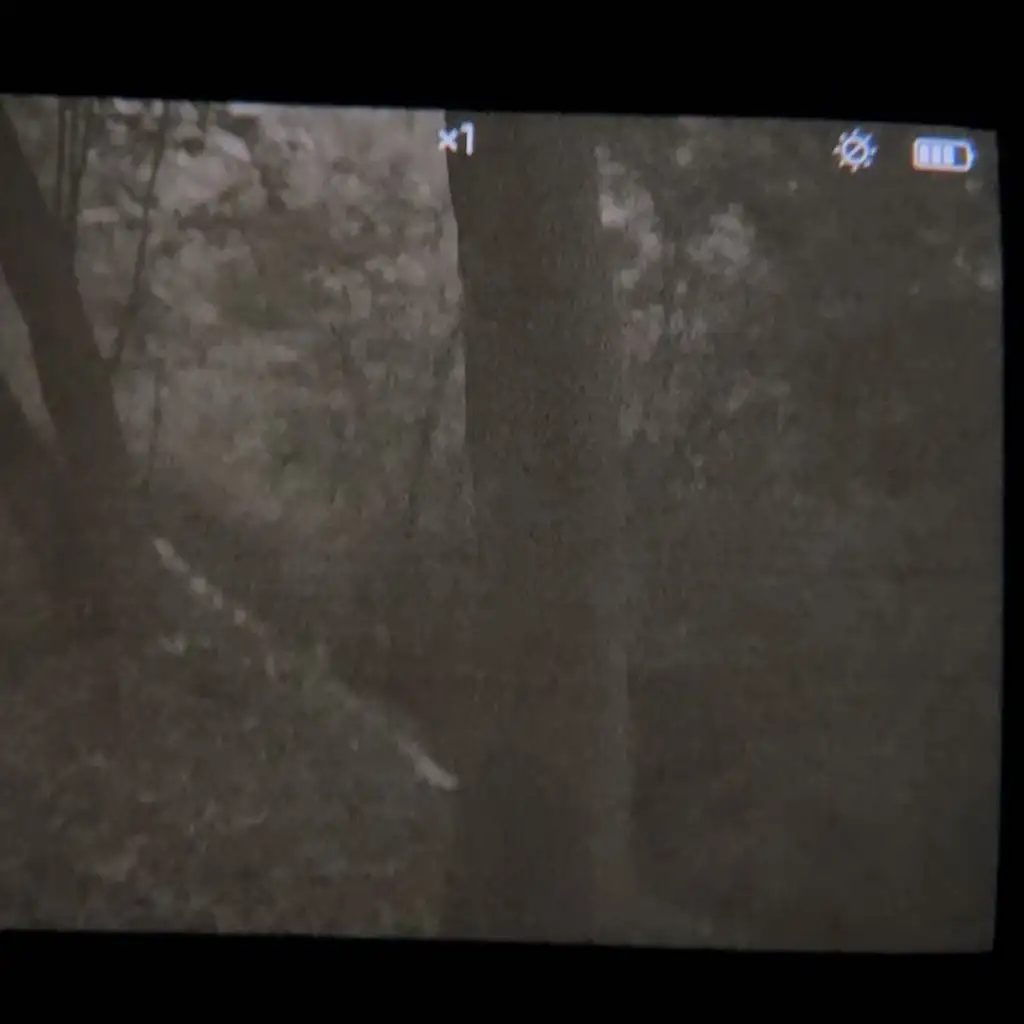
You notice this absence of distortion immediately—not because something looks wrong, but because nothing looks wrong. That, ironically, is the highest compliment. And it's one reason why even a compact night vision camera for helmet-mount applications can deliver a surprisingly immersive experience, provided its lens group is engineered to the same exacting standards as our full-sized binoculars.
3. Depth Perception Is Still Tricky—But Less Than You Fear
Alright, let's be honest. Even with the best night vision binoculars, your brain is still processing a digital image on two small OLED or LCD screens. It's not the same as direct binocular vision through glass. There's a tiny latency (even 20ms is perceptible to some people) and a slight mismatch between the digital focus and your eye's natural accommodation.
The first time you walk around, you'll still feel a little clumsy. A curb that looks a foot away is actually 14 inches. A branch that seems close is actually further out. This is because digital night vision flattens contrast—it amplifies shadows and highlights, which can wash out the subtle shading cues your brain uses for depth.
However—and this is the good news—modern units from a serious night vision goggles manufacturer incorporate automatic gain control and smart contrast mapping that preserve mid-tone gradients. This gives your brain more of the natural depth cues it craves. You don't get perfect stereo vision, but you get enough to move confidently after about 10 minutes of practice.
We've tested this extensively: a new user with a high-quality military night vision device (digital variant) can navigate an obstacle course within 15 minutes. With a cheap unit, that same user takes 45 minutes and bumps into three walls. The difference is in the image processing algorithms—how we map 14-bit sensor data into a smooth, natural-looking 8-bit display without crushing the shadows or blowing out the highlights. Even a thermal monocular, which has its own depth challenges due to the lack of fine edge detail, feels harder to navigate with than a well-tuned digital night vision system.
4. The Gain and Focus Become an Obsession
Within the first five minutes, you'll find yourself compulsively adjusting two things: the brightness/gain and the diopter focus. This is normal—and it's a sign that you're engaged with the tool rather than just passively looking through it.
What you notice is that digital night vision responds differently than analog. With analog, gain just makes the image brighter (and noisier). With a digital night vision scope, gain is tied to the sensor's ISO and exposure time. Crank it too high, and you get motion blur or digital noise that looks like crawling ants. Set it too low, and you lose shadow detail.
The sweet spot—which we at our factory calibrate as the "default" mode—balances noise, motion clarity, and brightness. But every user's eyes are different. That's why we put a precise diopter adjustment ring on every eyepiece we manufacture, whether it's for night vision binoculars or a single-tube military night vision device. When you first turn the ring and the pixel grid suddenly snaps into perfect sharpness, you feel a small thrill. It's like putting on prescription glasses for the first time.
You'll notice that you keep tweaking it, though. A shadow moves, a cloud passes overhead, and your instinct is to re-optimize. After an hour, you'll learn to trust the auto-gain—but that first 20 minutes, you're addicted to the dials. Interestingly, if you've ever used a night vision camera for photography, you'll recognize this same compulsive behavior—except with a camera, you're tweaking for the shot, while with goggles, you're tweaking for your eyes.
5. The Physical Weight Reminds You This Is a Precision Tool
Here's the fifth thing, and it's the most grounded: digital night vision is still a piece of hardware. Even the sleekest night vision binoculars pack a sensor board, a processing unit, a battery, an OLED display, and a complex lens group. Strap that to your forehead, and after 20 minutes, your neck knows it's there.
But here's the nuance: good weight distribution matters more than total weight. A 500g unit with a well-designed harness and a rear-mounted battery counterweight feels lighter than a 380g unit that's all front-heavy. As a night vision goggles manufacturer, we obsess over this—we use magnesium alloy housings, we hollow out non-structural areas, and we position the battery pack at the back of the head strap to balance the lever arm. The same design philosophy applies to our night vision camera units for drone or tripod mounting—balanced mass reduces vibration and improves image stability.
What you notice first-time is that where the weight sits is just as important as how much it weighs. A top-heavy unit will give you a headache in 10 minutes. A balanced one—even at 450g—lets you go for an hour comfortably.
And there's a psychological component too. When you feel that solid, rugged housing, when you adjust the hinge with a satisfying click, you know this isn't a toy. It's a tool designed for real use—whether that's night hiking, wildlife observation, security patrol, or professional field work. We build ours to IP67 standards, with shock-resistant lens barrels, because we know that if you're wearing a military night vision device or using a thermal monocular alongside your digital rig, you're not in a living room. You're in the field, and the equipment has to earn its keep. A thermal monocular might give you heat signatures from a distance, but your digital night vision gives you the detailed context to act on that information—and both need to be rugged enough to survive the mission.
Final Thoughts from the Maker's Perspective
So there you have it—the five things that hit you within the first hour of wearing digital night vision. The color (surprisingly natural), the distortion (pleasantly absent if the optics are right), the depth (tricky but learnable), the controls (addictively tunable), and the weight (manageable if balanced).
As someone who works alongside the engineers who design these devices, I can tell you that every one of these points is a deliberate trade-off. When we spend months tuning the auto-gain curve on every digital night vision scope that leaves our factory, we're doing it so that your first experience is intuitive, not frustrating. And when we design a night vision camera module, we think about how it will integrate with other gear—because we know professionals rarely carry just one tool; they carry a digital night vision scope for primary viewing, a thermal monocular for heat detection, and sometimes a dedicated night vision camera for recording or remote monitoring.
The first time you wear digital night vision, you're not just seeing the dark in a new way—you're experiencing the result of thousands of hours of optical, electronic, and ergonomic engineering. And if you've chosen a unit from a night vision goggles manufacturer that actually cares about those things, your first thought won't be "this is weird."
It'll be "this is brilliant—I can actually use this."
And that's exactly how it should be.
Share on Social:


