


Digital Night Vision vs. Thermal Imaging: What‘s the Difference?

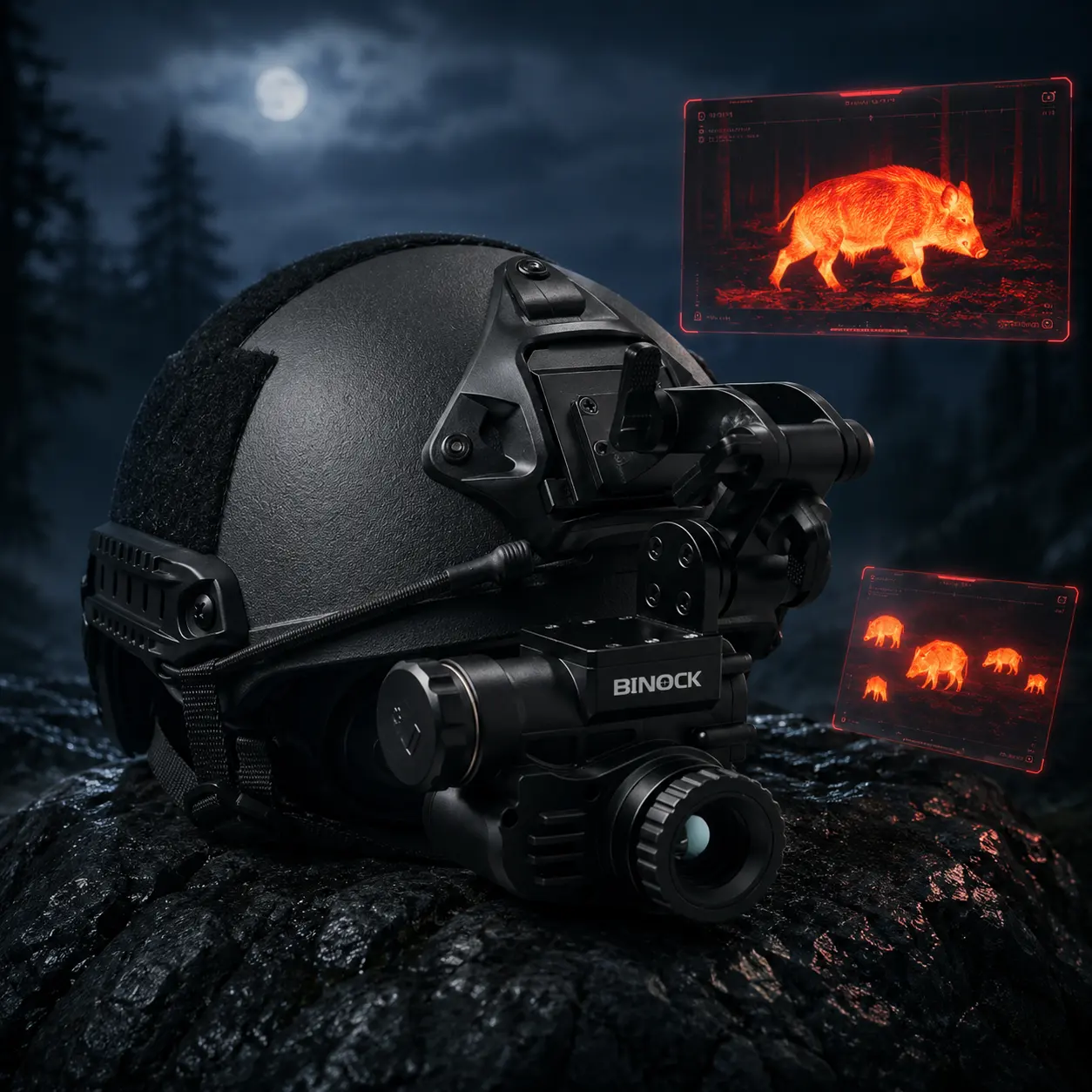

When it comes to seeing in the dark, two technologies dominate the market: digital night vision and thermal imaging. While both allow you to observe in low-light or no-light conditions, they operate on fundamentally different principles. Digital night vision works by capturing ambient light—moonlight, starlight, or infrared illumination—through a high-sensitivity CMOS or CCD sensor, converting those light signals into electrical signals, and processing them into a visible image displayed on an internal screen. It‘s essentially a highly sensitive digital camera that amplifies whatever light is available. Thermal imaging, by contrast, is entirely passive—it detects the infrared radiation (heat) emitted by objects above absolute zero. Every living creature, engine, or warm surface radiates heat, and thermal sensors capture these temperature differences to create a “heat map” image, with hotter objects appearing brighter. This fundamental difference—light vs. heat—determines everything about how these devices perform in the field.
What Digital Night Vision Shows You
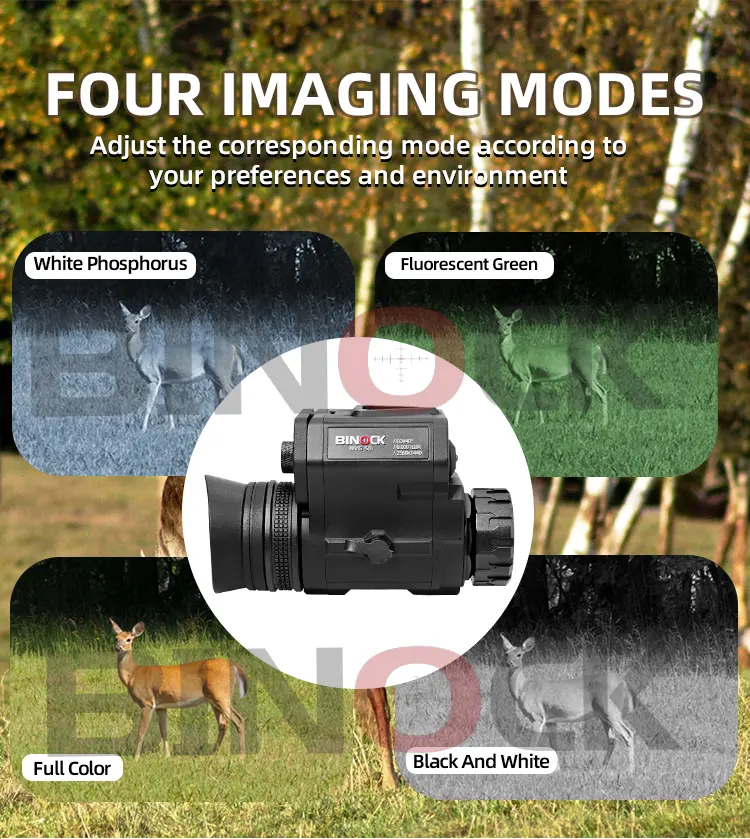
Digital night vision produces images that closely resemble what you’d see in daylight—just in black and white or green monochrome. The advantage is recognition: you can identify objects by their actual appearance, distinguishing species of animals, reading signage, or recognizing familiar terrain. The viewing experience varies by sensor quality and signal processing capabilities. Entry-level models provide reliable observation for recreational use, while premium devices with enhanced sensors deliver noticeably sharper image clarity and extended detection ranges, making them suitable for more demanding field conditions. High-end digital night vision units can push detection out to several hundred metres when paired with powerful infrared illuminators—though it‘s worth noting that range is still limited by atmospheric conditions like fog or heavy rain, which scatter IR light and reduce visibility. The key strength of digital night vision lies in what you see: the full animal, not just its heat signature. When hunting, you can clearly evaluate trophy antlers or identify specific features that thermal imaging simply cannot reveal. For instance, our NVG30, NVG50, and NVG90 series demonstrate this tiered performance—from reliable entry-level observation to premium image clarity and extended reach—but the principle remains consistent across all digital devices: they show you the scene as your eyes would see it, if only they were more sensitive.
What Thermal Imaging Shows You
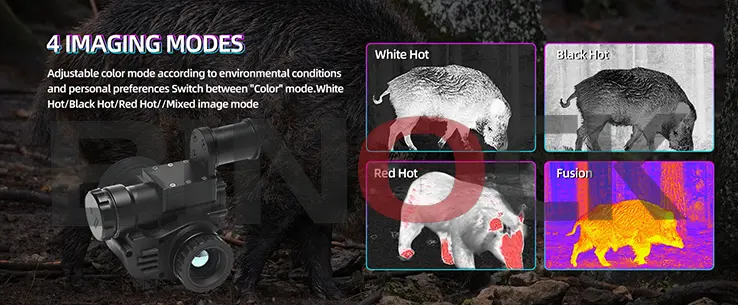
Thermal imaging takes a completely different approach. Instead of reflected light, it reads emitted heat. A thermal sensor captures temperature variations across a scene and translates them into a visual display where warmer objects appear bright and cooler backgrounds appear dark. This allows thermal devices to detect warm targets at distances far beyond what digital night vision can achieve—often exceeding 1,000 metres—and they do so in total darkness, through fog, smoke, light vegetation, or even light fabric. The image, however, is abstract: you see heat contours and outlines rather than realistic appearance. A deer appears as a bright white or orange shape against a cooler background; you can spot it behind a bush, but you may struggle to tell whether it‘s a deer or a wild boar until you get closer. Positive identification requires experience. Take the BTI10 as a reference: with its 384X288 thermal sensor, sub-35mK sensitivity, and up to 1,000 metres detection range, it excels at long-range scanning—but the image it delivers is still a heat map, not a photograph. Thermal is about detection and tracking, not recognition. That distinction is critical when deciding which tool to reach for.
Applications: Which One Should You Choose?
The choice between digital night vision and thermal imaging isn‘t about which is “better”—it’s about which is better for what you actually need to do.
Choose digital night vision when your priority is recognition and detail. If you need to positively identify what you‘re looking at—whether it’s a specific animal species, a person‘s face, or a vehicle model—digital night vision is your tool. It’s also the clear choice when budget matters, as quality digital devices typically cost significantly less than thermal equivalents. This makes them ideal for wildlife observation, camping, hiking, and terrain navigation, where understanding the landscape matters more than spotting heat signatures at extreme range. In tactical contexts, such as security patrols or property surveillance, digital night vision helps operators distinguish friend from foe by appearance, provided there is some ambient light available.If your main job is figuring out exactly what you’re looking at—not just that something is there, but what it actually is—digital night vision is the clear choice. The image it produces feels familiar because it looks like the world you already know, just rendered in monochrome. That familiarity matters more than you might think. When you’re behind a pair of night vision binoculars for hours at a stretch, your eyes don’t have to constantly reinterpret abstract shapes; you simply read the scene the way you would in daylight. That reduces fatigue and keeps your situational awareness sharp over long shifts. The same logic applies when you're moving—whether you're navigating rough trails or driving slowly through backcountry roads in near-darkness. With goggles or binoculars that give you proper depth cues and clear terrain detail, you can judge distances and avoid obstacles without second-guessing every shadow. And if you’re recording what you see—say, for evidence collection or documenting nocturnal wildlife behavior—the footage speaks for itself. Anyone reviewing it later can immediately understand what they’re looking at, without needing special training to interpret heat signatures.
Thermal Imaging – When You Need to Find Heat, Not Faces
Now switch to thermal, and the game changes entirely. Thermal doesn't care about moonlight, shadows, or camouflage—it only cares about temperature. That makes it brutally effective when you need to cover ground fast or search through messy environments. Scanning a wide-open valley at night? Thermal picks up a warm body at 800 metres while digital night vision is still squinting through the dark. Pushing through dense woodland where visual sightlines are almost nonexistent? A thermal scanner reveals the warm glow of a person or animal hiding behind a screen of leaves, something no digital imager could penetrate. It also laughs at bad weather—fog and light rain barely register as obstacles because heat radiation cuts straight through. And when there’s absolutely no light—not even starlight—thermal just keeps working, which is why it’s the default choice for cave exploration, basement searches, or any environment where you might as well be blindfolded. The catch, of course, is that you trade photographic clarity for detection power. You’ll know something is there, and roughly where it is, but you won’t know its colour, its markings, or whether it’s holding a tool unless you get much closer or switch to a different device.
Thermal is the go-to for search-and-rescue teams, law enforcement surveillance, and professional hunters who need to cover large areas quickly. Its detection range, often exceeding 1,000 metres, gives users a significant tactical advantage in open country. The trade-off is cost and image detail—thermal devices are significantly more expensive, and the images they produce are less intuitive to read without practice.
The smartest approach: use both. Many professionals carry a thermal scanner for initial detection and a digital night vision device for final identification. The thermal unit finds the heat source; the digital unit tells you what it actually is. This combination—often referred to as “fusion” in professional circles—leverages the strengths of each technology: thermal for search, digital for identification. As hybrid devices become more accessible, this integrated approach is increasingly common among serious users.
So when someone asks, “Which one should I buy?” the honest answer is: it depends. If you hunt in open fields and need to spot game at 800 metres before dawn, thermal is your priority. If you stalk through forests and need to know whether that movement is a deer or a fellow hunter, digital night vision is non-negotiable. And if your work or recreation demands both, save for both—because in the dark, having the right tool for the job isn‘t a luxury; it’s a necessity.
Share on Social:


