


Outdoor Gear We’d Bring for a Night Adventure



For years, my "night kit" was just a high-lumen headlamp and a spare set of batteries. But as I started pushing deeper into nocturnal photography and wildlife observation, I realized that throwing light at the darkness isn't always the answer. Sometimes, you want to see the night without disturbing it. This gear list isn't a "buy everything" guide; it’s a reflection on what actually works when you’re miles from the nearest streetlight and trying to make sense of the shadows.
The Foundation: Beyond the Gadgets
Before we even touch the electronics, we have to talk about the "boring" stuff that keeps you alive. A night adventure is, by definition, colder and more disorienting than a daytime hike.
- Thermal Management: Even in summer, the ground loses heat fast. I’ve learned the hard way that a static observation session—waiting for a badger or a fox—requires one more layer than you think. I pack a lightweight down "puffy" even if the forecast looks mild.
- Redundant Navigation: GPS is great until the canopy gets thick or the cold saps your battery. I still carry a physical topographic map and a compass with luminous markings.
- Low-Impact Lighting: I prefer headlamps with a dedicated red-light mode. It preserves your natural rhodopsin (night vision) levels, which takes about 30 minutes to fully develop in total darkness.
Crossing the Threshold: The Reality of Night Vision
Eventually, curiosity wins. You want to see what’s making that snapping sound in the brush 50 yards away. This is where the tech comes in. But let's be honest: the world of night optics is a rabbit hole of acronyms and eye-watering price tags. To choose the right tool, you first have to understand the "why" behind the "how."
How Does Night Vision Work? (Without the PhD)
If you’ve ever wondered how does night vision work, it’s essentially a choice between two different philosophies: amplification or conversion.
Traditional analog systems (the "tube" tech) act like a light sponge. They take the tiny bits of moonlight or starlight, hit a photocathode to turn photons into electrons, multiply those electrons, and then smash them into a phosphor screen. The result is a vibrant, near-instant image.
Digital night vision, meanwhile, works like a high-sensitivity version of your smartphone camera. It uses a CMOS sensor to capture light and processes it onto a small LCD screen inside the eyepiece. Digital is cheaper and can record video, but analog usually wins on battery life and "true" depth perception.
The Field Kit: What We Actually Pack
When I’m planning a night mission, I don't bring every toy in the closet. I pick the tools based on the environment.
1. For the Trek: Military Night Vision Glasses
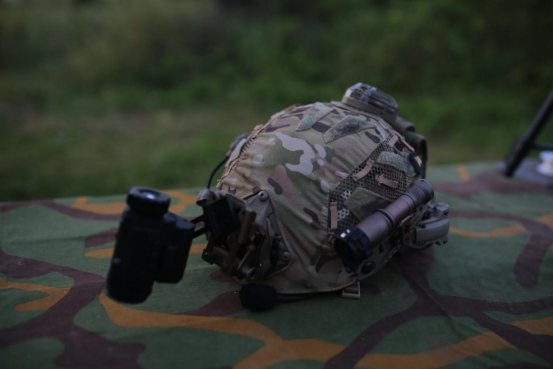
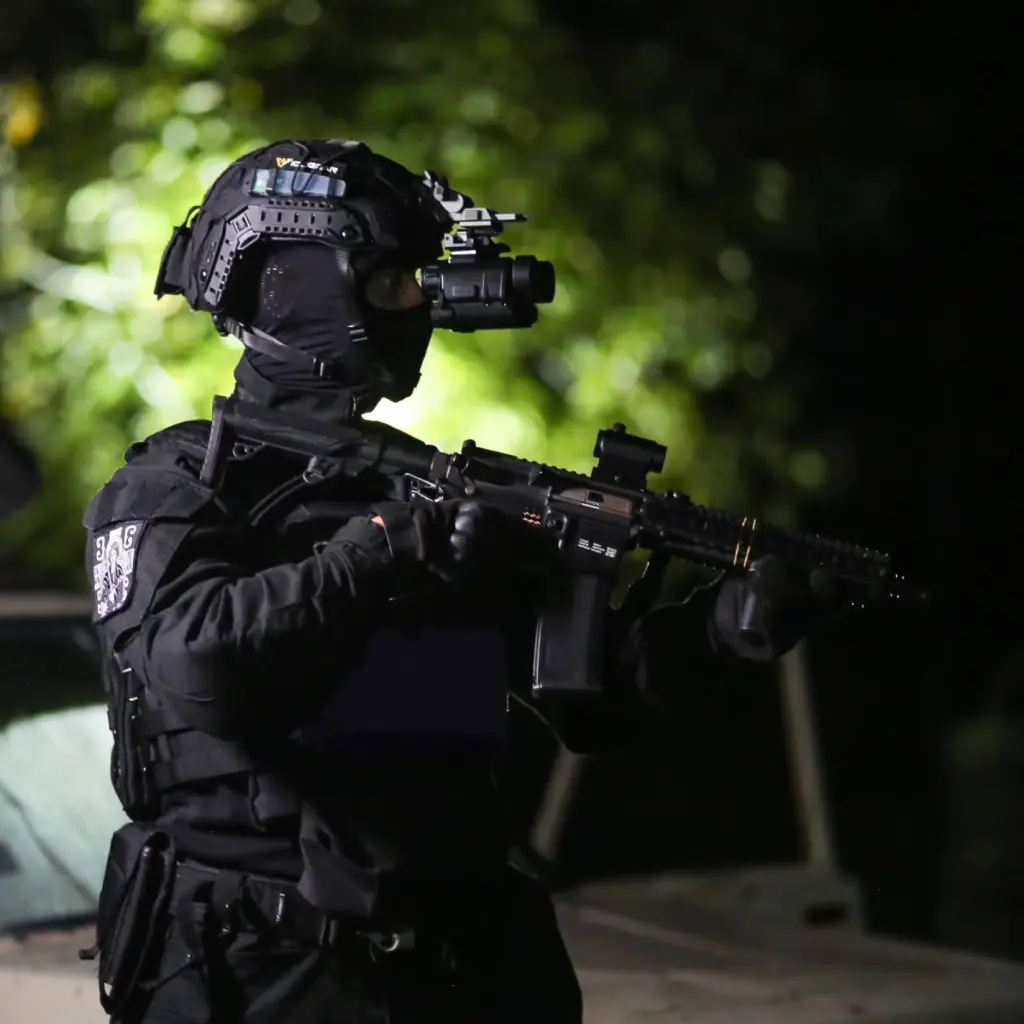
If I’m moving—actually walking through uneven terrain—I need my hands free. This is the domain of military night vision glasses. Now, "military" is a marketing buzzword, but in this context, it usually refers to head-mounted systems with 1x magnification.
Walking with 3x or 5x magnification is a great way to walk off a cliff. You need that 1:1 ratio to maintain your balance. In my experience, these are a "buy once, cry once" item. Cheap head-mounted units often have "fish-eye" distortion that will leave you dizzy and nauseous after twenty minutes of hiking.
2. The Professional Edge: White Phosphor Night Vision
If you’ve looked through older units, you’re used to the "Matrix" green glow. While iconic, green can be incredibly fatiguing for the eyes over several hours. Lately, the shift toward white phosphor night vision (often called P45) has been a game-changer for my long-haul adventures.
The image is black-and-white (with a slight blue tint), which feels much more natural to the human brain. The contrast is significantly higher, making it easier to distinguish a grey rock from a greyish-brown animal. It’s the closest thing to "turning on the sun" that doesn't involve a flashlight.
3. Documentation: Night Vision Cameras
A set of goggles is great for my eyes, but they aren't great for sharing the story. For that, we bring dedicated night vision cameras. We’ve moved away from trying to hold a phone up to a monocular eyepiece (which is a clumsy mess) and toward full-spectrum cameras. These units are designed to pull in light across a wider spectrum, allowing for cinematic, high-resolution footage of the nocturnal world. If you're looking to capture the "vibe" of the forest at 3 AM, this is where the digital sensor excels.
The Aerial Scout: The Night Vision Drone
One of the more controversial, yet undeniably useful, additions to a modern kit is the night vision drone. On a recent trip to a vast coastal marshland, we found ourselves stuck between rising tides and thick fog.
Launching a drone equipped with a low-light or thermal sensor allowed us to see the "heat map" of the terrain from 200 feet up. It identified a dry path through the reeds that we would have spent hours searching for on foot. It’s not just about scouting wildlife; it’s about situational awareness. However, it’s worth noting that drones at night require extra attention to local regulations and flight safety.
The "Best" is Subjective
Whenever someone asks what the best night vision devices are, I always counter with: "What are you doing?"
If you’re a hobbyist who wants to see the owls in your backyard, a $300 handheld digital night vision monocular is perfect. It’s essentially a specialized camera that lets you see in the dark. But if you’re doing a 10-mile ruck through the Appalachian Trail at midnight, you need the durability and zero-latency of high-end tubes.
There is a major "weight-to-utility" ratio here. Every piece of gear we bring has to justify its weight in the pack. A drone is heavy when you include the controller and three spare batteries. Military night vision glasses require a helmet or a complicated head harness. If you aren't careful, your "adventure" becomes a logistics exercise.
The Human Element: Training Your Eyes
One thing the marketing brochures won't tell you is that using night vision is a skill. It’s not like turning on a TV.
- Depth Perception: Even with the best gear, your depth perception is compromised. I’ve tripped over more "flat" roots while wearing NVGs than I care to admit. You have to learn to "read" the shadows differently.
- The "Toilet Paper Tube" Effect: Most night vision has a 40-degree field of view. Imagine trying to hike while looking through two toilet paper rolls. You have to keep your head moving constantly (the "scanning" technique) to avoid tunnel vision.
- Light Discipline: If you use an IR illuminator (the invisible flashlight many digital units need), you are essentially a glowing lighthouse to anyone else with NV gear. If you're on a shared trail or a group MilSim, learn when to go "dark."
Practical Advice: Batteries and Power
If there’s one thing that will kill a night adventure faster than a rainstorm, it’s a dead battery.
Analog units often run on a single AA or CR123A battery for 40+ hours. Digital night vision, because it’s powering an internal LCD screen and a processor, will chew through a battery in 2–4 hours. I always carry a dedicated power bank and ensure my night vision cameras are charged to 100% before I leave the car. In the cold, lithium batteries are your friend; alkaline will die far sooner than you expect.
Respecting the Dark
There is a temptation, once you have the gear, to try and "conquer" the night. But the most rewarding adventures I’ve had are the ones where the gear stayed in the pack for a while.
Sitting in total darkness, letting your ears do the work, and only using your white phosphor night vision to verify a movement is a far more immersive experience than constant scanning. The gear should be an extension of your senses, not a replacement for them.
Final Thoughts: Building Your Kit
If you're just starting, don't feel pressured to buy a "tactical" setup. Start with a solid red-light headlamp and maybe a basic digital monocular to see if you even enjoy being out after midnight. It’s not for everyone—the woods are loud, the shadows move, and your imagination can be your worst enemy.
But if you find yourself hooked on that quiet, monochromatic world, then you can start looking into the best night vision devices for your specific niche. Whether it's the cinematic power of night vision cameras, the tactical utility of military night vision glasses, or the broad perspective of a night vision drone, the tech is finally at a place where the night is truly open for business.
Just remember to pack a spare pair of socks and a thermos of coffee. The gear helps you see, but the coffee helps you stay awake to enjoy it.
The "Neutral" Night Kit Summary
| Gear Category | Reality Check | When to Pack |
|---|---|---|
| Traditional Lighting | Essential & Cheap | Always. Don't rely 100% on tech. |
| Digital NV | Great for Video | Wildlife observation & budget-conscious trips. |
| White Phosphor (Analog) | High Performance | Long-distance trekking & serious enthusiasts. |
| Drones & Cameras | High Logistical Burden | Only if documentation/scouting is the primary goal. |
Share on Social:


- PREV: The Real-World Range of Digital Night Vision Goggles
- NEXT: Not NEXT
