


The Night Vision Files: Something Was Watching Me From the Woods


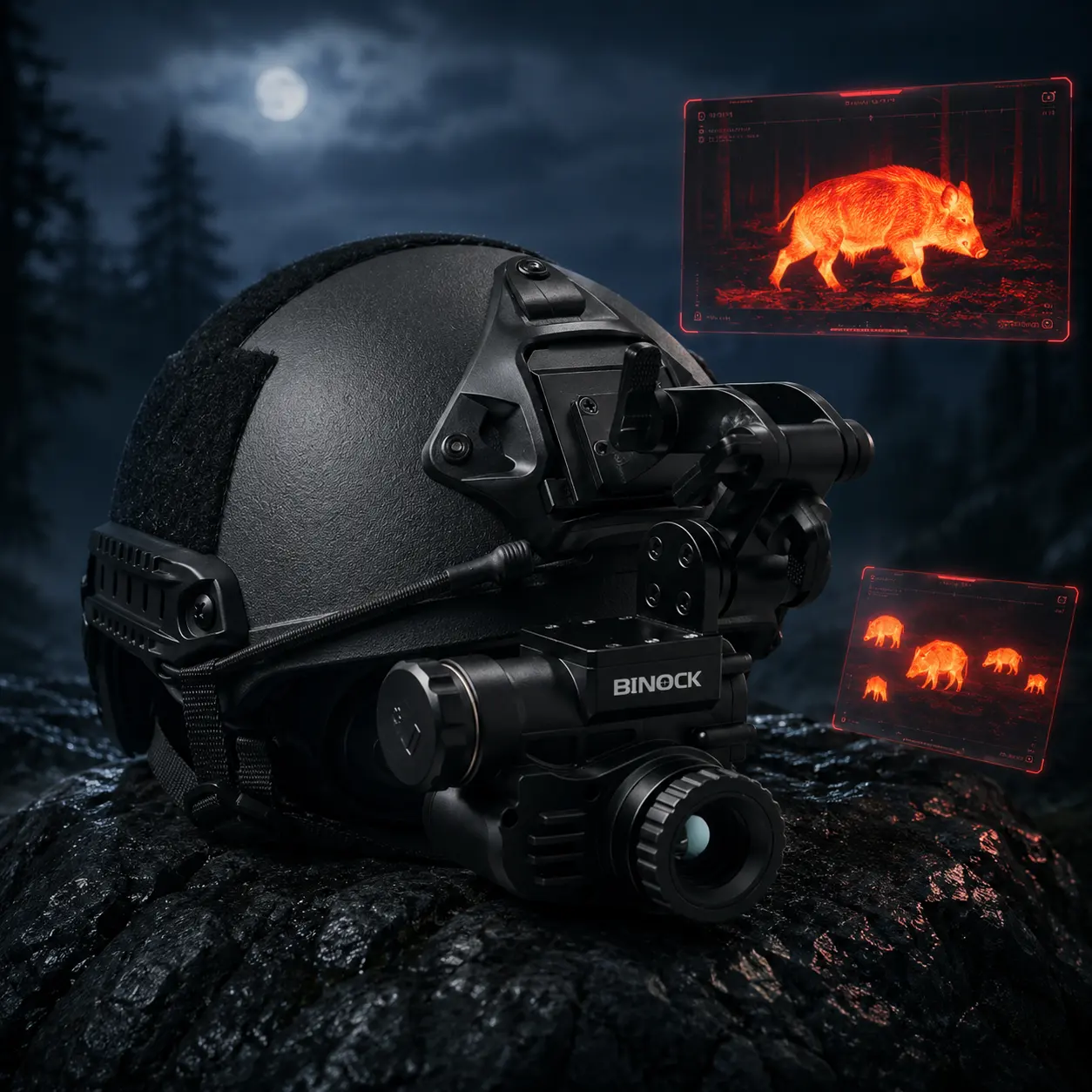

The first time I thought I might have encountered something paranormal, it was around 2 a.m.
Nothing particularly strange had happened that night.
No storm. No creepy local legend. No mysterious warning from the campsite owner.
It was just a normal night of camping.
During the day, the woods had looked almost boring.
Trees. A lake. A few tents. Some people slowly turning red in the sun.
Then night came.
And suddenly, everything changed.
Once I turned off my flashlight, the darkness felt almost solid.
You can see the outline of a few trees at first. Give your eyes some time to adjust, and you might think you're getting better at seeing in the dark.
You're not.
You're just getting better at seeing slightly different shades of black.
Then you start hearing things.
Leaves moving.
Something brushing through the grass.
A branch cracking somewhere in the distance.
During the day, you hear a noise in the woods and think:
“Probably an animal.”
At 2 a.m., your brain has a different opinion.
“Something is out there.”
At 2:17 a.m., I Heard Footsteps
I was already inside my tent when I heard it.
Crack.
It sounded like someone had stepped on a dry branch.
I sat up.
Silence.
A few seconds later:
Crack.
This time, it sounded closer.
I started asking myself a very reasonable question:
Why does every sound in the woods seem completely normal during the day, but mildly terrifying at night?
A branch breaking during daylight?
Whatever.
A branch breaking at 2:17 in the morning?
Clearly, something is coming for you.
I grabbed my flashlight and pointed it toward the trees.
Nothing.
I moved the beam from left to right.
Still nothing.
Just trees.
I was about to convince myself that I'd imagined the whole thing when I heard another sound.
Rustle.
Not a branch this time.
Something was moving through the grass.
And it sounded like it was getting closer.
Much closer.
Right outside the tent.
My First Thought: Please Don't Be a Person
This is probably one of the most uncomfortable things about being outside at night.
It's not necessarily the fear of ghosts.
It's the fact that you don't know what's actually there.
If it's an animal, you can deal with that.
If it's the wind, great.
If it's a person…
Well.
Let's not think about that one.
The problem is that darkness removes most of the information your eyes normally rely on.
You hear something.
You know something moved.
But you can't see it.
And when you can't see something, your imagination becomes extremely helpful.
Unfortunately, it is usually helpful in the worst possible direction.
That's when I grabbed a night vision device.
More specifically, a night vision monocular.
I was using a BINOCK NVG50.
The First Time You Look Through a Night Vision Device
If you've never used a night vision monocular before, the first few seconds are honestly pretty weird.
You look through it expecting to see… well, more darkness.
Instead, the scene starts coming back.
The trees have shape again.
The ground has texture.
Objects that were almost invisible to the naked eye suddenly become much easier to spot.
The night doesn't exactly turn into daytime.
It's more like someone quietly turned the contrast back on.
And that's one of the coolest things about night vision technology.
A night vision device doesn't magically make the darkness disappear.
It helps you see what was already there.
I slowly moved the NVG50 toward the right side of the tent.
Nothing.
Left.
Nothing.
Toward the trees.
Still nothing.
Then I saw them.
Two small points of light.
I stopped breathing.
They were near the edge of the woods.
Completely still.
Two little eyes.
Looking directly at me.
Okay. That's Definitely Not Creepy at All.
At this point, my brain stopped being useful.
I immediately came up with several explanations.
None of them were particularly scientific.
The two eyes didn't move.
I didn't move either.
We just stared at each other through the night vision device.
And I remember thinking:
Why are there two eyes?
That's when the imagination really starts working overtime.
Maybe it was an animal.
Probably an animal.
Almost definitely an animal.
…
Hopefully an animal.
Then it moved.
One step forward.
I froze.
Another step.
It was getting closer.
I adjusted the focus on the night vision monocular and tried to get a clearer look.
This is one of those things you don't really appreciate until you actually use night vision equipment.
It's not just about pointing the device at something and instantly seeing every detail.
In low-light conditions, distance, available ambient light, focus, and the surrounding environment can all affect what you're looking at.
So I adjusted the focus again.
And finally, I could see it.
And that's when my fear turned into something else.
Because it wasn't a ghost.
It wasn't a person.
It wasn't some mysterious creature from the woods.
It wasn't even a wolf.
It was…
a raccoon.
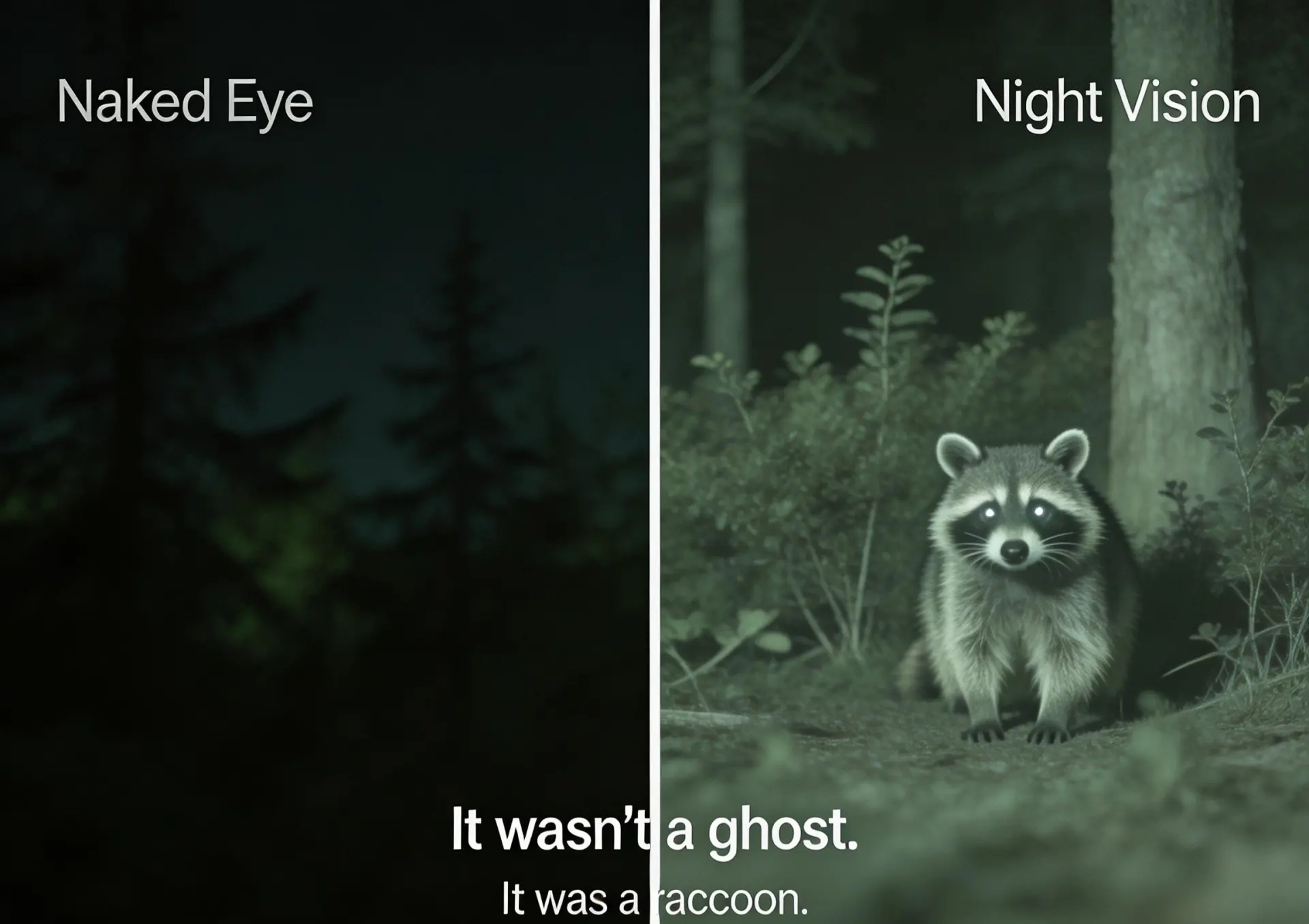
A Very Confident Raccoon
The raccoon stood there.
I looked at it.
It looked at me.
Neither of us moved.
It was honestly difficult to tell who was more confused.
Then I realized something.
The raccoon wasn't actually interested in me.
It was interested in the bag of snacks sitting next to the tent.
Of course.
At 2:17 a.m., I had just spent several minutes mentally preparing myself for a paranormal encounter.
The terrifying creature outside my tent?
A raccoon looking for free food.
Case closed.
The woods remained perfectly normal.
My dignity did not.
Night Vision Doesn't Make the Night Scarier
That night was also the first time I really understood why people use night vision devices.
Before that, my idea of night vision was pretty simple.
Green images.
Infrared.
Military equipment.
People in movies wearing night vision goggles and sneaking around in the dark.
It always felt like something designed for very specific situations and very specific people.
But using a night vision monocular outdoors made me look at it differently.
Because the basic idea is actually pretty simple:
There is a lot more happening at night than your eyes can see.
If you're camping, hunting, watching wildlife, exploring trails, or spending time outdoors after sunset, darkness can hide a surprising amount of activity.
A night vision device gives you another way to observe your surroundings.
And sometimes, that's all you need.
So, How Does a Night Vision Device Actually Work?
Okay, let's get slightly more technical for a minute.
Your eyes need light to see.
In very low-light conditions, the amount of visible light reaching your eyes can become too limited for you to see much detail.
Night vision technology is designed to work with those low-light conditions and enhance available light so objects become easier to see.
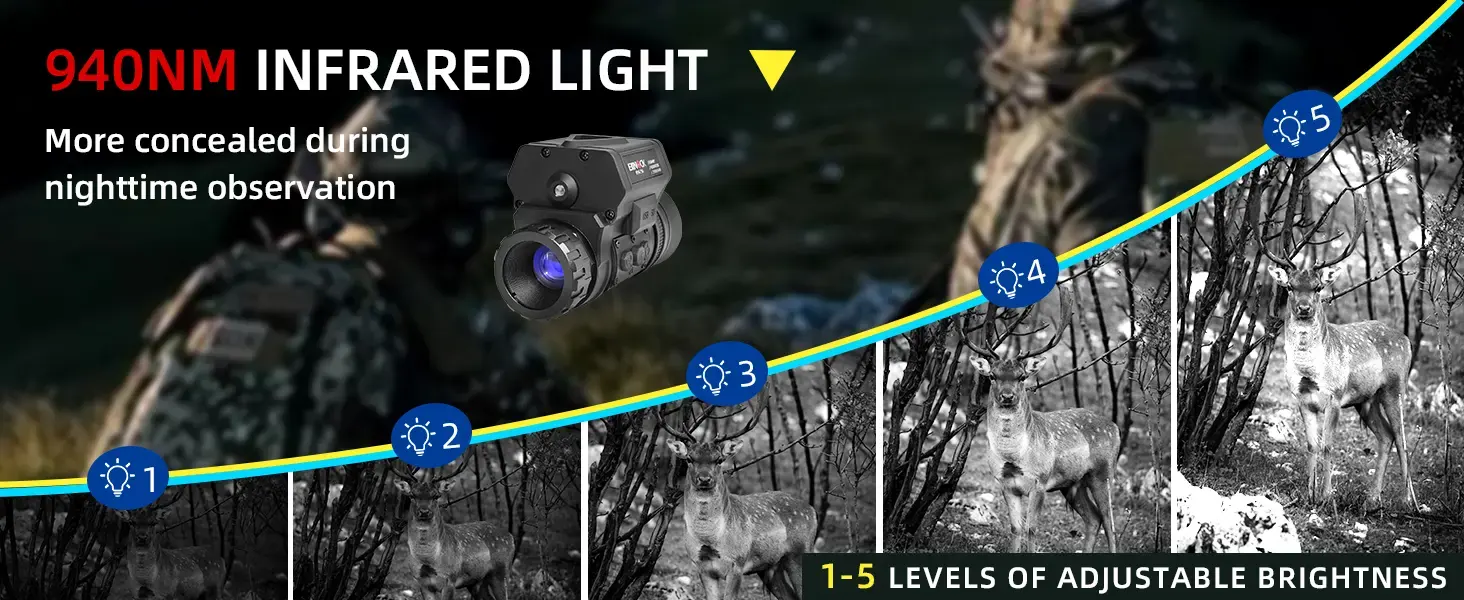
Some night vision equipment can also use infrared illumination when there isn't enough ambient light.
That's why terms like infrared night vision, IR illumination, and low-light night vision come up so often when people start researching night vision devices.
The result is a view that's very different from what your eyes see naturally.
Which explains the classic first-time night vision experience:
“Wait. There was something there this whole time?”
Yep.
There probably was.
You just couldn't see it.
Why Does Everything Look Scarier at Night?
This might actually be one of the funniest things about using night vision.
During the day, you see a dark shape in the woods:
“That's probably a tree.”
At night:
“What is that?”
You hear something moving through the grass.
During the day:
“Probably a bird.”
At night:
“It's coming closer.”
You see two glowing eyes in the distance.
During the day:
“Animal.”
At 2 a.m.:
“We're all going to die.”
Human beings are surprisingly bad at dealing with incomplete visual information.
When you can't see the whole picture, your brain starts filling in the blanks.
And your brain, apparently, has a very strong preference for dramatic explanations.
That's why night vision can actually have the opposite effect.
Instead of making the night more mysterious, it can help explain what's actually happening.
You thought something was hiding in the trees?
It might just be a deer.
You thought someone was walking around outside your campsite?
Maybe it's a raccoon.
You thought you heard something huge moving through the bushes?
Congratulations.
It may be another raccoon.
Apparently, raccoons have a very active night shift.
The Night Is Much Busier Than You Think
Once you start using a night vision monocular for outdoor observation, you notice something interesting.
The night isn't quiet.
It's just quieter for humans.
A bird moves through the trees.
A deer crosses the edge of a field.
An owl sits somewhere above you.
Small animals move through the grass.
Something is almost always happening somewhere.
You just don't normally get to see it.
That's what makes nighttime observation so interesting.
Darkness doesn't mean nothing is there.
It just means less of it is visible to you.
And that's where night vision equipment becomes genuinely useful.
BINOCK NVG50: Sometimes You Just Want to Know What's Out There
That's probably why I've come to appreciate a good night vision monocular more than I expected.
You don't necessarily need a giant piece of equipment or a complicated setup just to explore the outdoors after dark.
Sometimes you just want something compact and practical that lets you take a better look at what's happening around you.
That's where a device like the BINOCK NVG50 night vision monocular comes in.
Whether you're camping, observing wildlife, exploring the outdoors, or simply trying to figure out what keeps making noise behind your house at midnight, a portable night vision device can give you a completely different perspective.
And honestly, that's probably the best way to think about it.
Not:
“I am about to embark on a highly classified nighttime mission.”
More like:
“I heard something. I just want to know what it is.”
So, Was There Really Something in the Woods?
Yes.
Absolutely.
There was something in the woods.
It just wasn't a ghost.
It was a raccoon.
A deer.
An owl.
A cat that apparently refuses to sleep at normal human hours.
Or sometimes, just a branch moving in the wind.
But if you spend enough time outdoors at night, you'll eventually realize something:
The night isn't empty.
The forest doesn't stop moving when the sun goes down.
Animals don't disappear.
The world doesn't suddenly become quiet.
We just lose the ability to see most of it.
And maybe that's the most interesting thing about night vision.
It doesn't necessarily make the night more mysterious.
Sometimes, it does the opposite.
It lets you find out that the “creepy thing” you've been staring at for ten minutes is just a raccoon trying to steal your snacks.
And honestly?
I'm not sure which is worse.、
Share on Social:


