


Your IR Illuminator is Basically a Flashlight

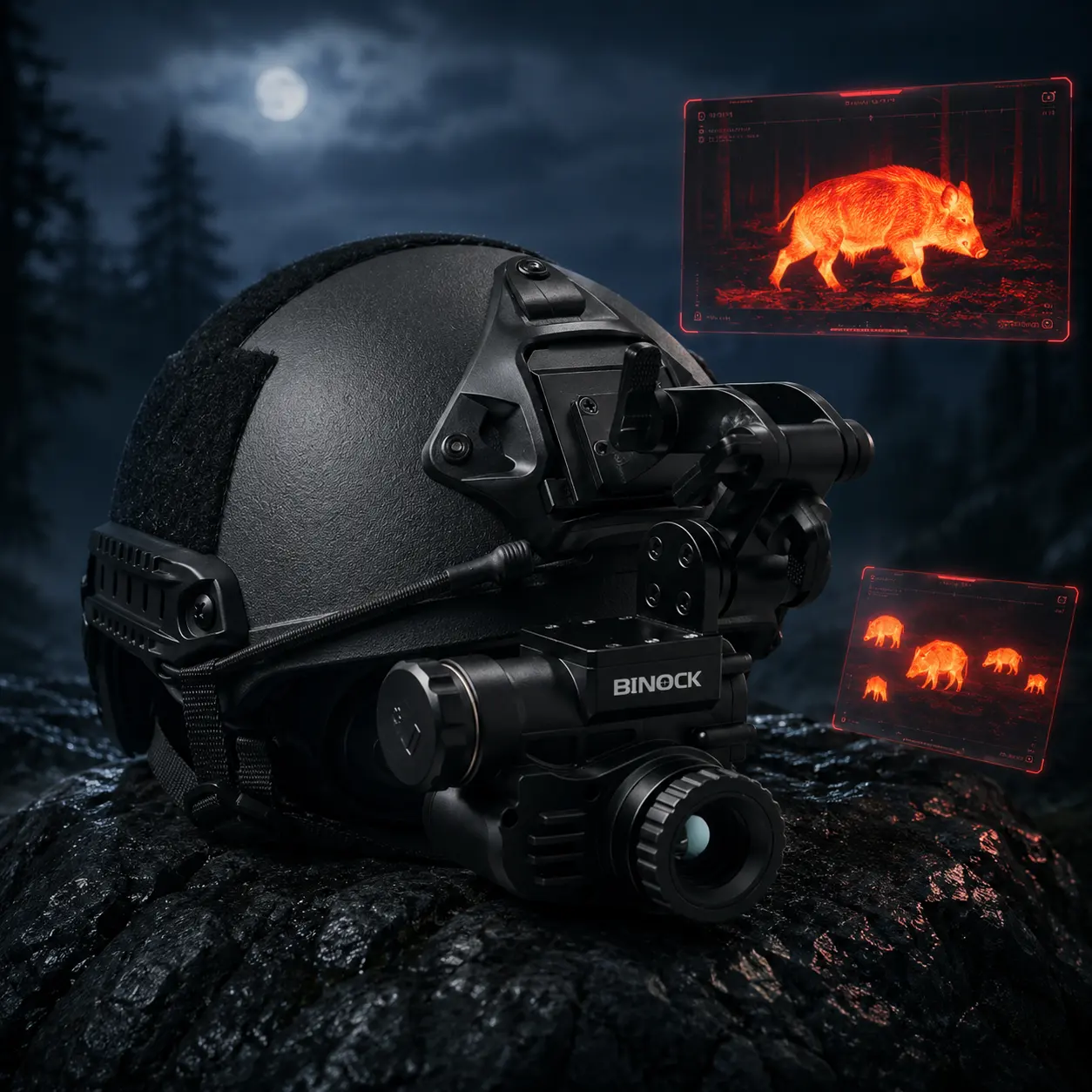

If you've ever played night airsoft—or spent way too much time researching night vision—you've probably heard one piece of advice:
Don't randomly turn on your IR.
If you haven't heard that before, well... now you know.
Because to someone without night vision, an infrared illuminator is basically invisible.
You turn it on.
Look around.
Nothing.
Still dark.
So you feel like you've just unlocked a secret advantage.
But if the person on the other side is also wearing night vision?
Things get a little more interesting.
Because what looks like “nothing” to your eyes can look surprisingly obvious through another night vision device.
Congratulations.
You were trying to stay hidden.
You may have just turned yourself into a very convenient “Hello, I'm over here” sign.
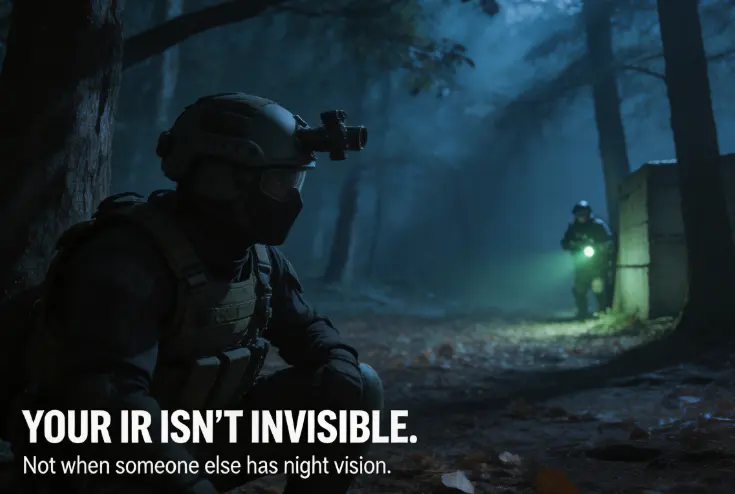
Night Airsoft Gets Interesting When Everyone Can See the Dark
Playing airsoft during the day is relatively straightforward.
Everyone has eyes.
Everyone can see the field, the trees, the obstacles, and hopefully the other players.
Then the sun goes down.
Suddenly, the rules feel a little different.
A flashlight?
Very noticeable.
Your regular eyesight?
Not exactly impressive.
That's where night vision equipment starts becoming interesting.
The first time you look through a night vision monocular, there's usually a moment when you think:
“Wait... I can actually see.”
The field that looked like a wall of darkness suddenly has shape.
Tree trunks appear.
The ground becomes visible.
Objects in the distance start to separate from the background.
You realize that the night wasn't actually empty.
You just couldn't see much of it.
That's one of the reasons night vision for airsoft has become such an interesting part of the hobby.
You're not necessarily making the night brighter.
You're getting more information from the light that's already there.
So Why Do You Need IR in the First Place?
Here's where things get interesting.
If a night vision device can work in low-light conditions, why would you need an infrared illuminator?
Because “dark” isn't really one single thing.
A night with a bright moon is different from a cloudy, moonless night.
A field near a city is different from a remote forest.
An open area is different from a heavily shaded trail.
And the amount of available ambient light can change everything.
When there is enough available light, a capable night vision device may be able to produce a useful image without additional illumination.
But when the environment gets extremely dark, an IR illuminator can provide additional infrared light that the night vision system can detect.
To your naked eyes?
Still dark.
Through a night vision device?
Suddenly, there's more information.
Sounds great, right?
It is.
But there's one little problem.
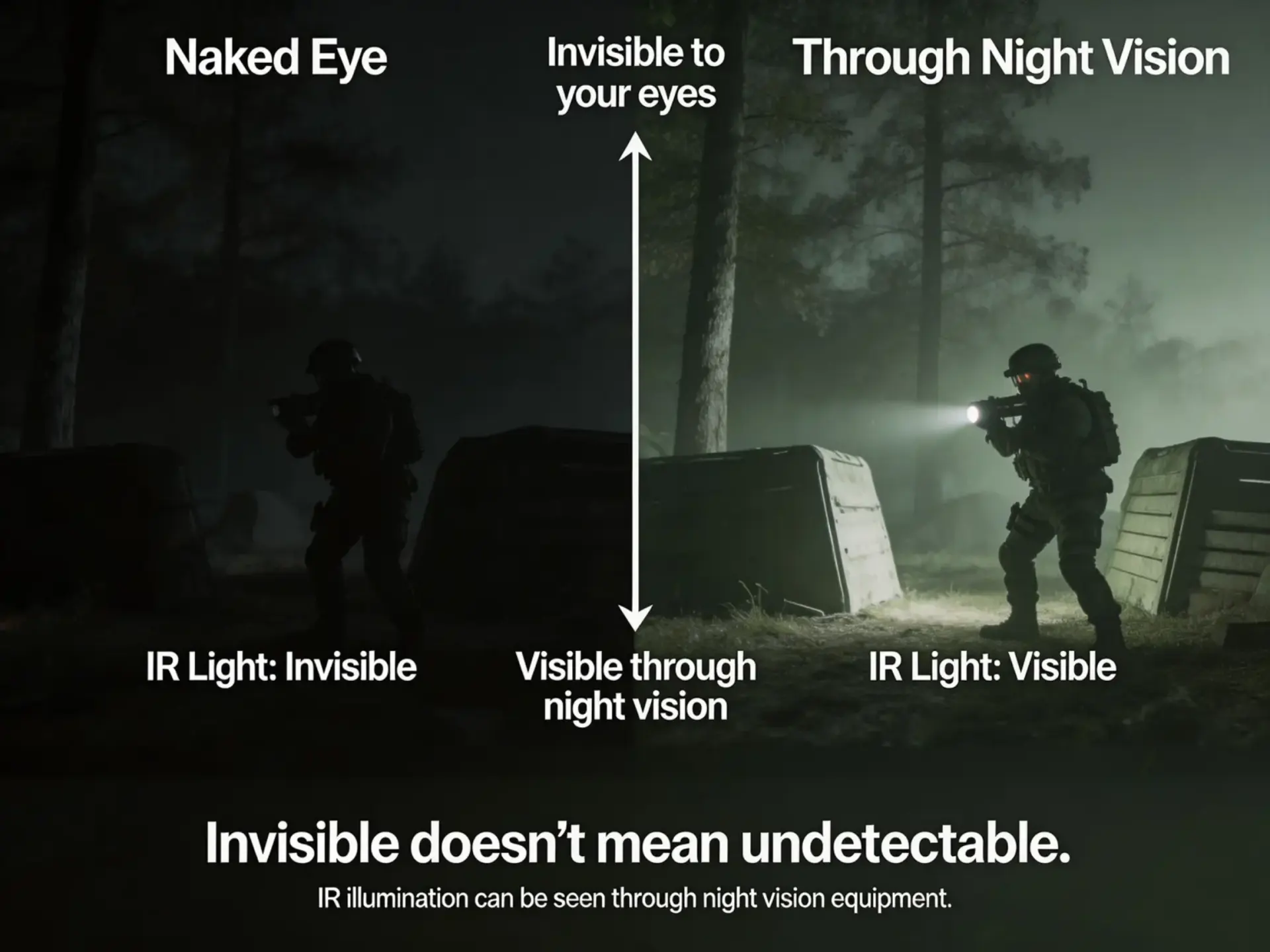
What If the Other Team Has Night Vision Too?
This is one of those details you don't fully appreciate until you actually use night vision in the field.
You might be thinking:
“I'm only turning on IR so I can see better.”
Someone looking through another night vision device might be thinking:
“Why did that guy just turn on a beacon?”
That's because infrared light isn't necessarily invisible to night vision equipment just because it's invisible to your eyes.
And this is why the question “Can you use night vision without IR?” comes up so often among night airsoft players and other night vision users.
The answer isn't simply yes or no.
It depends on the environment, the available ambient light, the performance of your night vision device, and what you're trying to do.
If there is enough ambient light, you may be able to operate without IR.
If you're somewhere extremely dark, IR can be incredibly useful.
The important part isn't necessarily avoiding IR altogether.
It's understanding when you need it and when you don't.
That's What Makes Night Vision More Interesting Than It Looks
When people first start shopping for a night vision device, it's easy to get obsessed with specifications.
How much magnification?
How far can it see?
What resolution?
Does it have IR?
How long does the battery last?
All of those things matter.
But after you actually use a night vision device outdoors, another question starts to become important:
How comfortable is it to carry?
Because here's the thing.
Night vision equipment doesn't live on a specification sheet.
You have to take it outside.
You hold it.
You walk with it.
You adjust the focus.
You move between different environments.
You may already be carrying a backpack, protective gear, a flashlight, extra batteries, and about twelve other things you somehow convinced yourself were absolutely necessary.
Then you pick up your night vision monocular and think:
“Wait... why is this thing so heavy?”
Your Night Vision Device Is Probably Heavier Than You Think
There's a funny little experiment you can try.
Pick up your night vision device at home.
Ten seconds:
“That's fine.”
Five minutes:
“Still fine.”
Thirty minutes:
“Okay...”
One hour:
“I should have paid more attention to the weight.”
😂
Weight matters even more when you're actually moving.
For night airsoft players, you're walking, crouching, running, changing positions, and carrying other equipment.
For campers and hikers, you're already thinking about everything that has to fit into your backpack.
For wildlife observers, you may be holding the device for extended periods while waiting for an animal to appear.
So weight isn't just another number in a product specification.
It affects whether you actually want to take the device with you.
And ultimately:
Whether you actually use it.
Why a Night Vision Monocular Still Makes a Lot of Sense
This leads to another question we hear quite often:
“Why use a monocular instead of binocular night vision?”
After all, two eyes are better than one, right?
We've spent our entire lives being told that.
But night vision is a little more complicated.
A night vision monocular can be smaller, lighter, and easier to carry.
For many outdoor users, that's a pretty big advantage.
Especially if you're already carrying other equipment.
You may not need a large, complicated setup just to observe what's happening around you at night.
Sometimes you simply want to pick up a compact night vision device and look into the woods.
Or check what's making that noise outside your campsite.
Or see what your dog has been barking at for the last five minutes.
Or, yes, play night airsoft without feeling like you've attached another brick to your gear.
There's no universal answer to whether a monocular or binocular night vision setup is better.
It depends on the user.
And that's actually an important point when designing night vision products.
This Is Where Product Design Gets Interesting
At BINOCK, we don't think about night vision as just a list of specifications.
We think about how people actually use it.
A night airsoft player might care about operating without IR whenever ambient light allows it.
An outdoor user might care more about weight and portability.
A wildlife observer may prioritize image clarity and ease of focusing.
A distributor might be looking at price, reliability, accessories, and packaging.
And a brand owner may have an entirely different question:
“Can you make this for us?”
That's where OEM and ODM development becomes much more than putting a logo on an existing product.
A Night Vision Product Usually Starts With a Problem
Imagine you're an airsoft equipment brand.
You don't necessarily come to a manufacturer and say:
“Give me a night vision device.”
You might say:
“Our customers play a lot of night games and don't want to rely on IR all the time.”
Or:
“Our users complain that existing night vision equipment is too heavy.”
Or:
“We want something compact enough to carry with the rest of our gear.”
Or:
“We want our own housing, logo, packaging, and product configuration.”
Those are very different requirements.
And that's where a manufacturer needs to start asking questions.
What kind of environment will the device be used in?
How much ambient light is normally available?
Is IR required?
How important is portability?
What type of user is buying it?
What accessories make sense?
What price range does the target market expect?
In other words:
What should the product actually be?
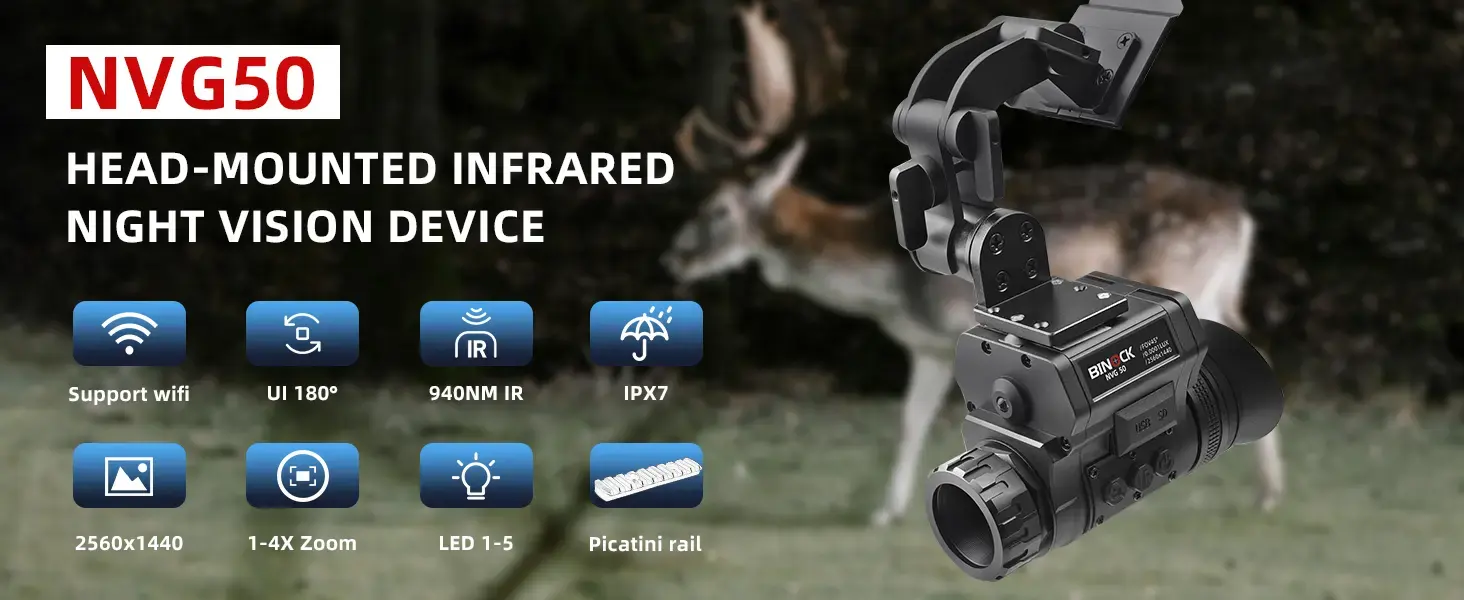
NVG50 Is One Example of That Approach
The BINOCK NVG50 night vision monocular was designed with practical outdoor use in mind.
The goal isn't simply to make a product that looks impressive on a specification sheet.
It's to create a night vision device that people can actually take outside and use.
Camping.
Outdoor observation.
Wildlife watching.
Night airsoft.
Exploring after dark.
Or simply figuring out what is making that suspicious noise in the backyard at 1:00 a.m.
Because a night vision monocular should be useful in the real world—not just impressive when sitting on a desk.
And that's the same thinking we bring into our OEM and ODM projects.
OEM Isn't Just About Putting Your Logo on It
This is something worth making clear.
For a manufacturer, OEM/ODM isn't simply:
Existing product + your logo = custom product.
Sometimes that's exactly what a customer needs.
But sometimes the real project looks more like this:
Market demand
↓
User feedback
↓
Product concept
↓
Configuration
↓
Sample development
↓
Testing
↓
Adjustments
↓
Mass production
For example, a customer targeting the airsoft market may want a specific configuration focused on portability and night use.
Another customer may be targeting outdoor enthusiasts and want a compact housing with a different visual identity.
Another may want customized accessories, packaging, branding, or a completely different product configuration.
That's where an experienced night vision manufacturer can add much more value than simply supplying finished products.
From Night Vision Device to Your Own Product
At BINOCK, our OEM/ODM capabilities can support different parts of the product development process, including:
Product Design
Housing, appearance, dimensions, materials, and overall product identity.
Night Vision Configuration
Different requirements for low-light performance, infrared illumination, and other product configurations based on the target market.
Accessories & Mounting
Different users may have different preferences for how they carry, use, or mount their equipment.
Branding
Custom logos, colors, surface treatments, and other brand elements.
Packaging
Retail packaging designed around your own brand and market positioning.
Sample Development
Developing, testing, collecting feedback, and refining the product before mass production.
Because the best product isn't always the one with the longest list of specifications.
Sometimes it's the one that solves a very specific problem for a very specific group of users.
So... Should You Turn Your IR Off?
If you're playing night airsoft, there's no universal answer.
Enough ambient light?
You may be perfectly fine without IR.
Almost complete darkness?
An IR illuminator can become extremely useful.
Worried about another night vision user spotting your IR?
Then you probably want to understand exactly how and when you're using it.
The bigger lesson is that night vision isn't really a “turn it on and forget about it” kind of technology.
The more you use it, the more details you start noticing.
IR.
Low-light performance.
Field of view.
Focus.
Weight.
Battery life.
Monocular versus binocular.
Mounting options.
Portability.
And, eventually, the strange realization that you're standing in your backyard at 1:30 a.m. staring at a raccoon through a night vision monocular.
Don't worry.
We've all been there.
Looking for a Night Vision Manufacturer for Your Next Product?
If you're looking for more than a standard off-the-shelf night vision device, BINOCK can work with you on OEM and ODM night vision solutions built around your market.
From product configuration and housing design to branding, accessories, packaging, sample development, and mass production, our team can work with you to turn a market requirement into a finished night vision product.
The NVG50 night vision monocular is one example of our product development capabilities.
But your next product doesn't have to look exactly like NVG50.
Maybe your customers want something lighter.
Maybe they want a different IR configuration.
Maybe they need a different housing.
Maybe they want their own brand from the beginning.
That's the point of OEM and ODM.
**You bring the market.
We help build the product.**
If your customers are already asking for something different, we'd love to hear what they're asking for.


