


When Sourcing Night Vision Devices, Don't Ask What's Best—Ask What's Right for Your Market


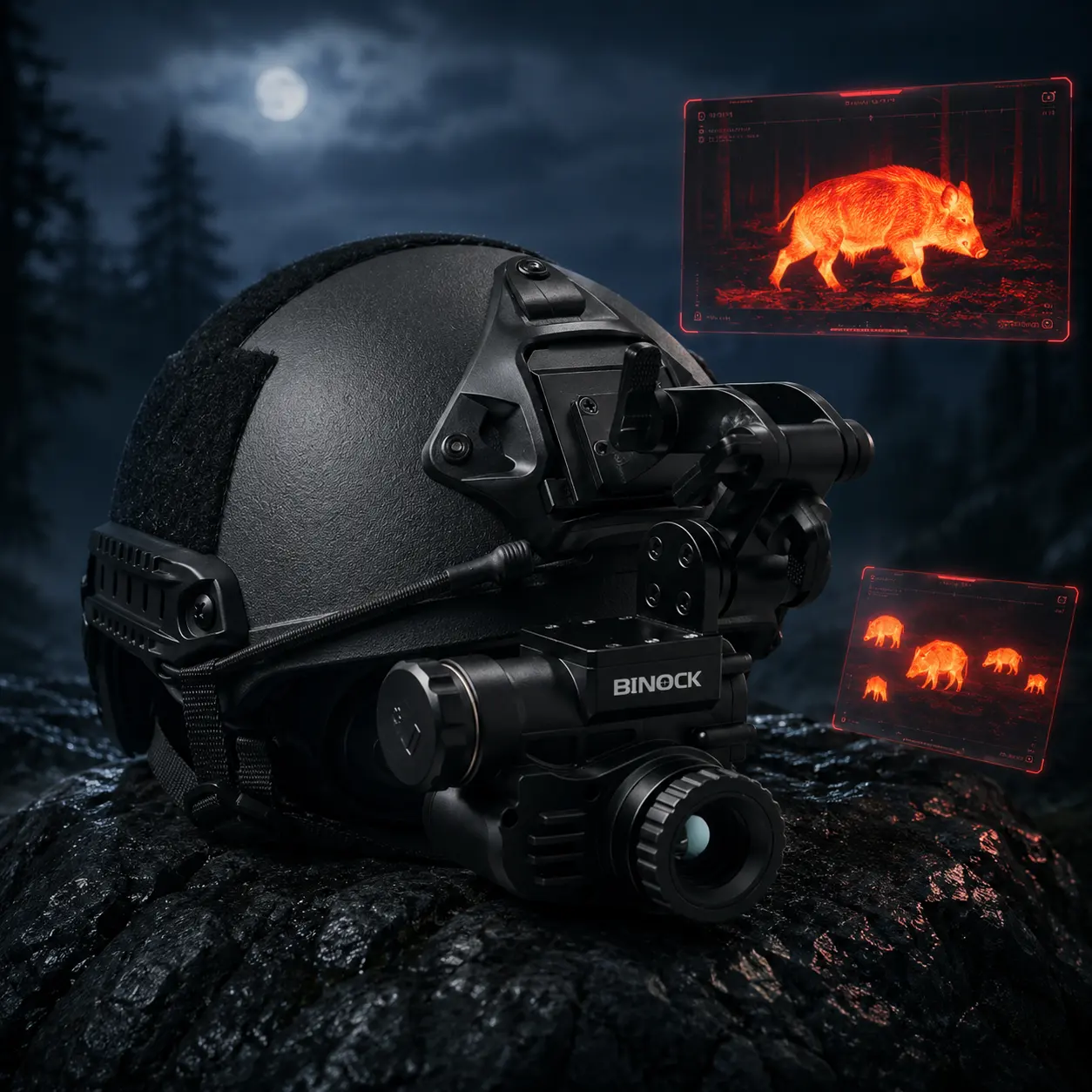

“What’s your best night vision device?”
If you work in the night vision industry, you’ve probably heard this question more times than you can count.
And if you’re a buyer, distributor, or brand owner looking for a night vision manufacturer, you may have asked it yourself.
Fair enough. When you’re comparing products, “the best one” sounds like a pretty good place to start.
The problem is that “best” doesn’t really mean much without a market behind it.
What’s the best car? A sports car? An SUV? A pickup truck? Or the one you can actually park at work and still fit all your camping gear into on the weekend?
Night vision devices work much the same way.
A device with stronger low-light performance and a higher-end configuration may be a better choice for one customer, while a more affordable monocular may make far more sense for another.
For a B2B buyer, the real question usually isn’t:
“What’s the best night vision device?”
It’s:
“What’s the right night vision device for my market?”
That small change in the question can save you a surprisingly large amount of money, time, and unnecessary specification-hunting.
Before You Compare Specifications, Think About Who Is Going to Use It
This is where night vision sourcing gets interesting.
It’s very easy to open five product catalogs and start comparing resolution, IR illuminators, battery life, weight, viewing range, and every other number manufacturers can possibly put on a specification sheet.
After an hour or two, you have a beautiful spreadsheet.
And absolutely no idea which product you should actually buy.
There’s a simpler place to start:
Who is your customer?
An Airsoft player, an outdoor enthusiast, a search and rescue team, and a patrol user may all need night vision.
That doesn’t mean they need the same night vision device.
Airsoft users want more than just a good image
For Airsoft, users need to move around with the device, react quickly, and spend a long time wearing or carrying their gear.
So weight, portability, mounting, battery life, durability, IR capability, and price can all matter.
Nobody wants to finish a night game thinking:
“The image quality was fantastic, but I think my neck has filed a complaint.”
For buyers targeting the entry-level or mid-range Airsoft market, a practical and cost-effective night vision monocular can often make more commercial sense than simply choosing the highest-spec product available.
That’s where a product like NVG50 can fit naturally.
NVG50 is designed around practical nighttime applications where users need useful night vision performance without pushing the product into a much higher price range.
It can work well for night games, outdoor exploration, search and rescue, patrol, and other general nighttime observation scenarios.
It isn’t trying to win a competition for the longest specification sheet.
It’s trying to give users what they actually need at a price that makes sense.
And for many B2B buyers, that matters just as much.

Then There’s the IR Question
Here’s where things get a little more interesting.
An IR illuminator can be extremely useful when the environment is very dark. It gives a night vision device additional light to work with and can make a noticeable difference in extremely low-light conditions.
But there’s a catch.
Especially for Airsoft users.
You may not be able to see your own IR illuminator with the naked eye, but someone else looking through night vision may be able to see it.
So you might think:
“Great, nobody can see my light.”
Meanwhile, someone across the field is thinking:
“Thanks for turning on the beacon.”
We actually wrote more about this in our article on IR illuminators and night vision, because invisible to the naked eye doesn’t necessarily mean invisible through night vision.
This is one reason some users care specifically about night vision without IR.
They want stronger performance in low-light conditions without having to rely as heavily on active IR illumination.
And that brings us to a different kind of product requirement.
When Low-Light Performance Without IR Matters More
Let’s say your customers are experienced Airsoft players or other users who care more about staying discreet in low-light environments.
In that case, simply asking:
“Does this night vision device have IR?”
isn’t enough.
A better question is:
“How well does it perform with the IR turned off?”
That distinction matters.
For a user who doesn’t mind using IR, an illuminator can be a useful tool.
For someone who wants to rely more on passive night vision, the device’s own low-light performance becomes much more important.
This is where NVG90 fits a different market position.
Compared with a more cost-focused product, NVG90 puts more emphasis on night vision performance without relying on IR, making it a more suitable option for users who place a higher value on low-light performance and passive observation.
Airsoft is one obvious example.
If your customer wants to see clearly at night without making themselves unnecessarily easy to spot through another night vision device, that difference can be worth paying for.
But—and this is the part a B2B buyer can’t ignore—NVG90 also comes at a higher price.
And that’s perfectly fine.
Not every customer needs it.
Not every market can support the price.
That doesn’t make one product “better” and the other “worse.”
It simply means they are solving different problems.
A Higher Specification Doesn’t Automatically Mean a Better Business Decision
This is probably one of the easiest traps to fall into when sourcing night vision devices.
The product sheet looks impressive.
Higher resolution?
Sounds good.
Better low-light performance?
Even better.
More features?
Why not?
Then the quotation arrives.
Suddenly, the question becomes:
“Are my customers actually willing to pay for all of this?”
That’s where B2B purchasing becomes very different from buying a product for yourself.
Every additional feature has a cost.
And the important question isn’t always whether you can add something.
It’s whether your customers will notice the difference—and whether they will pay for it.
If adding a feature increases your product cost by 
30 isn’t really a selling point.
It’s just another cost sitting inside your product.
A good product for your market is usually somewhere in the middle:
**Enough performance to satisfy the customer.
Enough features to make the product attractive.
A cost that leaves room for your business to make money.**
That balance is much more useful than simply chasing the highest specification.
So What Should You Figure Out Before Asking for a Quote?
You don’t need a 20-page purchasing brief.
A few straightforward answers can already tell a manufacturer a lot.
Who are you selling to?
Airsoft players?
Outdoor users?
Search and rescue teams?
Patrol users?
Wildlife observers?
Distributors?
Amazon brands?
The answer changes the product recommendation.
Where will they use it?
“Nighttime use” is a pretty broad description.
Night games, outdoor exploration, search and rescue, patrol, and general observation all happen after dark, but the actual requirements can be very different.
The more specific you are, the more useful the conversation with a night vision supplier becomes.
Instead of:
“I need a night vision device for nighttime use.”
Try:
“Our customers are mainly Airsoft players, and low-light performance without IR is important to them.”
That gives the manufacturer something to work with.
What is your target retail price?
This one deserves more attention than it usually gets.
Don’t choose the product first and worry about the selling price afterward.
Work backward.
If your target retail price is relatively accessible, a cost-effective product such as NVG50 may make more sense.
If your customers are willing to spend more for stronger low-light performance, then a higher-priced product such as NVG90 may be worth considering.
The goal isn’t to buy the cheapest device.
It isn’t to buy the most expensive one either.
It’s to find the product that makes sense at your price point.
Do your customers need IR?
Or would they rather avoid relying on it?
This question can completely change the product recommendation.
For very dark environments, IR can be extremely useful.
For users who prioritize discretion, however, performance without IR may matter more.
There’s no universal answer.
That’s exactly why the application should come before the product.
Are You Selling a Product—or Building a Brand?
This is where the sourcing conversation gets a little more serious.
If you simply need 100 night vision monoculars for resale, the process is relatively straightforward.
But if you’re building your own night vision brand, you’re no longer just buying a product.
You’re building something that will eventually carry your name.
That means you may also care about:
- The product’s positioning
- Housing design
- Logo
- Packaging
- Accessories
- Configuration
- MOQ
- Sample development
- Production consistency
And suddenly, the question isn’t just:
“Which product should I buy?”
It becomes:
“Which manufacturer can help me build the right product?”
That’s a much more important question.
OEM or ODM? It Depends on How Much of the Product You Want to Make Your Own
If you already know what product you want and mainly need your own brand identity, OEM may be the straightforward route.
Your logo.
Your packaging.
Your brand.
Perhaps some selected configuration or accessory changes.
You get a product to market without starting the entire development process from scratch.
For a new brand testing the market, that can be a very practical way to start.
But what if you look at an existing product and think:
“This is close, but not quite what our customers need.”
Maybe you want a different housing.
Maybe the configuration needs to change.
Maybe you want different accessories.
Maybe you want to build something specifically around a particular market.
That’s when ODM becomes more interesting.
Because there’s a big difference between putting your logo on a product and actually developing a product around your market.
Putting your logo on a product is one thing. Building a product around your market is another.
Before choosing an OEM/ODM supplier, it’s worth asking what “customization” actually means to them.
Can they change the housing?
Can they adjust the configuration?
Can they develop samples?
Can they support custom packaging?
Can they help with accessories?
And perhaps most importantly:
Can they support the product consistently once you move from sample to mass production?
Don’t Just Ask Your Supplier for a Catalog and the “Best Price”
We all know the classic B2B message:
“Please send me your catalog and best price.”
Nothing wrong with it.
It’s just not going to tell you very much about whether a supplier actually understands your business.
Try giving them some context instead.
Tell them:
“Our target customers are Airsoft players.”
“The main application is nighttime gaming.”
“We are looking for a competitive retail price.”
“Low-light performance without IR is important to our customers.”
Then ask:
“Which product would you recommend?”
Now you’re having a product conversation instead of just requesting a price list.
A good night vision manufacturer should be able to talk with you about the application, target customer, product configuration, pricing, MOQ, samples, customization, lead time, and mass production.
They shouldn’t just send you a PDF and disappear behind the words:
“Dear friend, this is our best price.”
We’ve all been there.
A Night Vision Supplier Is More Than a Place to Buy Products
For a brand building a long-term product line, the factory behind the product matters.
You may want to ask:
- Can I get a sample before placing a bulk order?
- Can the product be customized?
- Can you support OEM and ODM?
- What is the MOQ for customization?
- What is the sample lead time?
- What is the mass production lead time?
- How do you control quality during production?
- How do you maintain consistency between samples and mass production?
- Can you customize housing, packaging, or accessories?
These questions aren’t meant to make the supplier sit for an exam.
They help you understand whether you’re dealing with a company that simply sells existing products—or a manufacturer that can actually support your product development.
Because for a B2B brand:
The factory isn't just where your product is made. It's where your brand reputation starts.
So, Which Night Vision Device Is Actually the Best?
Well… it depends.
If your market needs a practical, cost-effective solution for everyday nighttime applications, NVG50 may be the more sensible starting point.
It can fit applications such as night games, outdoor exploration, search and rescue, patrol, and general nighttime observation.
If your customers place a higher value on low-light performance without IR, and they are willing to pay more for that capability, NVG90 may be a better fit.
Neither answer is automatically right for everyone.
And that’s really the point.
More expensive doesn’t automatically mean more suitable.
More affordable doesn’t automatically mean better value.
The right product is the one that makes sense for:
**your customers,
your application,
your target price,
and your brand positioning.**
Your Market First. Your Product Second.
Sourcing a night vision device doesn’t have to start with a giant specification sheet.
Start with a few much simpler questions.
Who are you selling to?
What are they going to do with it?
How important is IR?
How important is low-light performance without IR?
What are they willing to pay?
And are you simply reselling a product—or building your own night vision brand?
Once those questions are clear, choosing the product becomes much easier.
Maybe an existing product is exactly what you need.
Maybe a cost-effective option like NVG50 is the right way to enter the market.
Maybe your customers need the stronger low-light performance of NVG90.
Or maybe neither existing configuration is quite right, and it’s time to look at OEM or ODM development.
At BINOCK, we don’t believe every market needs the same night vision device.
We’d rather understand what you’re trying to sell, who you’re selling it to, and what your customers actually need before recommending a product.
If you’re not sure where to start, tell us your target market, application, and price range.
We can work backward from there and help you find a product that makes sense for your business—not simply point you toward the most expensive product in the catalog.
Because in B2B, the question was never really:
“What’s the best night vision device?”
It’s:
“What’s the right night vision device for the people I’m trying to sell to?”
And honestly, that’s a much better question to start with.


