


Thermal Imaging vs. Night Vision: Which One Should You Choose for Your Market?

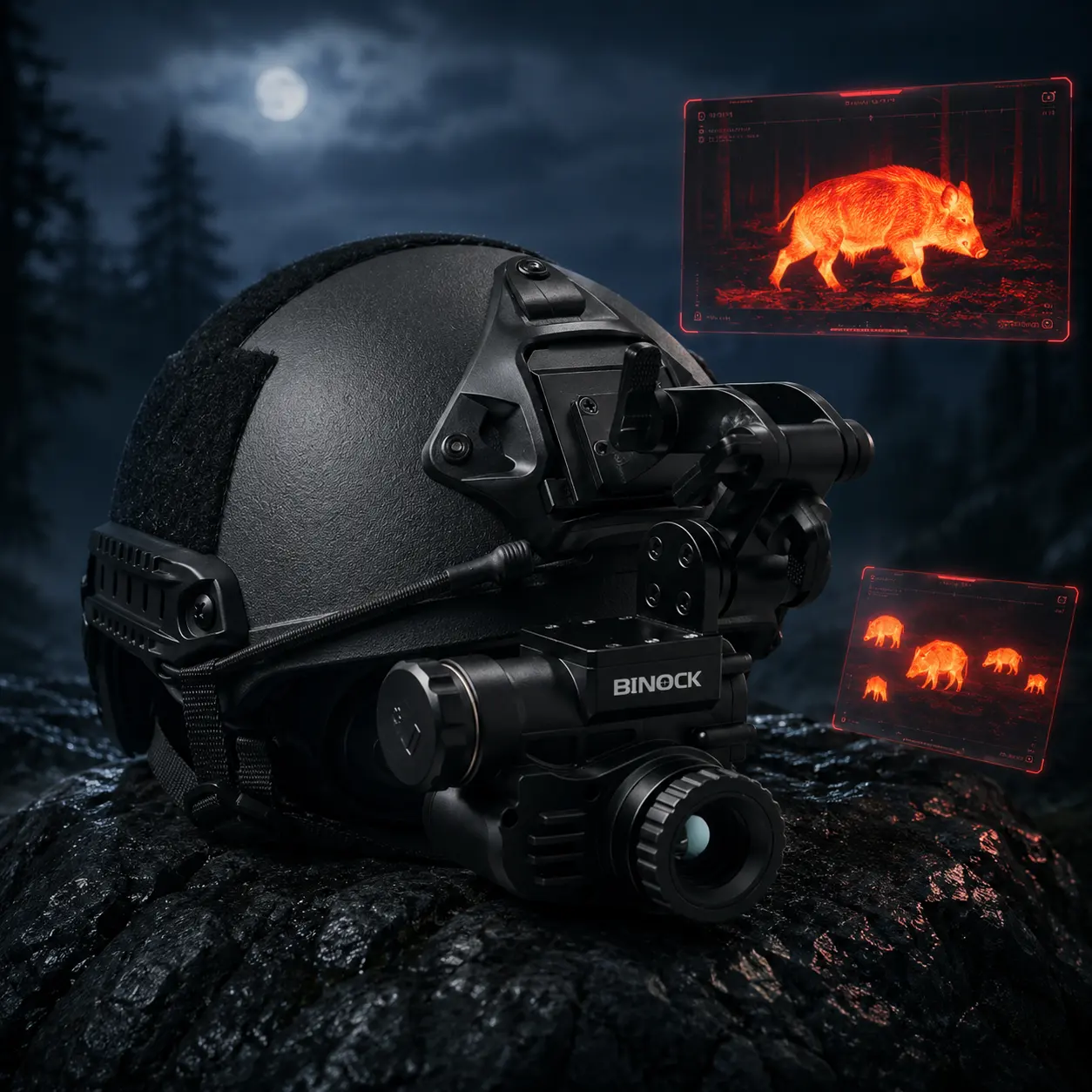

If you're sourcing night vision products for your brand, distribution business, or outdoor product line, you've probably run into this question:
“Which one is better, night vision or thermal imaging?”
A supplier sends you a catalog.
One page says Digital Night Vision.
The next says Thermal Imaging.
Then come the numbers: resolution, magnification, detection range, frame rate, sensor size...
And somewhere around page 12, you're probably thinking:
“Okay... but which one am I actually supposed to buy?”
The problem is, that's not quite the right question.
It's a little like asking whether an SUV or a sports car is better.
If you're taking three boxes of camping gear, two dogs, and half your garage on a road trip, the sports car might not be your best friend.
If you're just driving to the beach on a Sunday afternoon, you probably don't need something that can tow a construction site.
Night vision and thermal imaging work the same way.
There isn't one device that's the best choice for every market.
The better question is:
What does your customer actually need to see?
Night Vision and Thermal Imaging Don't Actually See the Same Thing
Let's clear up the most common misunderstanding first.
Traditional night vision and thermal imaging are both used for nighttime observation, but they work in very different ways.
Traditional night vision relies on available light and amplifies what is already there, allowing users to see their surroundings in low-light conditions.
So you may be looking at:
Trees.
Roads.
Buildings.
Ground.
Equipment.
The outline of a person.
In simple terms, traditional night vision is trying to answer:
“What does this dark scene actually look like?”
Thermal imaging asks a different question.
Instead of depending on visible light, it detects infrared radiation emitted by objects and turns differences in heat into an image.
So the question becomes:
“Is there something here that's different from its surroundings?”
And that's where things get interesting.
**Night vision helps you see the scene.
Thermal imaging helps you spot the heat.**
Night vision is more about the scene.
Thermal imaging is more about heat signatures and temperature differences.
And depending on what your customers are trying to do, that difference can matter quite a lot.
Sometimes, You Don't Need to See Everything
Imagine you're standing at the edge of a forest at night.
It's dark.
You think you saw something move in the distance.
At that moment, you probably don't care what species of tree is standing next to it.
You want to know one thing:
“Wait... was there something over there?”
That's where thermal imaging becomes interesting.
Sometimes, the user doesn't need to see every detail first.
They need to find the target.
That sounds like a small difference, but from a product-selection perspective, it's a pretty big one.

Outdoor & Wildlife: Find It First, Observe It Second
Outdoor exploration and wildlife observation are good examples.
At night, an animal can blend into its surroundings visually. Depending on the environment and available light, spotting it with a traditional optical image may not always be easy.
Thermal imaging takes a different approach.
If the animal has a noticeable temperature difference from the background, its heat signature may stand out.
So the first question isn't necessarily:
“What kind of animal is that?”
It may simply be:
“Wait... what's that over there?”
Find it.
Then observe it.
Then figure out what it is.
That's a very different way of thinking about nighttime observation.
Search & Rescue: Sometimes Finding Comes Before Identifying
Search and rescue is another good example.
When you're looking for someone at night, the first priority may not be seeing exactly what they're wearing.
It may simply be:
Where are they?
A person's body heat can create a temperature difference from the surrounding environment, which thermal imaging can detect.
In other words:
Finding the person may come before identifying the person.
First, locate the target.
Then observe and assess the situation.
In this kind of application, the value of thermal imaging isn't simply that it “lets you see at night.”
It's that it can help users detect a target in darkness based on heat differences.
Security & Patrol: The First Question Might Just Be “Is Someone There?”
Security and patrol applications can work in a similar way.
Sometimes you don't immediately need to know:
“Who is that?”
The first question is much simpler:
“Is someone there?”
Is there a target?
Is something moving?
Is there a heat source where there shouldn't be one?
If the answer is yes, then you can move on to observation and identification.
That's one reason thermal imaging can be valuable in certain applications.
It doesn't have to turn the entire night into daytime.
Sometimes, you just need it to help you notice what deserves your attention.
But Wait — Thermal Isn't Simply a “Better” Night Vision Device
This part is important.
It would be very easy to turn this article into:
Thermal imaging is amazing. Traditional night vision can go home now.
Nice marketing line.
Not necessarily true.
Traditional night vision still has plenty of situations where it makes more sense.
If your customers care more about:
- nighttime navigation
- terrain and road observation
- scene details
- target identification
- a more natural-looking visual image
then traditional night vision may still be the better fit.
If they care more about:
- target detection
- heat-source detection
- operation in complete darkness
- finding people
- wildlife observation
- detecting targets in low-light environments
then thermal imaging becomes much more interesting.
So the real question isn't:
Thermal or Night Vision?
It's:
What does your customer actually need to do?
And for B2B buyers, that question matters even more.
Because you're not just buying a specification.
You're choosing a product position for your market.
So, What Should You Actually Look for in a Thermal Imaging Device?
Okay.
Let's say you've figured out that thermal imaging makes sense for your market.
Now comes the second question:
“So... how do I actually compare thermal imaging devices?”
This is where the specification sheet appears.
But don't let the numbers scare you.
Some thermal imaging specifications are surprisingly easy to misunderstand.
A 1,000m+ Detection Range Doesn't Mean “Crystal-Clear at 1,000 Meters”
Take one of the headline specifications of the BINOCK BTI10:
Detection Range: More Than 1,000m
Sounds impressive, right?
It is.
But there's one word you should pay attention to:
Detection.
Not:
Identification.
Those are not the same thing.
Thermal imaging performance is often discussed in three different stages:
Detection
“Is there something there?”
Recognition
“What kind of object might that be?”
Identification
“What exactly is it?”
So:
A 1,000m+ detection range should not be interpreted as being able to clearly identify every detail at 1,000 meters.
This distinction is especially important for B2B buyers.
When a supplier gives you a big number on a specification sheet, don't just ask:
“How big is the number?”
Ask:
“What does the number actually mean?”
Detection range depends on more than the number printed in the brochure. Sensor performance, optics, target size, thermal contrast, and environmental conditions can all affect what a user can actually detect.
That's why the BTI10's 1,000m+ detection range is best understood as part of its long-range target detection capability—not as a promise of “perfect detail at 1,000 meters.”
384 × 288: What Does That Actually Tell You?
The BTI10 uses a:
384 × 288 Uncooled Thermal Sensor
If you don't work with thermal imaging products every day, you might look at that number and think:
“384 by 288... okay. And?”
It refers to the resolution of the thermal sensor—the number of pixels used to form the thermal image.
More pixels can provide more image information, but here's another common mistake:
Higher resolution does not automatically mean longer detection range.
Seeing a 640 × 512 sensor doesn't automatically mean:
“That one must detect targets farther away.”
Real-world performance also depends on factors such as the lens, sensor characteristics, target size, thermal contrast, and environmental conditions.
So a better purchasing question isn't:
“Which specification has the biggest number?”
It's:
“Does this combination of specifications make sense for my customers?”
That's the question that actually matters.
12μm: A Small Number With a Job to Do
The BTI10 uses a:
12μm Pixel Size
Pixel size is another important part of a thermal sensor's specifications.
But, once again, don't judge the entire product from one number.
12μm. 384 × 288. Lens specifications. Detection range.
These specifications need to be considered together.
A thermal imaging device isn't taking a math exam.
The goal is still very simple:
Help the user detect and observe targets in real situations.
So instead of asking:
“Is this number higher than the competitor's?”
a better question is:
“Does this configuration fit the market I'm selling to?”
50Hz: Because Targets Don't Stand Still for You
Here's another specification that can be easy to overlook:
Frame Rate: 50Hz
Why does it matter?
Because the real world is not particularly cooperative.
People walk.
Animals run.
Vehicles move.
The target you're observing is unlikely to politely stand there and say:
“Take your time. I'll stay perfectly still while you check the image.”
For moving-target observation, frame rate can affect how smoothly motion is displayed.
The BTI10 features a 50Hz frame rate, designed to provide smoother thermal imaging when observing moving targets.
So:
Frame rate isn't just another number on a specification sheet.
It's part of what the user actually experiences when looking through the device.
1×, 2×, 4×, 8×: Why Give Users So Many Options?
The BTI10 supports:
1× / 2× / 4× / 8× Magnification
And the reason is fairly intuitive.
When you're looking across a large area, you don't necessarily want everything zoomed in.
That's where 1× can make sense for broader observation.
Then you notice something in the distance.
You want to take a closer look.
2×.
Still need more?
4×.
And for a more distant target:
8×.
Of course, magnification should not be treated as a direct measurement of viewing distance. Actual observation performance depends on the optical system, target size, environment, and other factors.
But multiple magnification levels give users more flexibility:
Start with the wider view. Find something interesting. Then bring it closer.
That fits very naturally with the way thermal imaging is often used:
Detect first. Observe second.
One Thermal Image, Four Ways to Look at It
The BTI10 also offers four thermal image modes:
White Hot
Hotter areas are displayed brighter.
Black Hot
Hotter areas are displayed darker.
Red Hot
Red tones are used to highlight warmer areas.
Fusion
A color-based thermal display that combines different tones to show temperature differences.
If you've never used thermal imaging before, you might wonder:
“Why do I need four different ways to look at the same thing?”
Because there isn't one thermal palette that works best for every user or every situation.
Some users prefer White Hot.
Others find Black Hot easier to read.
Red Hot can make warmer areas stand out.
Fusion provides another way to interpret thermal differences.
So instead of forcing every user to look at the same image:
Give them options.
Sometimes a small change in how the thermal image is displayed can make a target easier to notice.
Don't Forget What You Actually Look Through
We've talked a lot about the sensor.
384 × 288.
12μm.
50Hz.
1,000m+.
But there's another very practical question:
What does the user actually see?
The answer isn't the sensor.
It's the display.
The BTI10 uses a:
1024 × 768 HD OLED Display
And that's worth paying attention to.
Because from the user's perspective:
**The sensor creates the thermal information.
The display is where the user actually experiences it.**
Sensor, optics, image processing, and display all have to work together.
A good thermal imaging product isn't just a collection of impressive numbers.
It's how those numbers come together in the real world.
So, Where Does the BTI10 Fit?
Now let's come back to the product itself.
The BTI10 isn't simply saying:
“Hey, we made a thermal imaging device.”
It's built around a much more specific idea:
How can users detect and observe targets in darkness?
The BTI10 combines:
384 × 288 uncooled thermal sensor
12μm pixel size
50Hz frame rate
More than 1,000m detection range
1× / 2× / 4× / 8× magnification
White Hot / Black Hot / Red Hot / Fusion image modes
and a
1024 × 768 HD OLED display
These specifications work together as a complete product configuration.
And that's an important point when you're comparing thermal imaging products:
One number rarely tells the whole story.
For B2B Buyers, There's an Even Bigger Question
Let's say you're an outdoor brand.
Your customers are interested in:
wildlife observation
night exploration
outdoor adventure
You may care more about:
detection range, portability, image performance, and ease of use.
If you're a security product distributor, you may be thinking more about:
performance, reliability, price positioning, and market demand.
If your customers work in search and rescue, then:
dark-environment detection, long-range observation, and moving-target performance
may be much more important.
And if you're building your own brand, there's another layer to the question:
What's the target retail price?
What will your customers actually pay for?
Do you need your own logo and packaging?
Is a standard product enough?
Or do you need a product built around your own market?
That's when the question changes again.
You're not just buying a thermal imaging device.
You're choosing a product position for your market.
Standard Product, OEM, or ODM?
This is where many B2B projects eventually arrive.
If you're testing a new market, a standard product is often the simplest place to start.
The product is already developed.
Development costs are lower.
And you can get to market faster.
Test it.
Sell it.
See what customers actually say.
Then decide what needs to change.
If you already have an established brand, OEM can give the product your own:
Logo
Packaging
Brand identity
and, depending on the project, selected product configurations.
ODM goes a step further.
Instead of simply putting your logo on an existing device, you're developing a product around specific market requirements.
And there's a big difference between the two.
Putting your logo on a thermal imaging device is one thing.
Building a thermal product around your market is another.
So, Don't Start by Asking Which Thermal Device Is “The Best”
If you're sourcing thermal imaging devices, I'd suggest changing the question you start with.
Don't begin with:
“Which thermal imaging device is the best?”
Start with:
“Who is my customer?”
Then ask:
Where will they use it?
What do they need to detect?
How far do they need to detect it?
Do they care more about detection or identification?
What's their target price?
Am I selling a device, or am I building a product line?
Once you have those answers, choosing the right product becomes much easier.
Because now you actually know what you're choosing for.
The Right Technology Comes First. The Right Product Comes Next.
There isn't a simple winner between thermal imaging and traditional night vision.
Night vision is better suited to some tasks.
Thermal imaging solves a different set of problems.
And a specification sheet with bigger numbers doesn't automatically make one product the better business decision.
The better question is:
What does your customer need to see, detect, and do?
Start there.
Then choose the technology.
Then choose the product.
The BINOCK BTI10 is one example of a thermal imaging device built around long-range detection, flexible magnification, multiple thermal viewing modes, and low-light observation.
If you're sourcing thermal imaging devices for your brand, distribution business, or new product line, BINOCK can support projects ranging from standard products to OEM and ODM development.
Because in the end, you may not need:
the most powerful device.
You need:
the right product for your market.


